

Historical data indicates Peter Obi won’t win 2023 presidential election

Nigeria’s presidential election has an interesting feature this year. Most opinion polls suggest Peter Obi, a third-party politician now rising in media popularity, will defeat the candidates of the two main parties.
This seems very exciting to many prospective voters and foreigners who have been following the buildup.
There’s just one thing the pollsters are forgetting.
Nigeria always has popular candidates in its presidential elections, but the men who win ultimately are those who form the best alliances among the political elite. Presidential elections in this country are not popularity contests. They’re alliance contests decided through competitive rigging.
The following is a quick timeline to explain how things really work around here.
1999 – Obasanjo v Falae
Winner: Obasanjo
Comment: Both frontrunners were Yoruba. The northern establishment stepped aside out of remorse for the annulment of the 1993 election won by Abiola, a Yoruba.
So, Obasanjo didn’t win in 1999 because he was popular. In fact, he lost heavily in every Yoruba state (including his own Ogun state). Yet, he won that election with the backing of the military class and regional allies.
2003 – Obasanjo v Buhari
Winner: Obasanjo
Comment: Buhari, the spiritual leader of northern Muslims, easily won that segment of the electorate but lost anyway. Obasanjo had broadened support among regional political stakeholders for this re-election bid.
2007 – Yar’adua v Buhari v Abubakar
Winner: Yar’adua
Comment: Frontrunners were Hausa/Fulani this time. The southern establishment stepped aside because the country’s political elite generally understood that it was the north’s turn to produce the next president. This was according to the zoning rule.
Buhari again easily won his northern Muslim constituency but failed to build meaningful relationships with other regional stakeholders. Abubakar had little political capital, having been shut out of the ruling party.
The incumbent Obasanjo virtually had the electoral commission write the results for Yar’adua. The nationwide results were never published, and that election is counted among the worst ever held in the country.
2011 – Jonathan v Buhari v Ribadu
Winner: Jonathan
Comment: A proposed coalition between Buhari and Tinubu was aborted. Again, Buhari easily won his northern Muslim constituency but failed to build meaningful relationships with key regional actors.
Ribadu, an upstart and ex-EFCC chair, was popular among the youth. But he came a distant third. While he was running, his own party leader Tinubu was discussing alliances with others to prepare himself for his future bid for the presidency.
Meanwhile, Jonathan somehow convinced the ruling PDP’s northern leaders that he would serve only one term if they backed him. This was the main condition on which he was allowed to run despite the zoning rule, which disqualified Jonathan at the time.
2015 – Jonathan v Buhari
Winner: Buhari
Comment: Jonathan reneged on his promise to key stakeholders (esp. in the north) and sought a second term. The north recoiled and rallied behind Buhari, who finally formed the coalition with Tinubu that swept him to power.
2019 – Buhari v Abubakar
Winner: Buhari
Comment: The Buhari-Tinubu coalition wobbled but was held together by the zoning rule. Tinubu and other southern figures were disgruntled but understood a Buhari re-election was their route to power (eight years of northern rule to be followed by southern rule). Northern Muslims kept faith in their spiritual leader, and other regional stakeholders did their part to keep him in power.
2023 – Tinubu v Abubakar v Obi v Kwankwaso
Comment: Obi has run an impressively popular campaign but hasn’t followed up that extraordinary effort with key alliances in his backyard and beyond.
No presidential candidate has ever won a geopolitical zone without most of its state governors on her side. None of the five state governors in Obi’s southeast zone supports his bid – let alone those in other parts of the country. Even Buhari, despite his cult-like following among the country’s largest voting bloc, couldn’t get over the line without alliances with the ruling elite at home and in the other zones.
The historical evidence tells us that an Obi win in the southeast alone (much less Nigeria) is improbable.
Adedayo Ademuwagun is a political risk consultant.

We have recently deactivated our website's comment provider in favour of other channels of distribution and commentary. We encourage you to join the conversation on our stories via our Facebook, Twitter and other social media pages.

More from Peoples Gazette

States
Independence: NBA urges Nigerians to expect better future
The NBA said that ordinary Nigerians should be deriving benefit from the subsidy removal rather than hardship.

Agriculture
FG tasks ECOWAS on leveraging financing strategies for agroecology
The federal government has urged stakeholders in the agriculture and finance sectors in the West Africa region to leverage financing strategies to enhance agroecology practices

Politics
Katsina youths pledge to deliver over 2 million votes to Atiku
“Katsina State is Atiku’s political base because it is his second home.”
Education
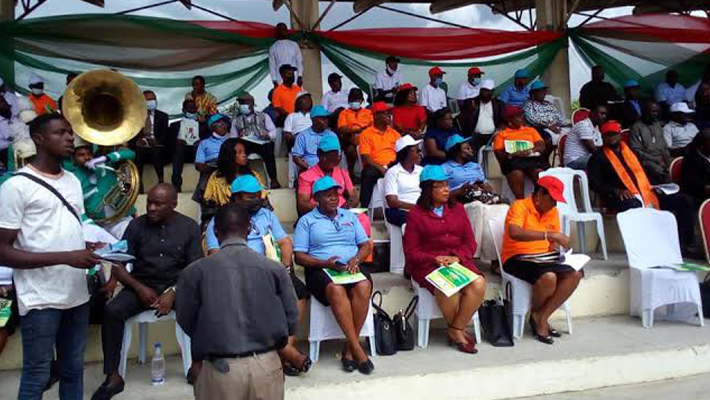
20,000 teachers get N50,000 wardrobe allowance each in Akwa Ibom
Governor Umo Eno has approved a N50,000 wardrobe allowance for each of the 20,000 teachers employed by the Akwa Ibom government.

States
Police nab suspected streetlight vandals, thieves in Enugu
The police command in Enugu has detained five suspects in three separate operations involving alleged vandalism and theft of public infrastructure.
World
Germany arrests former head of intelligence for espionage, treason
Police have arrested the former head of Germany’s BND foreign intelligence agency, August Hanning, on suspicion of espionage.

Abuja
Abuja residents urge AEDC to enlighten public on MAP refund scheme
Abuja residents have called on the Abuja Electricity Distribution Company to intensify public enlightenment on the Meter Asset Provider refund scheme.
Education
Oshodin releases debut novel ‘Even the Devil Wears a Pretty Smile’, announces African book tour
Nigerian author, poet, and filmmaker Godspower Oshodin has released his debut novel, ‘Even the Devil Wears a Pretty Smile’.
Politics
Reps urge INEC to disqualify candidates not in party registers
The Committee on Electoral Matters has urged INEC to audit party membership registers and disqualify candidates whose names are not on them, as stated in the Electoral Act 2026.


