

Nigeria’s endless diseases and bitter pills
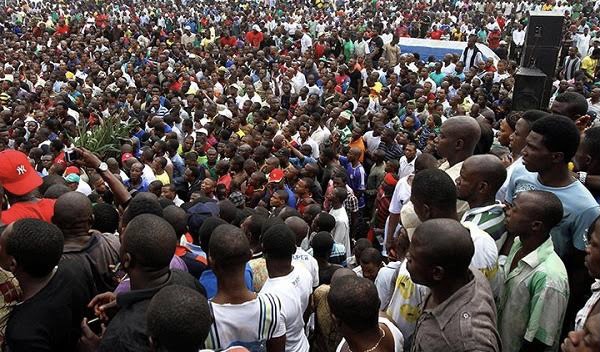
The next government is going to be a very unpopular one. There is no scenario where the government that succeeds the Buhari administration will be popular. If the government turns out to be mediocre, it’d easily become even less popular than its popularity at the inauguration.
If it goes on to do what it must do to lift Nigeria out of its economic doldrums, the immediate outcome of those decisions will leave a lot of pain and anger in its wake. Amid such pain and anger, logic would take the backseat, so arguments for the future benefits of those decisions will not land as intended.
Nigeria’s 5.5 per cent tax-to-GDP ratio is one of the lowest in Africa, collectively holding the world’s lowest tax-to-GDP ratio. According to the OECD, the African average is 16 per cent. A lot has been said about Nigeria’s historic lack of priorities in public expenditure. Successive governments have mouthed their willingness to fight corruption, and everyone knows that corruption continues to be the prevailing reality in our government and economic system.
What ought to be at the centre of these conversations but has not been is the fact that, more than anything else, Nigeria has a chronic revenue challenge. The ‘oil rich’ country myth has helped to deceive a generation of people into thinking theirs is a rich country. Potentially rich in many ways, of course, but abundantly poor.
I am tired of breaking the numbers down, so I won’t do so again here; just take it from me without the numbers this time: we do not have money. The fact the EFCC and our politicians battle over billions of naira in court every other day does not make us rich. We would still be a poor country if you collected all the money they stole and put them back in the national coffers.
Our politicians aren’t stealing from a big basket, they are stealing from a small one. What makes it look big is that when a few people steal what belongs to hundreds of millions of people, no matter how small that sum is for those millions of people, it becomes a lot when a few thousand rogues share it amongst themselves. That we have a corruption challenge is made worse by the fact that we do not even have enough without corruption.
Two major moves the next administration would need to do have to involve reordering our national scale of preference and expanding the country’s revenue base. We would have to decide whether to keep feeding our vehicles cheap fuels or help to use that money to fuel the transformation of our national infrastructure and education.
It is tragic enough that this country is poor. It is a layered tragedy that the little it has is stolen. But it becomes a multidimensional tragedy when the little left is spent like the country’s priorities are in an inverted position. The NNPC reportedly spent $10 billion on fuel subsidies in 2022. That’s about 10 times the sum of money I have read the National Population Commission needs to carry out the census.
Pick the budget, select any important item — education, infrastructure, science and technology, etc. — and you will find that none of them comes close to the sum we literally burn into carbons every day. One common disease every Nigerian government in the last two or three generations have suffered from is to mouth their commitment to the things that matter whilst spending on matters that they are certain keep the people in line, e.g. the price of bread and garri can go up every year, the cost of education may continue to increase with inverse proportionality to its value but the fuel subsidy?
It is the one thing that guarantees the people’s red eyes will be directed at the government. For the sake of the country’s future, the government and the people must come to a position on fuel subsidies. The onus then lies on the government on how to manage the transition. That it must go has long ended as a debate.
One thing every Nigerian who’s travelled abroad will never let you know is that we are far behind on many fronts when it comes to even Asian countries. It is human nature to see good things and wish you had them back home. We automatically desire those fast trains in Beijing and expansive train stations in Berlin, we’d love to have some of those road networks in Adelaide, want the peace and safety of Oslo and would not mind the kind of airlines and airports the likes of the UAE and Qatar have made the new travel experience. When they are not oil-rich, they are countries that have delivered sophisticated economies designed to recover taxes from their people’s productivity.
We are not oil-rich – we are not. Just divide our oil wealth with our population, compared to the numbers Saudi Arabia, Norway or Qatar have to divide with – and we are certainly short on recovering taxes from our even lower productivity. The journey is long.
But the journey must start, and it does not appear that Nigeria has started because we have prioritised political exigencies over the sort of governance that delivers value. It is why our children are stuck with teachers who can barely read and write, let alone teach the children to. If that is not the case, why is it always a controversial issue when a governor decides to test teachers? There are good teachers, of course, but if they were in the majority, tests for teachers would not be the controversial issue it always is.
Ours is a diseased country. Sick on many fronts. We can neither party nor worship God our way out of these issues. If we could, we would not have them worse, decade after decade. About time we settle in for the bitter pills we need to address them.
© Joshua J. Omojuwa

We have recently deactivated our website's comment provider in favour of other channels of distribution and commentary. We encourage you to join the conversation on our stories via our Facebook, Twitter and other social media pages.

More from Peoples Gazette

Agriculture
FG tasks ECOWAS on leveraging financing strategies for agroecology
The federal government has urged stakeholders in the agriculture and finance sectors in the West Africa region to leverage financing strategies to enhance agroecology practices

Politics
Katsina youths pledge to deliver over 2 million votes to Atiku
“Katsina State is Atiku’s political base because it is his second home.”
Sport
Fortune FA remain unbeaten as Idowu U-16 League records 19 goals
The victory lifted Heritage out of the relegation zone and boosted their hopes of turning around their campaign.

Agriculture
Kwara targets 1,000 cattle for artificial insemination Pub
The Director of TGB Farms, Ishola Peace, commended the government for extending the programme to the farmers.
Education
NLC opposes concession of King’s College, unity colleges
Mr Ajaero said the NLC endorsed protests against concessioning King’s College and other unity colleges.
States
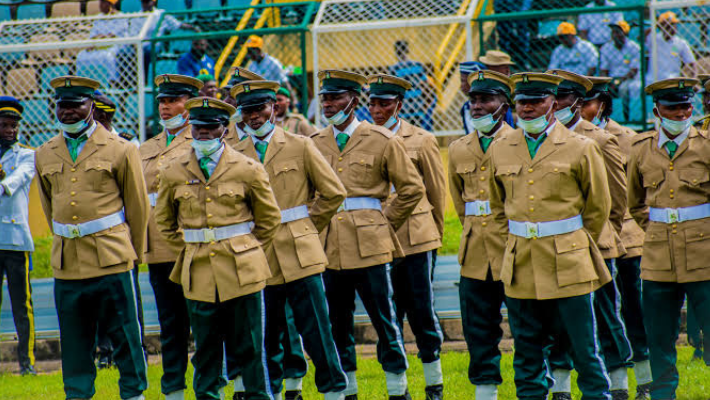
So-Safe corps nabs interstate tricycle thief in Ogun
The state commander, Soji Ganzallo, commended the operatives of the corps for their persistence, professionalism and tactical efficiency.
Economy
Refinery IPO investors are at no risk; they will reap bountiful returns, says Dangote VP
Mr Devakumar said, “The Dangote Refinery is one of the most significant industrial investments ever undertaken on the African continent.”
Hot news Home top
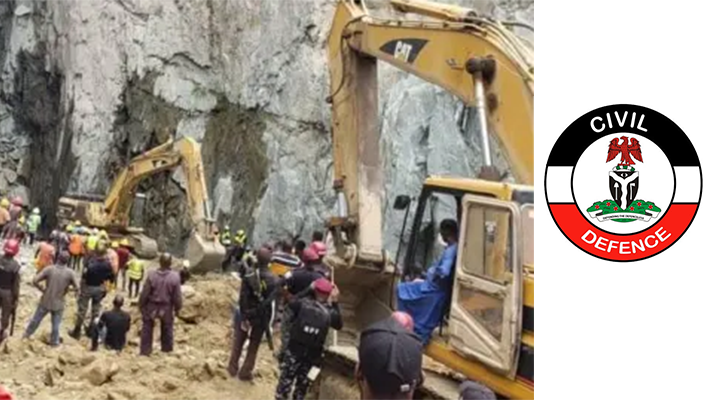
NSCDC names 23 officers detained over Niger miners’ deaths; orders corps’ flag to fly at half-mast across commands
Mr Afolabi noted that Mr Audi pledged on behalf of the service to continue to keep the public abreast on the outcome of the investigation.


