

Military years best for Nigeria: Babangida
![Former head of state, Ibrahim Badamosi Babangida. [PHOTO CREDIT: PM News]](https://gazettengr.com/wp-content/uploads/2020/10/Ibrahim-Badamosi-Babangida.jpg)
Ibrahim Babangida has credited military regimes for the few success stories Nigeria has recorded in public administration, contradicting the longstanding position of a plurality of Nigerians that the country’s deplorable state stemmed largely from unsolicited military interventions.
Mr. Babangida, who led a junta that ruled Nigeria from 1985 to 1993, said his government and other similar autocratic administrations before and after him improved the country’s infrastructure and even contributed to the emergence of its enduring civil rule.
“No, we didn’t provide problems. We tried to provide the framework upon which subsequent governments who are going to come after us could build upon,” Mr. Babangida told Channels TV in a recent interview. “Most of the infrastructural developments, even the democracy, we midwifed it. We started development, democracy, and a free-market economy.”
Nigeria attained independence in 1960. However, the country experienced 29 years of military rule characterised by gross human rights abuses, economic hardship, coup and counter coups.
Mr. Babangida’s claim underscored the perennial fissure between how everyday Nigerians and ex-military rulers remember the place of military dictatorships in the country’s 60-year history.
Starting with Aguiyi Ironsi in 1966 and ending with Abdulsalami Abubakar in 1999, the military regimes in Nigeria were filled with political drama, corruption, nepotism, abuses and even assassinations.
Mr. Babangida’s regime, for one, was responsible for a great deal of plunder, including the elusive Gulf War windfall which anti-graft campaigners estimated at over $12 billion. The retired dictator was also responsible for the annulment of 1993 presidential election reportedly won by Moshood Abiola. Mr. Abiola later died in detention in 1998 as he laboured to regain his mandate.
“Successive military regimes caused the collapse of civil service, so how did they midwife democracy?” Liborous Oshoma, a lawyer and public affairs analyst, told Peoples Gazette by telephone Saturday afternoon. “The military eroded democratic institutions.”
Mr. Oshoma, who took part in pro-democracy protests in the 1990s, said Mr. Babangida attempted to subvert democracy rather than joining its proponents.
“Babangida set up a kangaroo military tribunal that tried alleged coup plotters and eliminated them. Then people had no privileges to appeal against judgement of the military tribunal.
“When they wanted to hand over, the military drafted a constitution that reflected their mindset and that is why we have a federalism where a government goes to Abuja to take instructions and handouts. If not for coups, would we be discussing all these today?” Mr. Oshoma said.
Another lawyer in Abuja, Ken Eluma Asogwa, said the military intervention in governance marked a dark era in the country’s history.
“Nigeria had a blossoming economy in the ’60s. We had a regional system that was working for us before the military truncated our democracy in 1966 and made Nigeria a unitary state,” Mr. Eluma Asogwa said. “Today we call Nigeria a nascent democracy because the military never allowed it to work well.”

We have recently deactivated our website's comment provider in favour of other channels of distribution and commentary. We encourage you to join the conversation on our stories via our Facebook, Twitter and other social media pages.

More from Peoples Gazette

Agriculture
FG tasks ECOWAS on leveraging financing strategies for agroecology
The federal government has urged stakeholders in the agriculture and finance sectors in the West Africa region to leverage financing strategies to enhance agroecology practices

Politics
Katsina youths pledge to deliver over 2 million votes to Atiku
“Katsina State is Atiku’s political base because it is his second home.”
Africa
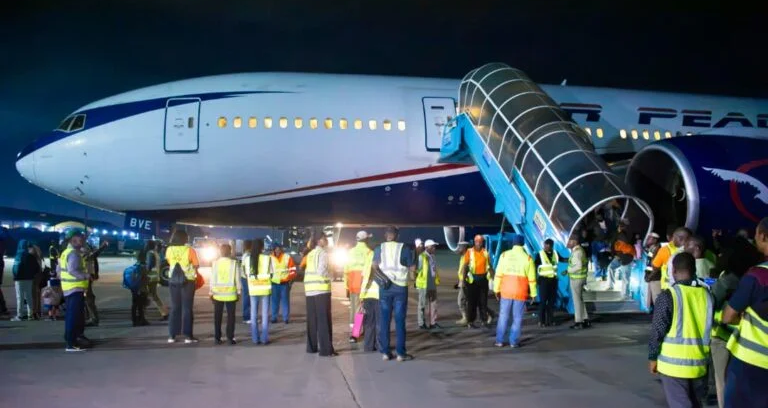
Air Peace ends of Nigerians fleeing South Africans’ xenophobic attacks
Air Peace has concluded the federal government’s humanitarian evacuation from South Africa, returning the final batch of 308 Nigerians aboard its Boeing 777-200 aircraft.

NationWide
NBC scraps annual digital TV access fee
The National Broadcasting Commission says Nigerians will no longer pay annual Digital Access Fees under the renewed Digital Switch Over project.

Economy
TransDigm abandons acquisition of Stellant Systems after DOJ’s decision to block transaction
TransDigm Group has abandoned its attempt to acquire rival defence and industrial component manufacturer Stellant Systems.

Abuja
Trump pressures Tinubu on terror prosecutions, protection for Christians
The U.S. pressed the Nigerian government to do more to protect Christians from attacks, and that greater efforts and resources must be allocated to the safe return of IDPs.
Abuja
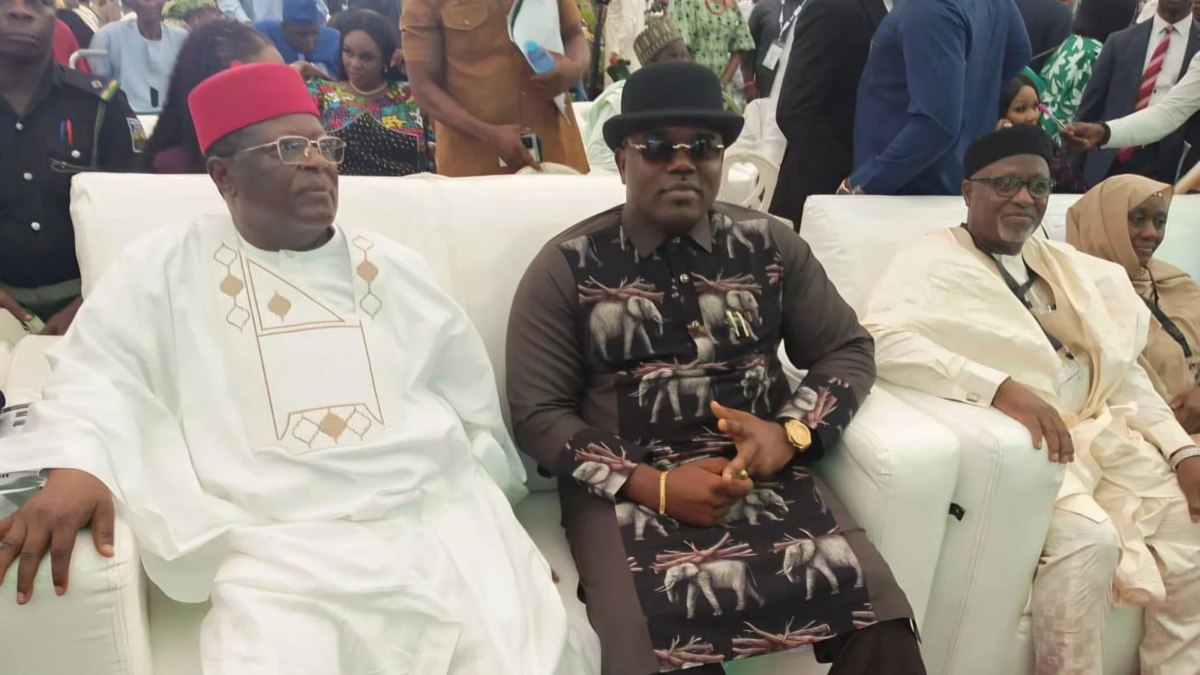
COREN Assembly: Tinubu seeks strong regulation, sanctions
Mr Tinubu said this at the opening of the 34th Engineering Assembly of the Council for the Regulation of Engineering in Nigeria in Abuja.

Heading 1
U.S. indicts bulletproof hosting firms Medialand, ML.Cloud, three Russians for cybercrime, wire fraud, money laundering
According to the indictment, 42 victims in 21 states were targeted by criminal groups who used Medialand’s and ML.Cloud’s services.


