

Nigeria requires $20 billion annually for gas expansion projects: NEITI

The Nigeria Extractive Industries Transparency Initiative (NEITI) says Nigeria requires $20 billion annually to achieve the desired gas expansion plan to bridge the country’s gas infrastructure.
Orji Ogbonnaya Orji, NEITI Executive Secretary, at a policy dialogue on Nigeria’s Decade of Gas Action plan on Monday in Abuja, said given the shrinking fossil fuel investment landscape, clarity was required for infrastructure to be prioritised.
The dialogue was organised by the African Initiative for Transparency, Accountability and Responsible Leadership (AFRITAL) in collaboration with the Natural Resource Governance Institute (NRGI).
The federal government in December 2020 rolled out the National Gas Expansion Programme (NGEP) to deepen the use of natural gas and make it a preferred form of cleaner, cheaper energy for both personal and industrial use.
In his remark, Mr Orji said Nigeria had the largest gas reserves in Africa and the ninth-largest globally with gas reserves of over 200 trillion cubic feet (tcf).
“The Petroleum Industry Act (PIA) provides the most significant progress for the gas sector in strengthening governance and providing fiscal frameworks for the sector’s growth.
“The gas utilisation plan should show the market-driven opportunities that would successfully translate the gas plans into sustainable economic development.
“For the gas utilisation policy to work, there is a compelling need for deliberate ambitious investment in its infrastructure. This includes specific connectivity across upstream facilities to processing, power plants and other end uses.
“The network code provides a framework through third-party access to resolve some of the connectivity issues but to a large extent, achieving the desired gas expansion will require an estimated $20 billion annually,” he said.
Mr Orji added that a new concept analysis would be required to demonstrate the new approaches the government intends to embrace to deliver on the gas infrastructure.
He recommended that the federal government should develop and publish a detailed, realistic, coated and comprehensive gas policy with clear roles for the state, and non-state actors and timelines to track periodic progress.
Mr Orji urged government to develop an industry-specific linkage between the integrated gas policy with Nigeria’s energy transition policies with a supporting action plan built on a robust monitoring and evaluation framework to track implementation.
He also called for a detailed plan to end gas flaring through a private sector-led commercialisation programme and pursue an open, competitive and transparent gas flare commercialisation programme.
Earlier, Louis Ogbeifun, the Executive Director AFRITAL, had decried the fact that Nigeria is so rich in gas, but most of its citizens use firewood or coal for cooking with all its attendant health hazards.
“Over the years, Nigeria has behaved like the prodigal son by exporting mineral resources to earn dollars for consumption without savings, reinvestment in revenue, and employment generation ventures.
“These analogies reflect the contradiction of being a rich but poor nation. Rich because Nigeria is vastly rich and blessed with abundant minerals and energy resources but so poor that most citizens lack access to affordable electricity and other essential social and welfare benefits,” Mr Ogbeifun said.
Also speaking, Aaron Sayne of NGRI called for tackling of foreign exchange and policy issues, investment and access to finance on gas projects while indigenous players should take the place of the International Oil Companies.
Oluremi Komolafe, Director, Gas, Ministry of Petroleum Resource, said the ministry was committed to energy transition.
Mrs Komolafe added that the NGEP was making way toward its realisation, while Compressed Natural Gas engines conversion was ongoing, noting that production would be spurred to meet demand.
(NAN)

We have recently deactivated our website's comment provider in favour of other channels of distribution and commentary. We encourage you to join the conversation on our stories via our Facebook, Twitter and other social media pages.

More from Peoples Gazette

Agriculture
FG tasks ECOWAS on leveraging financing strategies for agroecology
The federal government has urged stakeholders in the agriculture and finance sectors in the West Africa region to leverage financing strategies to enhance agroecology practices

Politics
Katsina youths pledge to deliver over 2 million votes to Atiku
“Katsina State is Atiku’s political base because it is his second home.”
NationWide
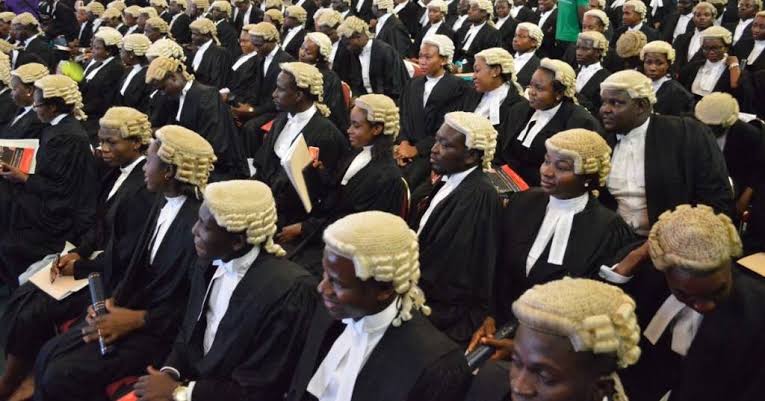
Wig, gown reserved for qualified lawyers: Legal Practitioners
The lawyers said only persons called to the bar and enrolled as solicitors of the Supreme Court of Nigeria are qualified to wear the legal regalia.

Health
Drug availability in Kano public health facilities has increased to 90%: Official
He said drug availability in public health facilities rose from 30 per cent to 90 per cent in three years.
Anti-Corruption
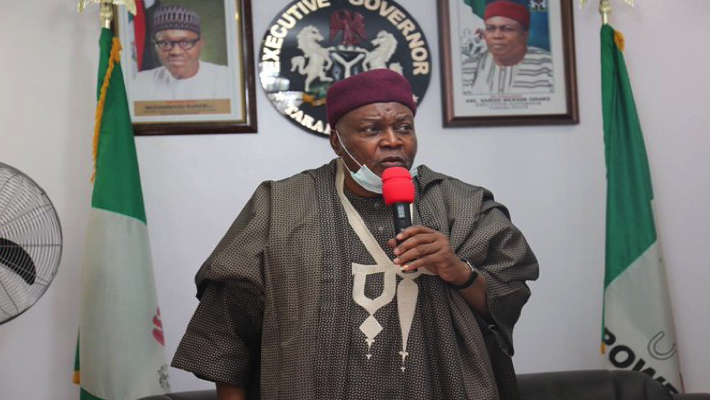
N1.8 billion was paid into my company account during ex-gov Darius Ishaku’s tenure, witness says
The witness said he received a total of 69 transfers from the Gassol Local Government Area of Taraba.

States
Troops arrest suspected arms trafficker in Kaduna
Troops of the Nigerian Army arrested a suspected arms trafficker in Zangon Kataf Local Government Area of Kaduna State.

World
EU to restrict children’s social media access among member states
She said the planned restrictions would be lifted gradually as children get older.

Lagos
Lagos official advocates greater inclusion of women in governance
She said women possess the competence, leadership qualities, and capacity required to contribute meaningfully to governance at all levels.


