

National Assembly workers demand retirement age extension to 65 years

Workers at the National Assembly want their retirement extended to 65 years of age or 40 years in service.
Retirement age in the federal civil service is 60 years or 35 years in service, whichever comes first.
Chairman of the Parliamentary Staff Association of Nigeria, Sunday Sabiyi, the National Assembly workers umbrella body, on Thursday in Abuja urged the Senate to pass the workers’ demand into law.
He stated that the extension of number of service years or retirement age was expedient as there was a dearth of qualified staff in the Legislature resulting in interruption of democracy by Nigeria’s military.
Mr Sabiyi explained that the number of few trained officers in the legislature had been further depleted by the Public Service Rule of 60 years of age or 35 years of service.
This, he also explained, had created a vacuum and shortage of qualified manpower in the legislative service.
He stressed that there was a need to extend National Assembly workers’ retirement age as proposed in a Bill before the National Assembly to maximise the knowledge and experience of the few trained staff.
Mr Sabiyi stated that the extension of retirement age would also build the capacity of young employees of the National Assembly Service.
“Considering the importance of legislative service as a specialised service globally, the passage of the Bill into law will strengthen the legislature and bring it into conformity with international best practices,’’ he stressed.
He urged the Senate to rightly exercise its legislative powers by passing the harmonised retirement age for staff of National Assembly Service in Nigeria Bill into law.
This, according to him, is for the stabilisation and development of capacity at the National Assembly service for the sustenance of democracy.
Mr Sabiyi added that it was also for fairness at the various arms of government in line with the doctrine of separation of powers.
The 8th Assembly, by resolution, passed the National Assembly Service Staff Regulations 2019 extending the retirement age for staff to 65 years of age or 40 years of service.
The harmonised retirement age for staff of both legislative houses was later introduced by the 9th House of Representatives, but was not passed.
(NAN)

We have recently deactivated our website's comment provider in favour of other channels of distribution and commentary. We encourage you to join the conversation on our stories via our Facebook, Twitter and other social media pages.

More from Peoples Gazette

Agriculture
FG tasks ECOWAS on leveraging financing strategies for agroecology
The federal government has urged stakeholders in the agriculture and finance sectors in the West Africa region to leverage financing strategies to enhance agroecology practices

Politics
Katsina youths pledge to deliver over 2 million votes to Atiku
“Katsina State is Atiku’s political base because it is his second home.”

Heading 5
Alleged Fake Agency: Police to arraign PFIPC DG Adeniyi Adeyemi Tuesday
Mr Adeyemi was alleged to have operated the fictitious agency from the 2nd Floor of the Federal Secretariat Complex in Abuja, Phase III, before his arrest.

States
Benue deputy governor demands justice for suspected killer herders’ victims
The deputy governor assured the people that the state government was committed to the protection of lives and property.

NationWide
NDLEA intercepts South African woman with heroin at Abuja airport
Mr Babafemi said the suspect concealed 14 large blocks of heroin weighing 5.75kg in her luggage.
Politics
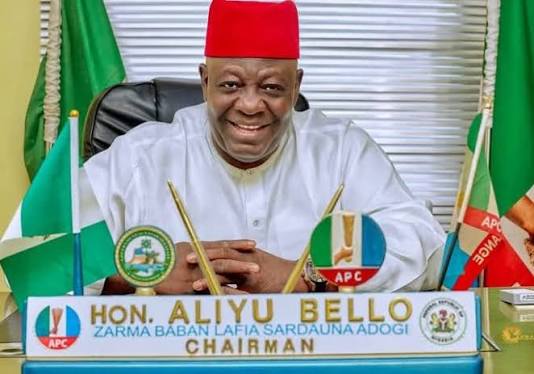
Opposition can’t unseat Tinubu in 2027; they’re in total disarray: APC Chieftain
Mr Bello dismissed reports of an emerging opposition coalition, insisting that the parties remained fragmented.

States
Ex-AGF Michael Aondoakaa mourns victims of Benue killings, demands action to end bloodshed
He said the latest killings highlighted the continued vulnerability of communities in Benue to violent attacks.

Africa
ICPC urges African leaders to scale up fight against anti-corruption
According to him, integrity, transparency, and the rule of law remain the foundation for sustainable development, democratic governance and economic growth in Africa.


