

ECOWAS says $5.2 billion needed to address infrastructure deficit in member states
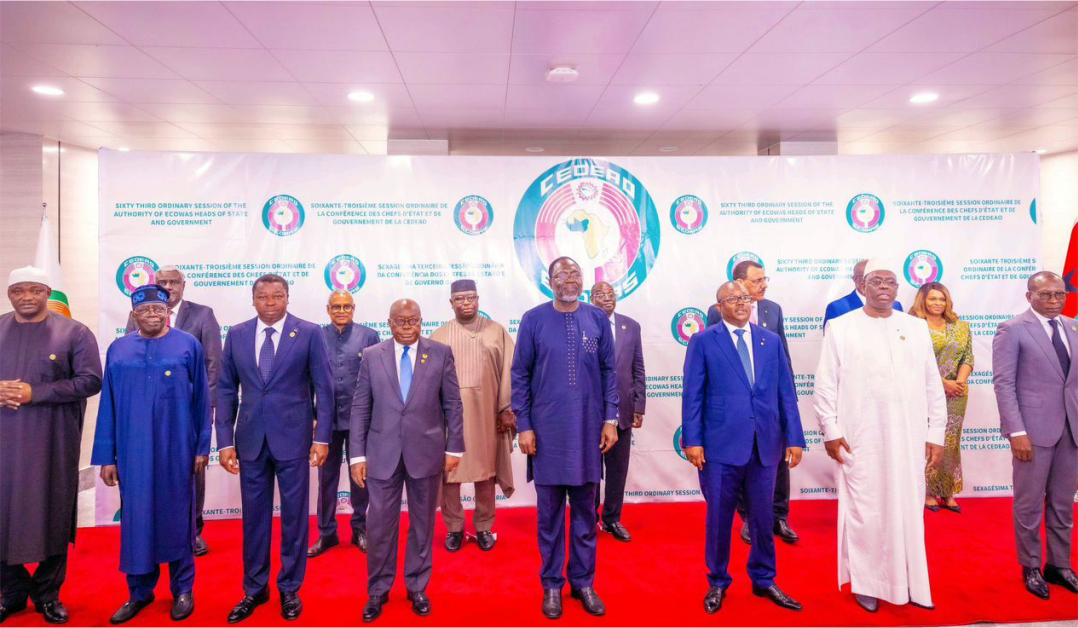
The Economic Community of West African States says it requires about $5.2 billion to address the infrastructure deficit and achieve its core objectives of driving the subregion’s economic growth.
The ECOWAS commissioner for infrastructure, energy and digitalisation, Sediko Douka, disclosed this during a news conference in Abuja on Thursday.
He said that to curb these challenges, the subregion’s leaders had earlier approved the creation of an ECOWAS fund to develop and finance the transport and energy sectors (FODETE).
Mr Douka explained that the fund was dedicated to financing regional infrastructure, particularly in the transport and energy sectors, and financed by taxing member states’ main export resources, such as agriculture, oil and gas, and natural minerals.
He described FODETE as a viable funding mechanism, expected to generate more than $350 million annually and would continue to grow over a projected 20-year period.
The ECWOAS official said that to address the numerous infrastructure challenges in West Africa, ECOWAS had implemented various regional electricity and energy programs and projects to promote subregional economic integration and growth.
“To address these challenges, ECOWAS set up specialised agencies in the field of energy, namely, the West African Power Pool (WAPP) in Cotonou, Benin. Others are the Regional Electricity Regulatory Authority (ERERA) in Accra, Ghana, the Centre for Renewable Energy and Energy Efficiency (ECREEE) in Praia, Cape Verde, and the West African Gas Pipeline Authority (WAGPA) in Abuja, Nigeria.
“The strategic objective of the WAPP is to integrate the operation of the Community’s national electricity grids into a unified regional electricity market, with a view to providing the citizens of ECOWAS Member States with a stable, regular, and reliable supply of electricity at a competitive cost in the medium and long term,” said Mr Douka.
According to him, WAPP promotes and develops electricity production and transmission facilities and equipment to achieve this objective and coordinates electricity trading among ECOWAS member states.
Mr Douka explained that the WAPP investment program was derived from the ECOWAS Master Plan for regional electricity production and transmission facilities, which is currently the 2019-2033 plan.
He said that ECOWAS also embarked on a Regional Electricity Access Project (ECOREAP) and Battery Energy Storage System (BEST) to enhance member states’ efforts in electricity supply.
He said the project, financed by the World Bank with $225 million and targeted 1,075 villages in Gambia, Guinea Bissau, and Mali, was to facilitate the connection to the electrical grid for 1.1 million households in nearly 600 localities.
He said that ECOWAS also embarked on the Regional Electricity Access Project (ECOREAP) and Battery Energy Storage System (BEST), which aim to enhance member states’ efforts in electricity supply.
Mr Douka said ECOWAS also embarked on a Regional Off-Grid Electricity Access Project (ROGEAP) to increase electricity access rates for households, commercial enterprises, and community institutions.
The project, which was funded by the World Bank with $338.7 million, is being implemented in 19 countries, including the 15 ECOWAS member states, Chad, Cameroon, Mauritania, and the Central African Republic.
The Commissioner said that ECOWAS also initiated the regional electricity market in June 2018, and ERERA and WAPP oversaw its implementation.
He said that several projects were underway in renewable energy to increase energy capacity and access to electricity, particularly for rural populations.
(NAN)

We have recently deactivated our website's comment provider in favour of other channels of distribution and commentary. We encourage you to join the conversation on our stories via our Facebook, Twitter and other social media pages.

More from Peoples Gazette

States
Independence: NBA urges Nigerians to expect better future
The NBA said that ordinary Nigerians should be deriving benefit from the subsidy removal rather than hardship.

Agriculture
FG tasks ECOWAS on leveraging financing strategies for agroecology
The federal government has urged stakeholders in the agriculture and finance sectors in the West Africa region to leverage financing strategies to enhance agroecology practices

Politics
Katsina youths pledge to deliver over 2 million votes to Atiku
“Katsina State is Atiku’s political base because it is his second home.”
Economy
Nigeria, AfDB agree to review ongoing projects to speed up delivery
The Nigerian government and the AfDB have agreed to review projects the bank funds across the country to identify challenges slowing progress and speed up delivery.
Abuja
Spain-Nigeria bilateral relations will continue to improve, envoy says
Spain says bilateral relations with Nigeria continue to improve, with prospects for stronger cooperation in trade, investment and other areas of mutual interest.
Economy
Diesel deal with Russia ‘out of the question’, says Germany
German Chancellor Friedrich Merz on Monday said that the recent agreement between the U.S. and Russia regarding diesel exports is “out of the question” for Germany and Europe.
Economy
AfDB, Family Bank sign $10 million deal to support trade in Kenya
AfDB and Family Bank have signed a $10 million Trade Finance Line of Creditto expand Kenyan businesses’ access to foreign-currency financing.

Heading 3
UBEC begins distribution of two million packs of sanitary towels to improve school attendance
Ms Garba said the initiative was designed to address barriers to girls’ education.
States
Police nab six armed robbers, recover weapons in Oyo
The police boss reaffirmed the command’s resolve to sustain intelligence-led operations against criminals.


