

Nigeria’s democracy and failure of leadership

All of Nigeria’s problems point towards one direction: a failure of leadership. Everything wrong with the country starts with this failure of leadership, even the quality of followership is affected by the quality of leadership. Then there is the kind of democracy practised in Nigeria, a problematic kind of democracy that is definitely caused by the failure of leadership that the country experiences.
There are different definitions given to forms of government in countries that claim to practice democracy in theory but cannot, in truth, be called “democratic” countries.
In the book ‘Corruptive Patterns of Patronage in South East Europe’ edited by P.K. Georgiev, he referred to “quasi-democracies” as “specific patterns of voting behaviour, election procedures, and institutional mal-functioning that have shaped in the years of transition in most countries in South East Europe (but also beyond it)… they have shaped a culture of oppressive arrogance to differ from some repressive tolerance relevant to modern societies… this culture feeds on eclectically leased values of rest-totalitarianism, irrelevant to the embedded norms of western democracy.”
This explanation of quasi-democracy is very close to the kind of democracy that is practised in Nigeria.
Then there’s Anocracy, which R.J. Sternberg and Christian Fischer describe as a quasi-democracy. It is another form of government that is also very close to what we call democracy in Nigeria. Anocracies are part democracy and part dictatorship, they are characterised by regimes that mix democratic and autocratic features and are vulnerable to political instability and conflict.
This is what years of failure of leadership get a country: quasi-democracies and anocracies. Democracy in itself is not a perfect system of government; it’s a system with flaws and, in some cases, impracticable. It is a system where a lot of basics need to be put in place for it to function properly. However, when all the basics needed to make it a success are in place, a democratic form of government is the best form of government for a country.
The democracy espoused by the ancient Greeks, with a definition made popular by Abraham Lincoln, described democracy as a government of the people, by the people and for the people, is the democracy that countries should strive for. For all its faults, the idea of democracy is to give people a sense of belonging, a sense of purpose in a country they hold allegiance to; this is definitely not what we get in Nigeria.
None of this was more evident than in last year’s general election. Nigeria’s quasi-democracy doesn’t just show itself during the electoral process, it also shows itself in how the country is governed post-election. Politicians who do not bother with respecting the tenets of democracy, whose foundation rests on a free and fair electoral process, will not be bothered to properly govern the people they lead; they are not particular with being great leaders, their leadership qualities or lack of are not the reasons they are in positions of power.
So, after one year of retrogression as a people, there’s no point in asking Nigerians how the last year of this administration has been; we all know how we have fared as a people. There is really no need to ask questions because everywhere you turn, you see the answers you seek; you see Nigerians living on the brink, a country teetering on the edge of complete economic collapse.
There is no need to ask Nigerians to celebrate Democracy Day. They know their country’s democracy is a farce. Nigerians know they don’t have leaders. They have rent-seeking politicians waiting to get their share of the country’s wealth; not caring that in fact the country is a poor country, filled with very poor people.
The disaster of the first year cannot be masked by changing the national anthem or, rather, reverting to a national anthem that was given to Nigerians by the colonialists. There was no form of review to show a level of critical reasoning to national issues. No attempt to improve on the anthem and make it into a truly Nigerian anthem, no attempt to fuse the old with the new and come up with something that truly reflects our national spirit.
This same lack of thoughtlessness in policy development and implementation has been the defining characteristic of the leadership of the past year and the eight years before. It shows you that the people in power are only good at mismanaging Nigeria; there will be another three years of haphazardness, and Nigerians will greatly suffer, as usual.
May God help us all.
Kelechi Belinda Udeogu has a PhD in development and political communication.

We have recently deactivated our website's comment provider in favour of other channels of distribution and commentary. We encourage you to join the conversation on our stories via our Facebook, Twitter and other social media pages.

More from Peoples Gazette

Agriculture
FG tasks ECOWAS on leveraging financing strategies for agroecology
The federal government has urged stakeholders in the agriculture and finance sectors in the West Africa region to leverage financing strategies to enhance agroecology practices

Politics
Katsina youths pledge to deliver over 2 million votes to Atiku
“Katsina State is Atiku’s political base because it is his second home.”
Heading 4
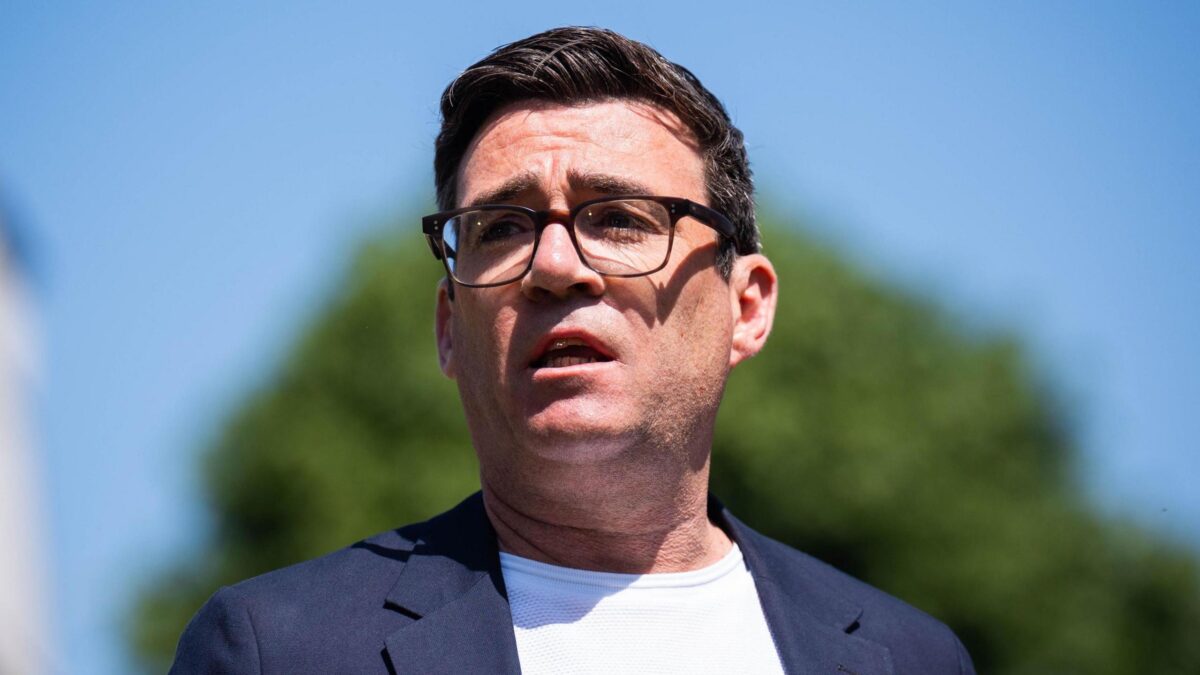
UK women, partners to get two weeks’ bereavement leave after miscarriage from next year
“From April, women and their partners will be entitled to two weeks off after any pregnancy loss,” Mr Burnham said.
Africa
Climate Change: 32 million West Africans may become refugees by 2050, says ECOWAS
ECOWAS says 32 million West Africans risk being displaced from their communities due to climate change.
States
Navy recovers 182,000 litres of suspected stolen crude oil in Rivers
The Nigerian Navy recovered 182,000 litres of suspected stolen crude oil in Rivers.
Economy
Edible oil tanker drivers suspend planned strike
NUEOTDN President Ilias Aperun said the decision followed interventions by the federal government and the State Security Service (SSS).
States
Lagos APC governorship candidate Hamzat rallies voters for 2027
Mr Hamzat expressed concern about declining voter participation, noting that of the 6.2 million registered voters in Lagos in the last election, only about 1.2 million voted.
Economy
NMDPRA begins consultations on anti-competition regulations in petroleum sector
The proposed regulations are designed to address abuse of dominance and promote fair, non-discriminatory access to essential petroleum infrastructure.


