

Ivory Coast bans student unions in universities following killing of two

The Ivory Coast government has banned the activities of all student unions in the country after the killing of two students identified as Khalifa Diomandé and Zigui Mars Aubin Déagoué.
The National Security Council (CNS) announced the ban on Thursday after a meeting chaired by President Alassane Ouattara, in response to a proposal made by the country’s minister in charge of higher education.
The statement noted that “the dissolution of all student union bodies which were established in the 1990s” was aimed at curbing violence in the country’s university campuses and schools.
Some members of the Student and School Federation of Côte d’Ivoire (FESCI), suspected to be behind the killings that occurred in August and September 2024, have been arrested.
The government, aside from opening a judicial investigation, has dislodged everyone living irregularly on university campuses, which has led to the arrest of 17 students, including the general secretary of FESCI.
In the same vein, the government has also dislodged about 5,000 people living irregularly in the university towns of Abidjan, Bouaké, and Daloa, while seizing over 100 machetes and grenades, as well as destroying illegal businesses during the raids in these areas.
The CNS, at the meeting, expressed satisfaction with the results of the enforcement operations, which, according to it, have restored “the necessary calm for the smooth running of academic activities.”
The government, therefore, vowed to “maintain and vigorously pursue” all sanitation measures for university campuses “in order to eliminate all illegal practices.”
Investigators sent to the Félix-Houphouët-Boigny University in Abidjan discovered a brothel and a tunnel where victims were tortured. Students told the BBC that both places, run by FESCI, are known to them, but they can’t speak about it due to fear.
A former student at the university, who preferred to remain anonymous, told the BBC, “You wouldn’t have believed you were in a university in an organised country,” adding, “I was threatened by FESCI many times; they tried to rape me.”
Stating that she is still traumatised and has not been to the campus since she dropped out after her ordeal eight years ago, she recounted, “My boyfriend tried to stand up for me, and he was beaten up.”
She also stated that she had, on a few occasions, paid FESCI members to leave her alone, adding, “I don’t know how it lasted so long, but now I feel relieved for the victims.”
FESCI, which has long been an anti-government protest group, has been alleged to be involved in organised crime, while some of its members have delved into politics.

We have recently deactivated our website's comment provider in favour of other channels of distribution and commentary. We encourage you to join the conversation on our stories via our Facebook, Twitter and other social media pages.

More from Peoples Gazette

Agriculture
FG tasks ECOWAS on leveraging financing strategies for agroecology
The federal government has urged stakeholders in the agriculture and finance sectors in the West Africa region to leverage financing strategies to enhance agroecology practices

Politics
Katsina youths pledge to deliver over 2 million votes to Atiku
“Katsina State is Atiku’s political base because it is his second home.”
Africa
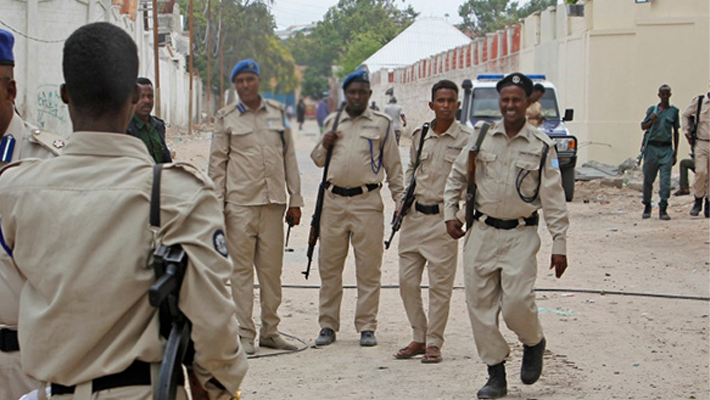
Fresh clashes in Somalia leave children dead, others injured
The fresh clashes began on Monday.

NationWide
CIoD seeks stronger board leadership amid AI, economic shifts
Mr Nolas-Alausa said the new economy presented both opportunities and responsibilities.

Heading 1
Tinubu extends 2025 budget implementation to December
The extension gives ministries, departments and agencies (MDAs) additional time to complete ongoing capital projects.

Economy
Dangote to deliver $16 billion East Africa refinery in 40 months
According to Mr Dangote, the Kenyan refinery would be one of the fastest major projects undertaken by the group.

Anti-Corruption
Police nab two Indians, seven others over alleged N6.2 billion internet fraud
The AIG said the NPF-NCCC was also engaging international partners as part of the ongoing investigation.

Heading 4
Independence Celebration: Abia, Imo stakeholders differ on Tinubu’s performance
Mr Ubani said the stabilisation of the naira had allowed access to forex based on market forces.


