

Rafael Nadal: A sport legend who transformed tennis
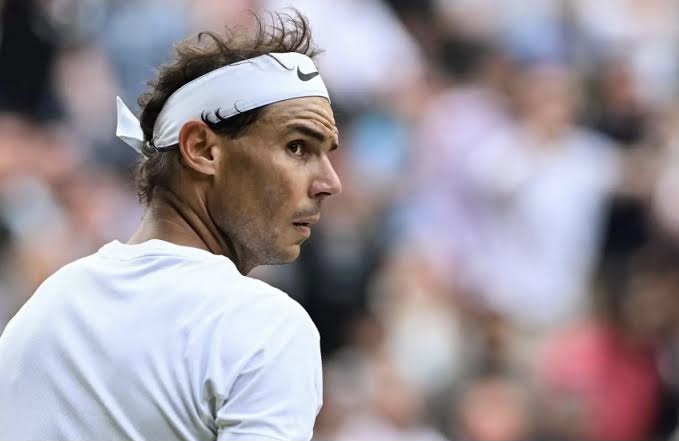
For nearly two decades, Rafael Nadal has been one of the most influential figures in tennis, a player whose impact extends beyond the court. From his revolutionary playing style to his evolution, Nadal’s story is one of talent, determination, and loyalty to his roots.
A man of many contradictions, Nadal combined humility with an unrelenting competitive spirit. Though his career ended without a final victory, his legacy is marked by 22 Grand Slam titles, a reign as the “King of Clay,” and his role in one of the greatest rivalries the sport has ever known.
One of the most fascinating aspects of Nadal’s career was his ambidexterity. While he writes and signs autographs with his right hand, he plays tennis with his left. This signature style was a result of his uncle and coach, Toni Nadal, who recognized his nephew’s potential from an early age and sought to maximize it.
He said, “When I was a kid, I played forehand and backhand with both hands. One day, Uncle Toni told me to try playing with just my left hand because my left foot was stronger in football. It felt natural, and it worked.”
This decision gave Nadal a strategic advantage, allowing him to hit powerful, topspin-heavy forehands that forced right-handed opponents off the court. It became a cornerstone of his game and one of the reasons for his dominance on clay courts.
Nadal’s family in Manacor, a small town in Mallorca, Spain, was steeped in sports. His father, Sebastian, played lower-division football, while his uncle, Miguel Ángel Nadal, was a renowned defender for Barcelona and the Spanish national team, earning a reputation as one of the toughest players in football history.
Despite his family’s footballing pedigree, Nadal gravitated toward tennis. As a child, he split his time between football and tennis, excelling in both. But at age eight, everything changed when he won the under-12 tennis championship. This victory marked a turning point, with people beginning to recognize his extraordinary talent.
Nadal’s rise to the top was shaped by his uncle Toni, who took over his training and became a constant presence in his career. Toni emphasized discipline, humility, and a relentless work ethic. He also worked on refining Rafa’s game, encouraging him to develop a more aggressive approach and frequent the net, even though he was already dominating from the baseline. It was Toni who pushed Nadal to switch to his left hand, a decision that proved instrumental in his success.
“We’ll do it as soon as possible so he gets used to it and doesn’t find it strange,” Toni said during Nadal’s early years.
Nadal’s career was defined by his extraordinary success on clay, a surface he mastered with his relentless athleticism, heavy topspin, and tactical acumen. He won a record 14 Roland Garros titles, solidifying his status as the greatest clay-court player in history.
However, his journey wasn’t without struggles. In 2009, Nadal experienced one of the most challenging years of his career. After a dominant start to the season, he suffered his first-ever defeat at Roland Garros, losing to Robin Soderling in the fourth round.
“I know how he plays and how dangerous he can be. I fought, but sometimes fighting is not enough,” Nadal said after the match.
Later that year, he was unable to defend his Wimbledon title due to tendonitis in his knees. Compounding his difficulties, Nadal faced personal turmoil as his parents separated; an episode that deeply affected him.
From the beginning of his career, Nadal was a trendsetter. As a teenager, his sleeveless tops and muscular physique made him a standout on the court. Nike, his sponsor, initially embraced this bold image but later transitioned him to more conventional attire to boost sales of everyday clothing lines.
Nadal also remained loyal to Babolat throughout his career. The company developed custom rackets to suit his heavy-hitting style, including the AeroPro Drive, a racket that revolutionized tennis equipment with its aerodynamic design and distinctive yellow-and-black colour scheme.
Before Nadal, clay-court tennis was dominated by players with finesse and creativity. Nadal, however, brought an entirely new style to the surface. His incredible speed and stamina allowed him to chase down seemingly impossible shots, while his topspin-heavy strokes forced opponents into awkward positions.
Michael Chang, the 1989 Roland Garros champion, once explained Nadal’s ascendancy:
“The fact that he was left-handed meant that all opponents were travelling the other way. Powerful forehands would usually come into the backhand of a right-handed player and send him off the court. Especially with his tremendous spin. It’s hard to play against that.”
Nadal’s career coincided with the golden era of tennis, dominated by the “Big Three”: Roger Federer, Novak Djokovic, and Nadal himself. Each brought a unique style and personality to the sport, pushing one another to new heights.
Their rivalries elevated tennis to unprecedented levels of popularity and competition.
Nadal finished his career with 22 Grand Slam titles, cementing his place as one of the greatest players of all time. When Nadal played his final match, he reflected on what truly mattered to him.
He said, “I want people to remember me not just for my titles but as a good person from a small village in Mallorca.’’
His departure wasn’t marked by a grand victory but by the same determination and grit that defined his career. Refusing to give up until the final point, Nadal’s farewell encapsulated the spirit of a champion who always fought with his heart.
Rafael Nadal’s legacy goes beyond his trophies and accolades. He changed the way the game is played, inspired millions, and left an indelible mark on tennis and sports history.

We have recently deactivated our website's comment provider in favour of other channels of distribution and commentary. We encourage you to join the conversation on our stories via our Facebook, Twitter and other social media pages.

More from Peoples Gazette

Agriculture
FG tasks ECOWAS on leveraging financing strategies for agroecology
The federal government has urged stakeholders in the agriculture and finance sectors in the West Africa region to leverage financing strategies to enhance agroecology practices

Politics
Katsina youths pledge to deliver over 2 million votes to Atiku
“Katsina State is Atiku’s political base because it is his second home.”

States
INEC integrates NIN into voter register ahead of 2027 polls
The Oyo State government says it has renewed its drive to bring all hospitality businesses into the tax system.

NationWide
INEC integrates NIN into voter register ahead of 2027 polls
INEC says it has integrated NIN into its system to audit, verify, and clean the national voter register.

Sport
Zverev criticised over lengthy second-serve routine at U.S. Open
German tennis star Alexander Zverev has been criticised for his lengthy second-serve routine at the U.S. Open final.

States
Ondo senator Faduyile disowns fake social media handle
Mr Faduyile said scammers were using the fake account to solicit money from unsuspecting members of the public under the pretext of awarding non-existent Abuja contracts.

Economy
Nigeria’s inflation rate dropped to 15.39% in August: NBS
August headline inflation rate fell by 0.04 per cent to 15.39 per cent, down from 15.43 per cent in July.
NationWide
NAPTAN opposes FG’s concession of King’s College
Mr Yau-Nabayi said, “Education is not a revenue-generating agency; our schools are not revenue-generating agencies.”


