


Energy expert urges FG to deploy tech solutions against pipeline vandalism
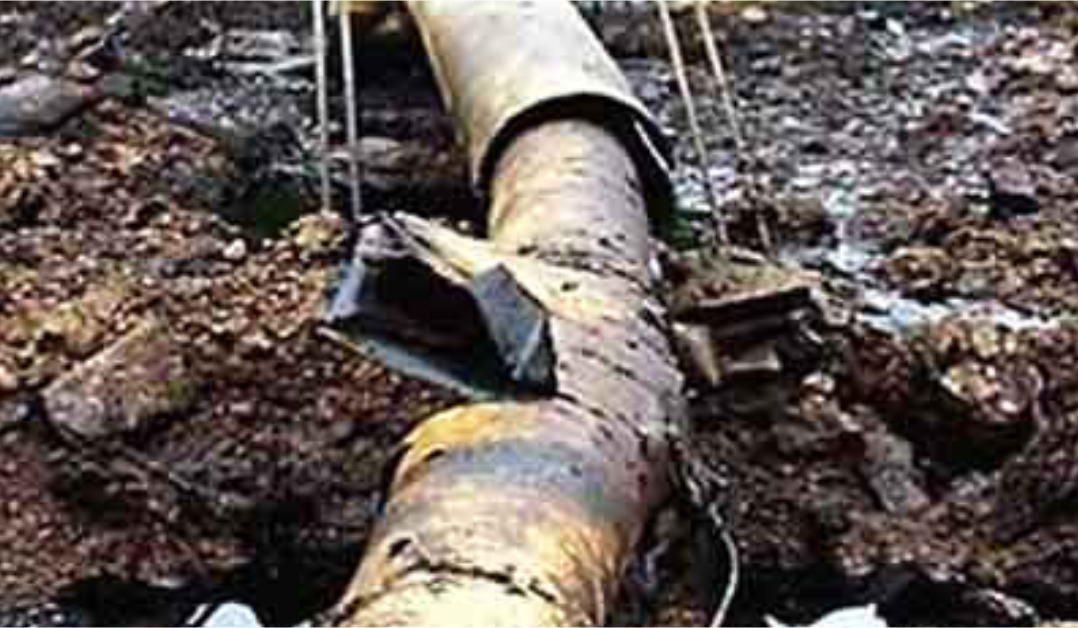
An energy lawyer, Ayodele Oni, has called on the federal government to use modern technology to combat pipeline vandalism.
Mr Oni, a partner at Bloomfield Law Firm, recommended deploying drones, pipe-in-pipe systems, fibre-optic sensors, and pressure-drop-controlled flow stations to enhance pipeline monitoring and functionality.
He gave the advice in an interview with journalists on Friday in Lagos.
He said these recommended strategies would safeguard the nation’s pipeline system from continuous vandalisation.
According to Mr Oni, strengthening security measures is essential for curbing illegal activities and ensuring a steady revenue flow from oil and gas, which are critical to the country’s development.
He further explained that ensuring a steady supply of feedstock was essential for achieving optimal refinery production, which would help meet domestic fuel demand and reduce dependence on fuel imports.
He said, “Local refineries must explore various options to ensure continuous access to feedstock, which is necessary to maintain optimal refining levels.
“The distance from the feedstock source and its type can affect refining economics, and refineries must minimise dependency on the government for supply.”
Mr Oni said that establishing strategic partnerships with upstream oil producers and situating refineries near crude sources could guarantee a steady supply of crude.
He noted that conventional refineries with larger crude requirements might consider sourcing from international markets.
The expert added that co-locating modular refineries within existing refineries or onshore marginal fields could prove beneficial.
Mr Oni, however, stated that damaged pipelines, shallow water channels, and inadequate logistics and infrastructure were significant challenges facing the refining sector and the broader oil and gas industry.
He explained that pipeline damage had consistently disrupted crude supply while the country’s rail and inland waterway systems remained suboptimal for transporting large volumes of oil and refined products.
To address these issues, Mr Oni called for significant investments in rail systems, dredging, and barges to facilitate efficient transportation.
He stressed that a robust intermodal transport system, combining rail, inland waterways, and road transport, would be essential for optimal refined product distribution,
He also advocated for public-private partnerships (PPP) to bridge Nigeria’s infrastructure gap.
On boosting domestic production, Mr Oni lauded the Dangote Integrated Refinery, which has a refining capacity of 650,000 barrels per day (bpd).
He said that the 20-billion-dollar refinery, which began operations in January, had already started producing products such as naphtha and jet fuel.
According to OPEC’s 2021 World Oil Outlook, Africa’s medium-term oil outlook is more optimistic, with 1.2 million bpd of new capacity expected by 2026, half of which will come from the Dangote refinery.
He said that since its commissioning, the Dangote refinery has reduced fuel imports, saved foreign exchange, and alleviated fuel shortages in the country.
He said that the refinery, with an estimated production of 330,000 bpd of petrol, accounts for over one per cent of global petrol demand.
Mr Oni also mentioned that the Nigerian National Petroleum Company Ltd. (NNPCL), had announced the re-streaming of the Port Harcourt refinery, signalling the government’s commitment to enhancing crude oil processing and delivering petroleum products to the market.
He noted that this project involves engineering, procurement, construction, installation, and commissioning (EPCIC) efforts aimed at restoring the refinery’s full functionality.
He stated that in the final quarter of 2024, Nigeria achieved a significant milestone: crude oil and condensate production reached 1.8 million barrels per day (bpd).
Mr Oni described this achievement as a major step towards meeting OPEC’s production quota, which Nigeria had struggled to fulfil for several years.
(NAN)

We have recently deactivated our website's comment provider in favour of other channels of distribution and commentary. We encourage you to join the conversation on our stories via our Facebook, Twitter and other social media pages.

More from Peoples Gazette

Agriculture
FG tasks ECOWAS on leveraging financing strategies for agroecology
The federal government has urged stakeholders in the agriculture and finance sectors in the West Africa region to leverage financing strategies to enhance agroecology practices

Politics
Katsina youths pledge to deliver over 2 million votes to Atiku
“Katsina State is Atiku’s political base because it is his second home.”
States
One killed, three injured after gunman invaded Kano wedding: Police
Police said they arrested a 34-year-old man, Rabiu Mukhtar, in connection with the attack.

Heading 1
At least 30 killed, 60 abducted in terrorist attacks on four Niger communities
“The main attack largely took place in Dekara community, where over 30 people were killed, and over 60 people were taken away,” he said.
NationWide
2027: Matawalle urges prayers for peace
Mr Matawalle urged Muslims in Nigeria to use the Maulud period to pray for peace ahead of the 2027 elections.


States
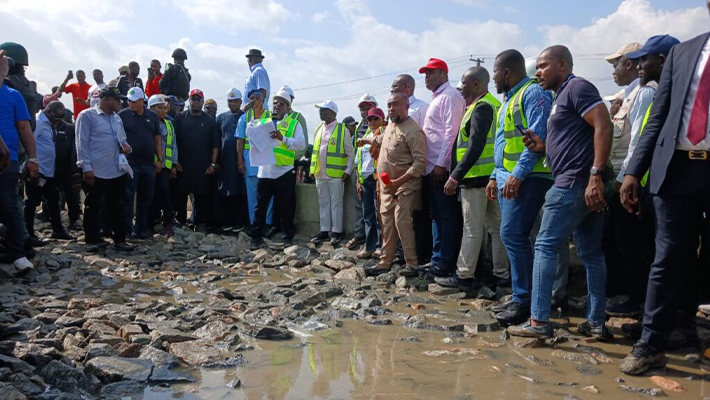
Umahi apologises over Benin-Sapele road, orders arrest of contractors
Mr Umahi apologised to commuters for the deplorable condition of the Benin-Sapele road, which he said has caused untold hardship.
States
FG to review Benin-Asaba highway concession over poor handling
Mr Umahi said the concessionaire lacked the technical competence required to execute the project.


