

LCCI seeks policy interventions to tackle structural weaknesses, balance capital inflows

The Lagos Chamber of Commerce and Industry has urged policy interventions to address the structural weaknesses that are undermining the economy and to balance capital importation. LCCI director-general Chinyere Almona said this in a statement on Thursday.
Ms Almona said that while headline inflation eased for the fourth consecutive month to 21.88 per cent in July from 22.22 per cent in June, month-on-month inflation rose to 1.99 per cent from 1.68 per cent, showing persistent price pressures.
She noted that, despite increased capital inflows in Q1 2025, structural imbalances continued to weigh on the economy.
“Though inflation is moderating annually, food inflation remains elevated at 22.74 per cent year on year, with rural communities experiencing sharper monthly increases than urban centres.
“This persistent rise in food costs underscores the urgent need for targeted interventions in agriculture, rural infrastructure, and logistics efficiency to ease supply-side bottlenecks.
“We need policy interventions that support more productive economic activities, create sufficient supply, make goods available at the right places, create jobs, and let businesses thrive in an enabling business environment,” she said.
Ms Almona called for interventions that addressed energy costs, power supply, logistics, infrastructure deficits, bottlenecks in licensing and registration, access to credit, and foreign exchange liquidity through non-oil exports.
Regarding capital importation, she noted that Nigeria attracted $5.64 billion in the first quarter of 2025, representing a 67 per cent year-on-year increase and an 11 per cent growth quarter-on-quarter.
Ms Almona said the surge signalled renewed investor interest but noted concerns over the structure of inflows.
She said that particularly worrisome was the continued decline in investment into manufacturing, which attracted only $129.92 million in Q1 2025, a 32 per cent drop from the same period in 2024.
According to her, weak inflows into this critical sector reflect persistent challenges around foreign exchange liquidity, energy costs, job losses, and operating uncertainties.
“Over 90 per cent of total inflows were in portfolio investments, short-term funds chasing high yields in government securities. By contrast, Foreign Direct Investment (FDI) plunged to $126.29 million, down 70 per cent from the previous quarter, accounting for just 2.24 per cent of total inflows. This imbalance reveals that investors remain cautious about making long-term commitments to Nigeria’s real sector,” she said.
Ms Almona called for urgent measures to translate macro-level gains into broad-based, sustainable growth. She advocated deepened structural reforms to create “a more efficient oil and gas sector that supports cheaper energy and logistics costs and increased power supply”.
The LCCI director general called for strengthened incentives for FDI, including stable tax and regulatory frameworks that reduced perceived risks.
She said Nigeria must rebuild domestic investor confidence, as local capital commitments often preceded foreign inflows.
“The easing of headline inflation and the rise in capital inflows are encouraging signals. However, we must not lose sight of Nigerian households grappling with rising costs, and investors are hesitant to commit long-term capital. Our economy urgently needs a deliberate strategy to attract and retain productive investment that drives jobs, industrial growth, and long-term competitiveness,” she said.
(NAN)

We have recently deactivated our website's comment provider in favour of other channels of distribution and commentary. We encourage you to join the conversation on our stories via our Facebook, Twitter and other social media pages.

More from Peoples Gazette

States
Independence: NBA urges Nigerians to expect better future
The NBA said that ordinary Nigerians should be deriving benefit from the subsidy removal rather than hardship.

Agriculture
FG tasks ECOWAS on leveraging financing strategies for agroecology
The federal government has urged stakeholders in the agriculture and finance sectors in the West Africa region to leverage financing strategies to enhance agroecology practices

Politics
Katsina youths pledge to deliver over 2 million votes to Atiku
“Katsina State is Atiku’s political base because it is his second home.”
Economy
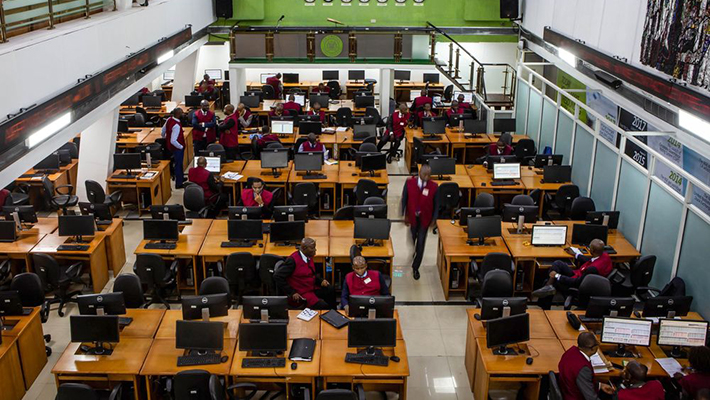
NGX investors lose N2.9 trillion in two days as stocks decline
Investors on the Nigerian Exchange lost about N2.9 trillion in two trading sessions as sharp declines in major listed companies’ share prices dragged down the market.

States
Police arrest seven suspects for plotting to kidnap Kwara businessman
The police command in Kwara says it has arrested seven suspects over an alleged plot to kidnap a businessman in Bode Saadu.
Economy
Afreximbank launches free training for African creatives
Afreximbank launched a capacity-building programme to equip African creative professionals and entrepreneurs.

Economy
FG, states, LGs share N2.44 trillion as oil, tax revenues decline
FAAC shared N2.441 trillion among the federal, state and local governments as revenue generated in October, amid a decline in oil earnings and major tax receipts.

Economy
NNPC, CBN sign deal to boost oil revenue, attract investment
The Nigerian National Petroleum Company Limited and the Central Bank of Nigeria have signed an agreement to boost foreign exchange inflows.

Economy
Fitch projects Nigeria’s interest rate to fall to 18.6% by 2028
Fitch projected that Nigeria’s average monetary policy rate will decline to 18.6 per cent by 2028, as inflation eases and the CBN gradually reduces borrowing costs.


