

Fare thee well, Nnaemeka Okwelume

Nnaemeka Okwelume is dead.
He was my classmate at Nnobi High School. The last time I heard from him was last week when he commented on one of my social media posts. He sympathised with my small efforts to get our people to put on the proverbial thinking caps and asked, almost rhetorically, “How many of our people still read books?”
I don’t remember what I replied. I don’t even want to go back and check. It doesn’t matter anymore. If I had known that would be our last exchange, I might have spent more time crafting a response worth remembering.
Perhaps I would have told him how much I admired his dedication to public service—a thankless calling where one sacrifices time and resources only to receive criticism and abuse in return.
But I assumed he’d always be around. I thought there would be a day when I’d pause and truly appreciate him.
He wasn’t the first classmate I’ve lost. Some died back in school. Yet this one pierced deeper than the rest.
You probably expect me to explain why Nnaemeka’s death hurts so much. Maybe you want a tribute, a few heartwarming anecdotes. But I won’t do that. I’ve done it before, and it only made readers feel a fraction of my pain. It did nothing for me, and it won’t do anything for you.
For Nnaemeka, I want to do something different.
What if you—the one reading this—are next?
Don’t stop now. You’ve already begun. Pausing won’t change fate.
If I told you your death would come in the next six weeks, how would you live the next 84 days?
Death picks us off one by one. That bastard is sly; it works quietly so we don’t panic. It wants us to keep living as though it’s not lurking around the corner.
But what if today really is your last day?
We don’t like to think about it. We cover ourselves with the blood of Jesus and say, “Tufiakwa. It’s not my portion.”
But it could be.
Someone reading this will die next. Despite prayers, protests, and passionate appeals to God, it could still be you.
So what will you do about it? How will you prepare? What will you change?
Or will you pretend it won’t be you—until it is your turn?
Nnaemeka Okwelume is dead.
You probably didn’t know him. Nothing I share about our high school days will make you know him as I did. Even if I tell you about his wife, his children, or the day he came to my book presentation in Lagos, it’ll only make you murmur, “Eyaa. May his soul rest in peace.”
Some of you are itching to know what killed him. We all ask that question. Maybe it’s because we hope to avoid the same fate. But there are enough ways to die for everyone. New diseases appear. Old ones remain undefeated. We can’t outrun them all.
Others will want to know his age—so you can measure your sympathy, or compare his years to your own. Did he reach Nigeria’s life expectancy? Did he leave children behind? Will they manage without him?
I understand your curiosity. We were never taught how to deal with death. We don’t even have the right words when it happens. So we fumble.
But hear this: Nnaemeka Okwelume is dead. He is one of roughly 170,000 people who died last Sunday around the world. Another 170,000 have died every other day since last Sunday.
You didn’t know him, but you weren’t far removed. We’re all only six degrees of separation apart.
If you’re old enough to read this, you’ve already known someone who has died. And you’ll know someone else who dies in the future.
It could be as soon as today.
God forbid.
It could be tomorrow.
It shall not be your portion.
But it’s coming.
And if nobody you know dies soon, it may simply mean you are next.
I repeat: God forbid. It is not your portion.
I was about eight when I made peace with death. I remember seeing the words written on a coffin carriage at St. Simon’s Church, Nnobi. The inscription read: O bu m ka o bu gi? — Would it be me or you?
Nnaemeka Okwelume is dead. Fare thee well, my brother.
Rudolf Ogoo Okonkwo teaches Post-Colonial African History, Afrodiasporic Literature, and African Folktales at the School of Visual Arts in New York City. He is also the host of Dr. Damages Show. His books include “This American Life Sef” and “Children of a Retired God.” among others. His upcoming book is called “Why I’m Disappointed in Jesus.”

We have recently deactivated our website's comment provider in favour of other channels of distribution and commentary. We encourage you to join the conversation on our stories via our Facebook, Twitter and other social media pages.

More from Peoples Gazette

States
Independence: NBA urges Nigerians to expect better future
The NBA said that ordinary Nigerians should be deriving benefit from the subsidy removal rather than hardship.

Agriculture
FG tasks ECOWAS on leveraging financing strategies for agroecology
The federal government has urged stakeholders in the agriculture and finance sectors in the West Africa region to leverage financing strategies to enhance agroecology practices

Politics
Katsina youths pledge to deliver over 2 million votes to Atiku
“Katsina State is Atiku’s political base because it is his second home.”
Heading 5
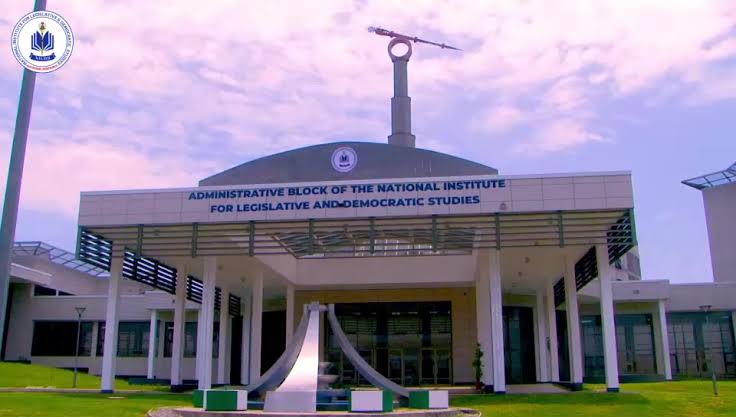
NILDS seeks stronger role for women in governance
According to the DG, democracy in Nigeria has come to stay and requires collective commitment.

Lagos
Lagos recruits 45 personnel to boost enforcement on Lekki-Epe corridor
Mr Osiyemi noted that the corridor had staffing challenges that slowed down operations.
Heading 2
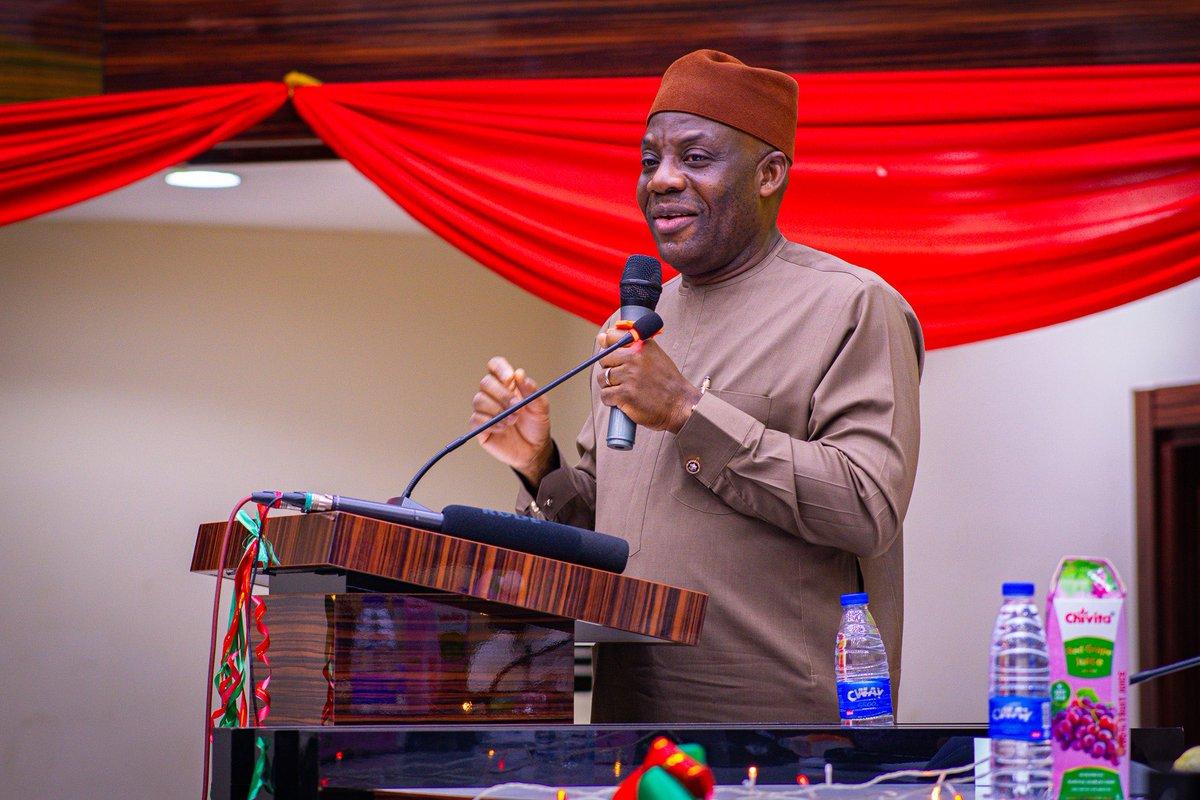
Education minister inaugurates Nigeria’s first robotic surgery academy
Mr Alausa said the initiative would expand advanced medical training.
Health
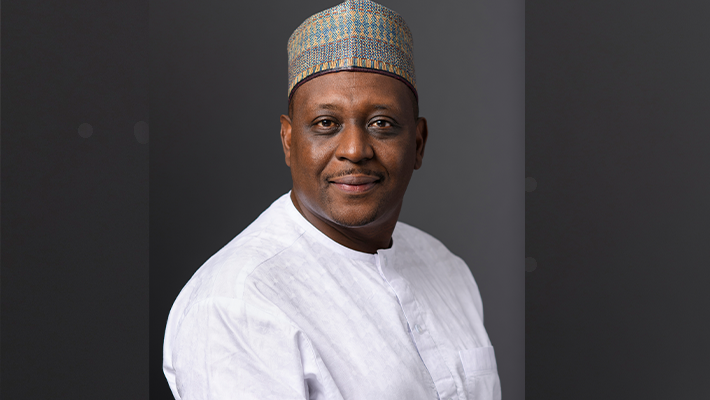
Pate warns politicians against politicising Ebola case
Mr Pate said health is a unifying issue that transcends political, ethnic and religious affiliations.
Economy
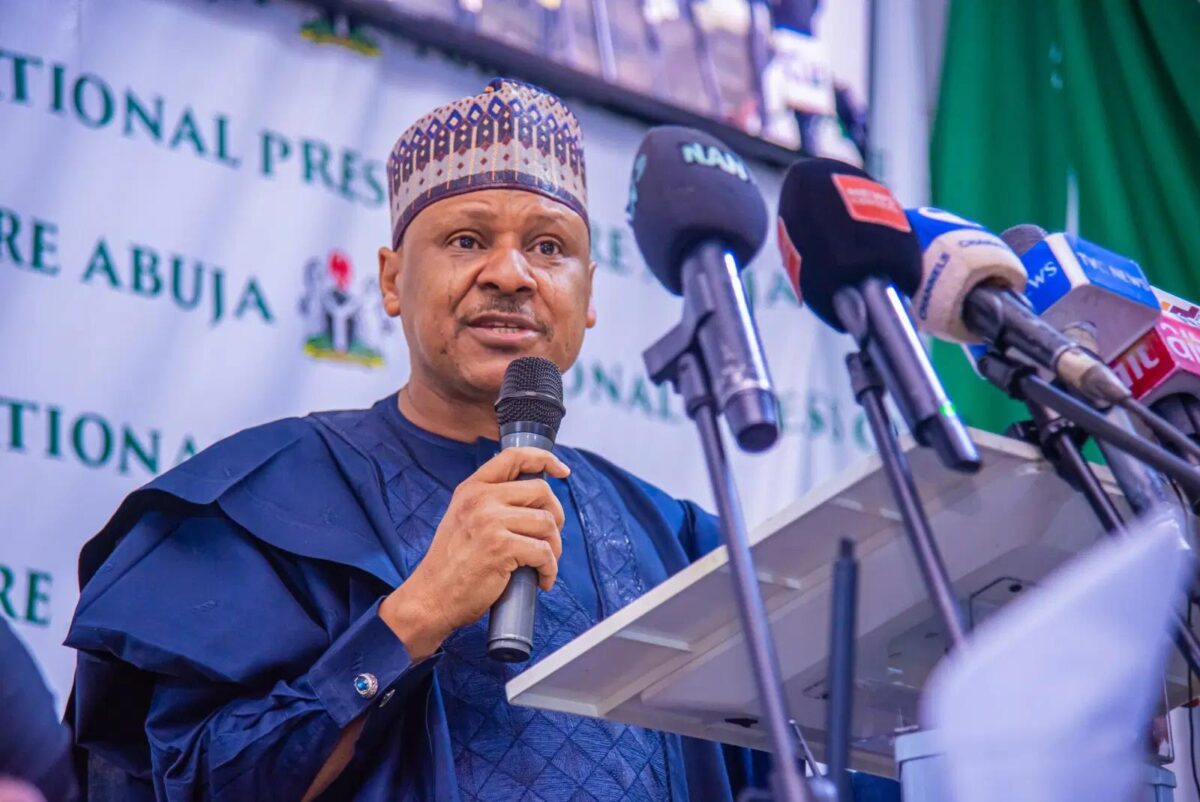
Tinubu’s economic reforms paving way for prosperity: Minister
The minister explained that the reforms were deliberate and courageous, aimed at addressing longstanding structural weaknesses.

Health
Kaduna expands last-mile health supply project to 1,000 facilities
Ms Isyaku said four zonal warehouses in Ikara, Sabon Gari, Zaria and Kafanchan, established under the project, were operational.


