

Nigeria@65: Experts urge FG to tackle electricity crisis

Stakeholders in the power sector have raised concerns over the persistent financial challenges affecting Nigeria’s electricity value chain as the nation marks 65 years of independence.
They said in Lagos on Tuesday that liquidity constraints remained the biggest obstacle to providing stable and reliable power to millions of Nigerians.
Group managing director of Sahara Power Group, Kola Adesina, described the sector as being in a state of chronic financial insolvency.
He noted that power generation companies (GenCos) and gas suppliers were owed over N4 trillion.
“Only about 35 per cent of monthly invoices are paid, leaving stranded capacity and stifling both maintenance and fuel supply,” he lamented.
Mr Adesina also identified non-cost-reflective tariffs as a fundamental structural flaw.
He explained that while the April 2024 Band A tariff increase from N66 to N225/kwh helped reduce the cost-recovery gap for high-end users, it also triggered political backlash and regulatory uncertainty.
“Partial rollbacks have only deepened policy instability. Meanwhile, transmission constraints and grid instability remain persistent problems.
“Despite installed generation capacity, Nigeria’s wheeling capacity lags far behind, resulting in frequent system collapses. Aging infrastructure, limited SCADA coverage, and vandalism further compound the crisis,” he said.
Mr Adesina warned of misalignments in the gas-to-power chain, citing irregular payments, pipeline bottlenecks, and foreign exchange exposure that limit gas availability for thermal plants.
“Contractual disconnects between gas supply agreements and power purchase agreements only worsen the situation. It all circles back to liquidity,” he stressed.
According to him, the Electricity Act 2023, which decentralises power sector responsibilities to the states, presents both opportunities and risks.
“Decentralisation can foster healthy competition. But without a unified regulatory framework, we risk dangerous fragmentation that could derail market stability,” he noted.
To resolve the sector’s enduring crisis, Mr Adesina proposed urgent reforms.
He added that these include securitising legacy debts owed to GenCos and gas suppliers through a time-bound bond programme tied to improved metering and reduced losses.
He also urged strict enforcement of tariff discipline under the MYTO framework, targeted subsidies for low-income users, and government guarantees for FX-indexed gas payments.
Mr Adesina further recommended granting operational independence to the transmission system operator (TSO), scaling up metering, supporting mini-grids and off-grid solar, hybridising hydro and gas plants with renewables, and launching competitive tenders backed by bankable power purchase agreements (PPAs).
Similarly, Olukayode Akinrolabu, chairman of the Customer Consultative Forum for Festac and Satellite Town, acknowledged that ongoing electricity reforms under President Bola Tinubu’s administration had recorded some gains but not without persistent challenges.
He said Nigeria’s functional power generation capacity rarely exceeds 4,000 megawatts, which remains grossly inadequate to meet the country’s energy needs.
“One of the most pressing issues is the persistent inadequate generation capacity. In spite of reforms, the sector continues to fall short of expectations,” he said.
Mr Akinrolabu highlighted grid instability, noting that the national grid suffered more than 10 partial or complete collapses in 2023 and 2024 alone.
He also lamented the metering gap, with an estimated 6.2 million customers still unmetered, leading to widespread estimated billing, loss of consumer trust, and revenue shortfalls for Distribution Companies (DisCos).
He said the Transmission Company of Nigeria (TCN) struggles to move power efficiently from GenCos to end-users, with frequent disruptions caused by vandalism and inadequate gas infrastructure funding.
“Much of the transmission and distribution network is obsolete and dilapidated, contributing to high technical losses and continued grid instability,” he added.
According to him, DisCos and GenCos face severe financial stress due to low tariff recovery, widespread electricity theft, and weak liquidity.
He also warned that inconsistent policies and regulatory ambiguity discourage investors.
“Without a stable regulatory environment, investor confidence will remain low, and the sector will continue to suffer,” he said.
Also, electricity market analyst, Lanre Elatuyi, stressed the urgent need for clear and consistent policies to attract private sector investment into Nigeria’s power industry.
He said investors require a fair regulatory environment, legal protection, and assurances that the government will honour its financial obligations.
He expressed concern over the rising debt owed by government ministries, departments, and agencies (MDAs), calling it a red flag.
Mr Elatuyi also lamented the absence of strict penalties for energy theft, describing it as another factor undermining investor confidence.
He said, “We must treat the power sector as an integrated whole, understanding that each segment has distinct goals but ultimately must work together for reliable and affordable electricity.”
He explained that affordability depends on ensuring the lowest possible supply costs, which begin with investment decisions and extend through efficient dispatch of generators.
Mr Elatuyi outlined two market models Nigeria could adopt: a centralised market where a central authority dispatches generators based on technical constraints or a decentralised market relying on bilateral contracts complemented by a balancing spot market.
He added that pricing mechanisms such as locational marginal pricing or postage stamp pricing were vital for efficient market operations.
“While these concepts may seem unfamiliar, they are fundamental to delivering affordable and reliable electricity. Our power sector is no longer a vertically integrated system.
“To move forward, we must embrace the fundamentals of a liberalised electricity market,” he said.
(NAN)

We have recently deactivated our website's comment provider in favour of other channels of distribution and commentary. We encourage you to join the conversation on our stories via our Facebook, Twitter and other social media pages.

More from Peoples Gazette

States
Independence: NBA urges Nigerians to expect better future
The NBA said that ordinary Nigerians should be deriving benefit from the subsidy removal rather than hardship.

Agriculture
FG tasks ECOWAS on leveraging financing strategies for agroecology
The federal government has urged stakeholders in the agriculture and finance sectors in the West Africa region to leverage financing strategies to enhance agroecology practices

Politics
Katsina youths pledge to deliver over 2 million votes to Atiku
“Katsina State is Atiku’s political base because it is his second home.”

Education
Nigerian teachers relying more on AI amid shortage of textbooks, say stakeholders
Stakeholders say textbook shortages under Nigeria’s new national curriculum are pushing teachers to rely more on AI for instructional materials, research, and lesson preparation.

Economy
FG clears pension backlog, funds enrolled workers’ rights through 2029
President Bola Tinubu’s government has funded the accrued pension rights of enrolled federal workers who have yet to retire through December 2029, PenCom says.
Politics
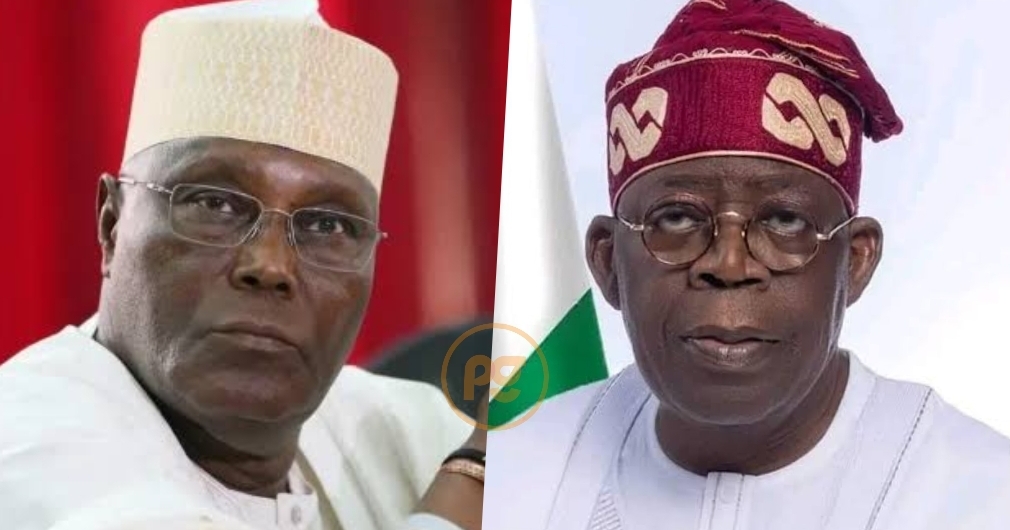
Kaduna govt seals Arewa House billed to host Atiku for Northern stakeholders meeting: ADC
ADC raised the alarm over the closure of Arewa House, which was set to host a meeting of its presidential candidate, Atiku Abubakar, with Northern stakeholders.
Economy
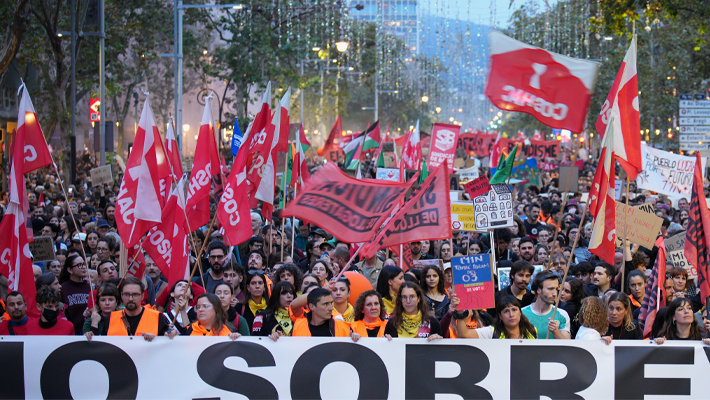
Spanish workers on strike over house rent hikes
According to the country’s central bank data, Spain has a deficit of about 750,000 homes, which is set to grow to over a million by 2028.
Anti-Corruption
EFCC re-arraigns ex-Skye Bank chief Tunde Ayeni for N15 billion fraud
EFCC re-arraigns former Skye Bank chairman Tunde Ayeni before the Federal Capital Territory High Court, Maitama Division, on charges of alleged fraud.

States
Over 600 road crashes recorded in Kaduna
The Federal Road Safety Corps says it has recorded 662 road traffic crashes that caused 470 deaths and 2,624 injuries in Kaduna State between January and October.


