

Nigeria losing benefits of rising crude oil prices due to low production capacity, economist says

An economist, Chijioke Ekechukwu, says Nigeria could have recorded a major economic windfall from the current surge in global crude oil prices if its production had been operating at full capacity.
Mr Ekechukwu, the group managing director/chief executive officer of Bristol Investment Limited, said this in an interview with journalists in Abuja on Sunday, while reacting to the ongoing Middle East crisis.
He said Nigeria would have hit an economic jackpot if its crude oil production had reached its installed capacity or quota under the Organisation of the Petroleum Exporting Countries (OPEC).
“Nigeria is currently producing far below its potential as an oil-producing nation, thereby limiting the benefits it can derive from the current rise in global crude prices triggered by tensions involving the United States and Iran,” he said.
OPEC had retained Nigeria’s crude oil production quota at 1.5 million barrels per day (mbpd). Still, the country’s production fell to 1.31 million barrels per day (bpd) in February, according to the organisation’s data.
With crude oil prices rising far above Nigeria’s 2026 budget benchmark of $64.9 per barrel, the country’s fiscal deficit for the year could have been wiped out if it had been producing optimally.
Mr Ekechukwu, however, warned that while government revenue might increase due to higher crude prices, the average Nigerian was already bearing the burden of rising petroleum product costs.
He said the surge in fuel prices had triggered increases in diesel prices, transportation fares, and production costs across multiple sectors of the economy.
“The rising energy costs are already pushing up prices of goods and services, thereby worsening the cost-of-living pressures on citizens.
“Nigerians are already experiencing high fuel costs, high diesel prices, rising transportation costs and increased production expenses.
“These increases are translating into higher prices of goods and services, meaning the purchasing power of the average Nigerian is declining rapidly,” he said.
The economist added that although Nigeria’s treasury would experience some revenue boost from high crude prices, the gains would be significantly lower than what the country could have realised if crude oil production were at optimal levels.
(NAN)

We have recently deactivated our website's comment provider in favour of other channels of distribution and commentary. We encourage you to join the conversation on our stories via our Facebook, Twitter and other social media pages.

More from Peoples Gazette

Agriculture
FG tasks ECOWAS on leveraging financing strategies for agroecology
The federal government has urged stakeholders in the agriculture and finance sectors in the West Africa region to leverage financing strategies to enhance agroecology practices

Politics
Katsina youths pledge to deliver over 2 million votes to Atiku
“Katsina State is Atiku’s political base because it is his second home.”
Heading 3
Tinubu avoiding U.S. due to past drug dealings; Nigerians bearing diplomatic consequences of repeated absence from UNGA meetings: Atiku
Mr Atiku said the President’s persistent avoidance of the United States inevitably invites troubling questions.

Heading 1
U.S. says employees in Saudi Arabia need special approval to travel amid Iranian war
The mission also advised Americans in Saudi Arabia to avoid glass doors and windows in the event of an aerial attack.

World
U.S. child sex offender Anthony Paul Smith dies of lung cancer two years into 35-year jail term
Mr Smith eventually pleaded guilty to the lower charge and was sentenced to 35 years’ imprisonment in December 2023.

Africa
Three suspects arrested over murder of nine women in South Africa
Mr Cachalia noted that eight of the victims had been positively identified.

World
British PM, cabinet members behaving like ostriches, ignoring looming energy crisis, says Kemi Badenoch
The UK Conservative Party leader said the solution for UK “is simple: Drill our own oil and gas in the North Sea.”
States
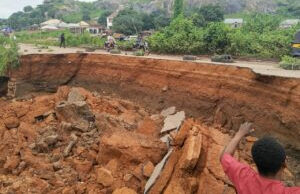
Residents beg FG to fix collapsed Iseyin-Abeokuta road
Mr Alaba said that the road had shown signs of failure about six years ago before it finally collapsed.


