

Germany adopts school-based strategy to combat disinformation

Germany has adopted a school-based strategy to tackle the growing threat of disinformation, integrating media literacy and digital resilience into its education system.
The initiative targets children, teenagers, parents, and professionals, equipping them with skills to identify and counter false information, especially in the digital space.
Susanne Bohmig of the Media Literacy Centre, Foundation for Youth and Family, said the programme was designed to build critical thinking and strengthen society’s resistance to disinformation.
The initiative was highlighted during the Willkommen Visitor Programme of the German government, facilitated by the Goethe Institute in Berlin.
As part of the programme, journalists from 16 countries were trained on the roles and responsibilities of media professionals and influencers in addressing disinformation, foreign information manipulation, and interference.
Participants were exposed to practical methods of identifying fake content and understanding how disinformation spreads, particularly on social media platforms.
Ms Bohmig said Germany’s approach emphasised inclusiveness, ensuring that children with disabilities were not left behind in the learning process. According to her, learning plans are tailored to meet the needs of individual students.
“This allows them to learn in a more conducive manner, and their curriculum is structured for half a year based on the goals the child should achieve within the stipulated time frame.
“However, for children without disabilities, their curriculum is designed within a shorter time frame to achieve set goals. This is necessary to ensure every child becomes media literate on disinformation,” she said.
She added that the pace of assimilation varies, particularly among children with disabilities, depending on individual learning needs.
Gernot Wolfram of the Federal Agency for Civic Education said the rise of Artificial Intelligence had made disinformation more complex, urging journalists to adapt to the changing information landscape.
He said mainstream media must respond by analysing and contextualising false narratives to enable the public to make informed choices.
According to him, the focus should shift from merely identifying what is right or wrong to educating audiences on how AI-generated fake content is created and disseminated.
(NAN)

We have recently deactivated our website's comment provider in favour of other channels of distribution and commentary. We encourage you to join the conversation on our stories via our Facebook, Twitter and other social media pages.

More from Peoples Gazette

Agriculture
FG tasks ECOWAS on leveraging financing strategies for agroecology
The federal government has urged stakeholders in the agriculture and finance sectors in the West Africa region to leverage financing strategies to enhance agroecology practices

Politics
Katsina youths pledge to deliver over 2 million votes to Atiku
“Katsina State is Atiku’s political base because it is his second home.”
Abuja
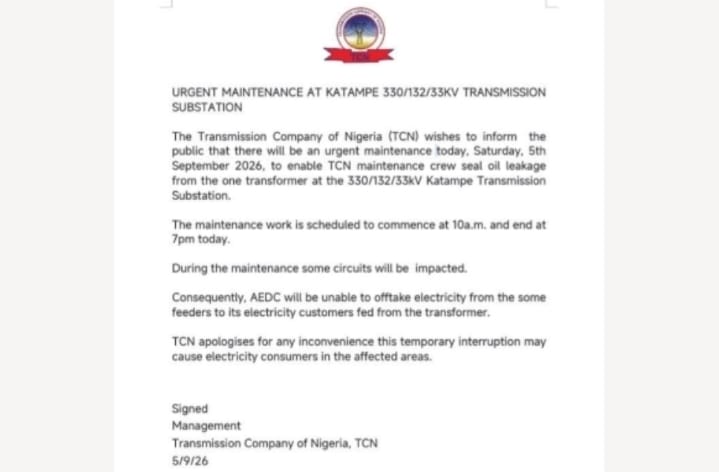
TCN announces nine-hour transformer oil leakage sealing at Katampe substation
The TCN stated that during the maintenance some circuits would be impacted.

States
Three suspects nabbed in Ondo over N23 million vehicle sale, UK student visa scams
The police said the suspects would arraigned upon conclusion of investigation.

Hot news Home top
Tinubu won’t be arrested but will be embarrassed if he attends UN meeting in New York, says Atiku’s hired lobby firm
The firm said, “An alleged heroin trafficker like President Tinubu has no business meeting with President Trump.”

States
Losses as fire guts 12 shops at Kwara market
The Chief Fire Officer, Alabi Muhammed, commended the firefighters for their prompt response.

States
One killed, four bikes recovered as troops raid Katsina terrorist hideout
The media information officer for Fansan Yamma, Aliyu Danja, said the operation was carried out on Friday.

Hot news Home top
Police probe theft of 800 barrels of Guinness worth £115,000 in UK
Detective Sergeant McClatchy said, “It is famously said that ‘Guinness is good for you,’ but that is only the case when it has been bought and paid for.”


