

AI strengthens organisations’ cybersecurity, says WEF report
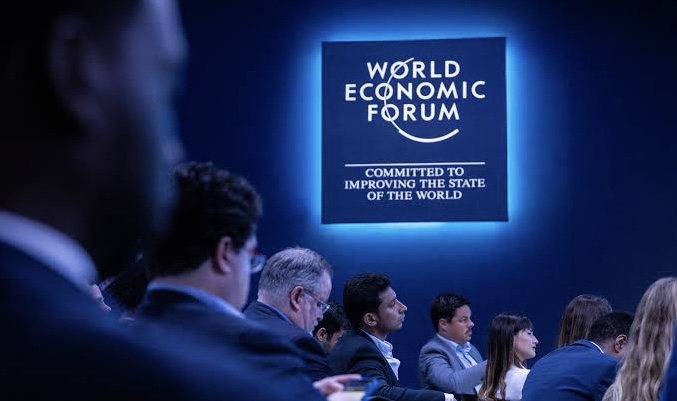
A new report by the World Economic Forum (WEF) says artificial intelligence (AI) is transforming cybersecurity, giving organisations advantage while also increasing threats.
The May report titled, “AI and Cyber: Empowering Defenders”, was developed in collaboration with KPMG and is based on insights from more than 84 organisations across 15 industries.
The study found that 94 per cent of cyber leaders consider AI the key influence in cybersecurity, while 77 per cent of organisations already apply it in their cyber operations.
According to the report, AI is accelerating both cyber threats and defence systems, creating high-speed race between organisations and cyber criminals.
However, firms that adopt AI strategically are seeing benefits, including threat detection, the report noted.
Organisations that extensively use AI in cybersecurity can cut breach costs by up to $1.9 million and reduce breach lifecycles by around 80 days, the report said.
Head of the Centre for Cybersecurity, WEF, Akshay Joshi said, “AI has the potential to shift the balance towards defenders.”
“Organisations that treat it as a strategic capability, rather than a standalone tool, will be better placed to turn growing cyber risk into resilience and competitive advantage,” he said.
The report also highlighted some real-world applications of AI across firms.
It said Accenture reduced security analysis time for more than 100,000 internet-facing sites from 15 minutes to under one minute, while IBM’s ATOM platform automates over 850 analyst hours monthly and cuts investigation time by 37 per cent.
It added that KPMG reported a 25 per cent increase in operational efficiency in threat intelligence.
Despite these gains, the report warned that cyber criminals are also using AI to automate deception, generate malware and scale attacks rapidly.
Laurent Gobbi, partner and global head of cyber & tech risk at KPMG said, “Attackers are moving faster and at greater scale than ever before. This report is a call to action for organisations to match that pace.”
The study stressed that AI’s effectiveness depends on strong governance, clear deployment strategies and human oversight, noting that the technology should complement not replace human expertise.
Building on its 2025 publication on AI and cybersecurity, the WEF initiative called on business and government leaders to treat AI as a core security capability and invest in the skills and systems needed to operate at machine speed.
The findings are part of the forum’s Cyber Frontiers: AI & Cyber initiative, launched in 2024 to explore how AI is reshaping global cybersecurity and to guide organisations on adopting AI to strengthen their skills.

We have recently deactivated our website's comment provider in favour of other channels of distribution and commentary. We encourage you to join the conversation on our stories via our Facebook, Twitter and other social media pages.

More from Peoples Gazette

Agriculture
FG tasks ECOWAS on leveraging financing strategies for agroecology
The federal government has urged stakeholders in the agriculture and finance sectors in the West Africa region to leverage financing strategies to enhance agroecology practices

Politics
Katsina youths pledge to deliver over 2 million votes to Atiku
“Katsina State is Atiku’s political base because it is his second home.”

Heading 5
Ogun govt issues flood alert to residents, warns against flood-prone areas, electric poles
The agency said, “Heavy rainfall is expected in parts of Ogun State this wet season.”

Heading 3
My decision to return fuel subsidy is to strengthen local oil production like Trump: Atiku
Mr Atiku said, “Tinubu did not inherit this cost-of-living crisis from Nigerians. His policies created and deepened it.”

States
Gov. Makinde approves 32-seater, 18-seater buses for Shooting Stars
The governor assured the club of government continued support.

Sport
FIFA president Infantino to seek re-election amid UEFA disapproval
Gianni Infantino reaffirmed his commitment to run for a fourth term as FIFA president amid growing disapproval over his leadership.

Hot news Home top
Dozens of students trapped in Indian residential building collapse
Dozens of students were trapped after a five-storey residential building collapsed into a university hostel in Delhi.

Heading 2
Reasons Nigerian men want to enlarge their penis
The Peoples Gazette compiled reasons why a virile Nigerian man would submit to a cosmetic surgical procedure to enlarge his penis.


