

Three years of reform, three years of hardship
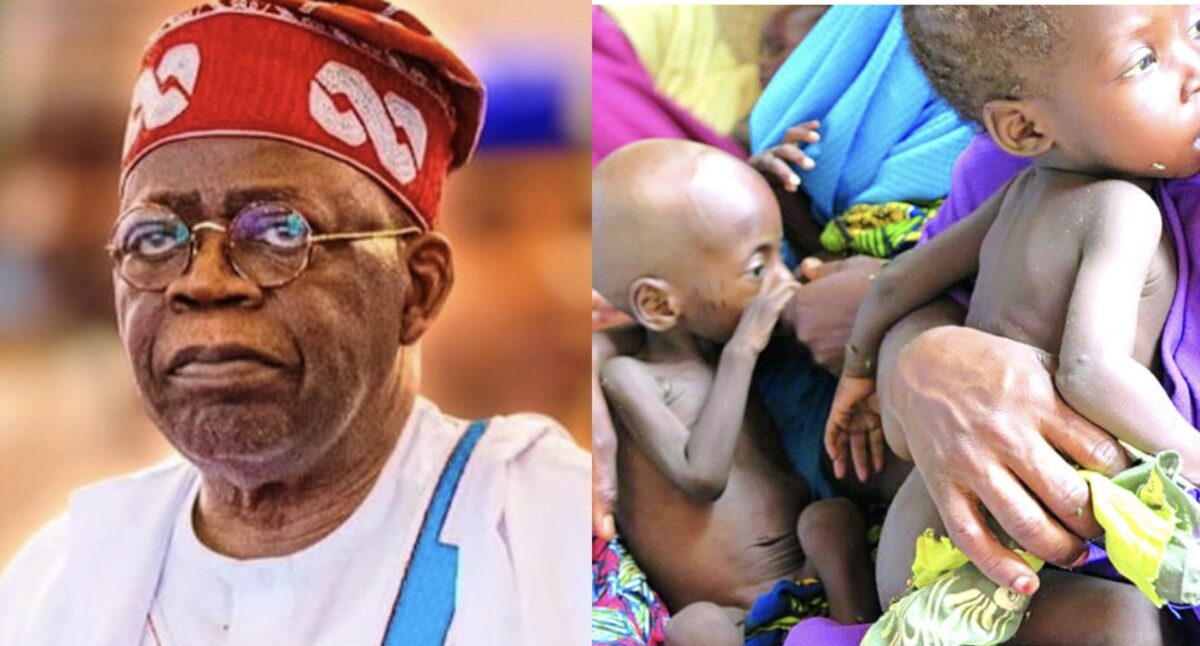
Three years into President Bola Tinubu’s administration, the promise that economic pain would yield gains has worn thin. What was presented as a difficult but necessary journey toward prosperity has instead become an intense, desperate struggle for citizens whose lives have been reshaped by inflation, declining purchasing power, and deepening economic failure.
When President Tinubu assumed office in May 2023, he embraced a neoliberal economic agenda built around market liberalisation, subsidy removal, currency devaluation, and fiscal austerity. His supporters argued that these measures would correct long-standing distortions, attract investment, and place our country on a sustainable path to growth. Citizens were urged to endure temporary hardship in anticipation of future rewards.
Three years later, the anticipated gains remain elusive.
The removal of the fuel subsidy was announced with remarkable speed. Economists had long debated the inefficiencies associated with the subsidy regime, and few observers denied the need for reform.
What many questioned was the absence of adequate safeguards to cushion the consequences for ordinary citizens. Fuel prices rose dramatically within days. Transportation costs rose sky-high. Food prices followed. The effect rippled through every facet of economic life. For a country where millions were already at the precipice, the impact was devastating.
The liberalisation of the foreign exchange market compounded these difficulties. The naira entered a prolonged decline that has now transformed everyday life into a contest between stagnant incomes and rising costs. Imported goods have become more expensive as local manufacturers struggle with rising raw material costs. Small-scale businesses are folding up daily in an economic environment challenged by currency volatility. The naira’s performance has become one of the most visible signs of Tinubu’s failing economic policies.
A currency is more than a medium of exchange. It reflects confidence, stability, and national pride. The continued weakening of the naira has eroded all three. Families now discover that salaries that could meet basic needs a few years ago can no longer sustain the same standard of living. Savings accumulated over the years have lost substantial value. Retirement plans have become uncertain.
Inflation has emerged as perhaps the most relentless burden. Rising prices affect citizens regardless of political affiliation, ethnicity, religion, or creed. They enter markets every day and confront the same reality. Food staples have become increasingly difficult to afford. Rent continues to climb. School fees consume larger portions of household income. Medical expenses have become frightening for many families.
Behind every inflation statistic lies human stories.
It is the story of a teacher who skips meals to ensure her children eat. It is the tale of the retiree whose pension no longer covers essential medication. What of the trader who sees customers turn back at the sight of prices that change with unsettling frequency? What of the young graduate who remains under his parents’ roof when he should, by now, be charting an independent course through life? Economic debates often become trapped within spreadsheets and policy papers.
Citizens experience these policies through empty refrigerators, postponed medical appointments, resorting to local herbs, abandoned business plans, and anxious conversations around dinner tables. Tinubu’s goons like Sunday Dare frequently point to macroeconomic indicators as evidence that reforms are beginning to yield results, that foreign investors are expressing renewed interest in certain sectors, that international financial institutions are offering words of encouragement, and that fiscal revenues are improving in some areas. These developments may hold significance for economists and investors. They provide little comfort to families confronting the rising costs of living.
Economic policy ultimately succeeds or fails in the lives of citizens. An economy that leaves citizens poorer cannot claim success. The gulf between official optimism and citizens’ experiences has widened steadily over the past three years. Youth unemployment remains a source of concern. Many young citizens continue to confront limited opportunities despite repeated assurances that reforms would unlock investment and job creation.
Some citizens have chosen to japa, while others have simply stayed put, navigating a labour market disconnected from their aspirations and qualifications. The healthcare sector continues to struggle with inadequate funding, deteriorating infrastructure, and the departure of skilled professionals seeking better conditions abroad. Educational institutions face persistent challenges that undermine human capital development. Electricity supply remains inconsistent despite years of promises and reform efforts. These are not ordinary concerns. They shape productivity, investment, and the quality of life of citizens.
Citizens’ patience is not an inexhaustible resource. Citizens can endure considerable hardship when they can identify a clear destination and measure genuine progress. The challenge facing the Tinubu administration is that many citizens increasingly struggle to see either. This does not mean that every reform was misguided.
Our country faced serious structural problems long before 2023. Fiscal pressures, foreign exchange distortions, declining productivity, and dependence on oil revenues required attention. The question concerns implementation and the extent to which President Tinubu has accounted for the social consequences of his decisions. Economic policy is not an exercise in market efficiency alone. It is also an exercise in empathy and judgment.
Three years after the launch of one of the most ambitious reform programmes in recent Nigerian history, Tinubu’s administration confronts an uncomfortable reality. Citizens were asked to trust that present suffering would produce future prosperity. That proposition becomes increasingly difficult to sustain when inflation remains stubbornly high, the naira continues to struggle, and daily life grows more expensive with each passing month.
History will judge President Tinubu’s policies not only by the elegance of economic theory but also by their impact on citizens’ lives. It will ask whether families became more secure or whether they gained confidence in their future.
At present, many citizens would answer both questions with hesitation.
Abdul Mahmud, a human rights attorney in Abuja, writes weekly for The Gazette

We have recently deactivated our website's comment provider in favour of other channels of distribution and commentary. We encourage you to join the conversation on our stories via our Facebook, Twitter and other social media pages.

More from Peoples Gazette

Agriculture
FG tasks ECOWAS on leveraging financing strategies for agroecology
The federal government has urged stakeholders in the agriculture and finance sectors in the West Africa region to leverage financing strategies to enhance agroecology practices

Politics
Katsina youths pledge to deliver over 2 million votes to Atiku
“Katsina State is Atiku’s political base because it is his second home.”

Heading 5
Security agents kill suspected kidnapper, rescue two men abducted on Lagos farm
The army said that the remains of the dead kidnapper were handed over to the police for appropriate action.

States
Police uncover drugs concealed in car tyre, apprehend two suspects in Oyo
The command noted that the suspects would be charged to court upon conclusion of investigation.

World
Airstrike hits WHO warehouse in Ukraine, destroys medical supplies, equipment
Mr Lindmeier stated, “The attacks are part of a broader pattern affecting humanitarian operations across the country.”
Education
Expert urges GIS professionals to leverage AI for skills development
Mr Afolayan stressed the need for proper understanding and adoption of AI to address local issues effectively.

NationWide
Stock market closes week with N405 billion gain
The sustained rally further strengthened the year-to-date return to 58.72 per cent.

NationWide
2027: Tinubu-Shettima movement develops plan for grassroots mobilisation
The committee explained that the movement’s communication and administrative infrastructure was being strengthened.


