


Human-caused sea-level rise drives extreme coastal flooding surge: Study
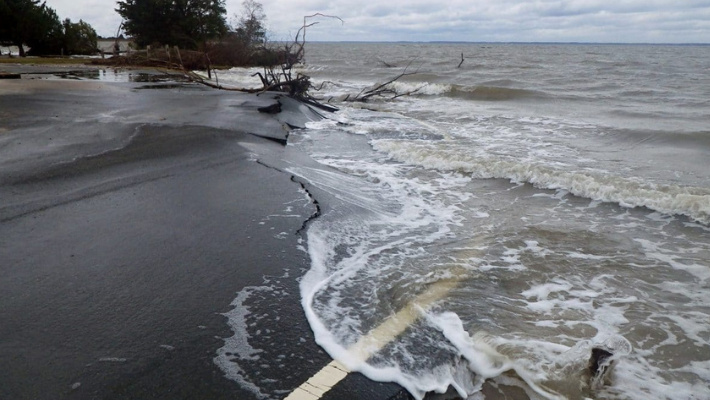
A new paper led by Climate Central has helped pinpoint the extent to which human-caused climate change is responsible for increases in extreme water levels at local and regional scales worldwide.
The new research published in Science Advances finds that human-caused sea level rise is detectable at 97 per cent of global tide gauge sites investigated, and that climate change was responsible for 58 per cent of the observed days with extreme water levels during 2000 to 2018.
Averaged across all locations, climate change has nearly tripled the number of days exceeding extreme water level thresholds since the 1970s.
Climate Central researchers used two largely independent methods to estimate the climate change signal in sea-level rise and extreme water levels at 519 tide-gauge sites around the world.
Results from the first method were determined by calculating attributable sea-level rise from four contributing factors: thermal expansion of water, melt from mountain glaciers, and ice loss from the Greenland and Antarctic ice sheets.
“These studies highlight how we’ve loaded the climate dice against not only our children and grandchildren, but ourselves,” said Daniel Gilford, paper author and climate scientist at Climate Central. “The effects of human-caused climate change are already here. We will continue to face growing threats like increasing coastal flood risks unless we immediately and sharply reduce our climate pollution.”
The second method compared observed sea levels from 1900 to 2018 with a modelled scenario for the same period, excluding the influence of climate-warming pollution. Similar conclusions from both methods give confidence in the overall findings — human-caused sea level rise is responsible for driving the majority of extreme water levels worldwide.
These results are further supported by the findings in a complementary new paper in Nature Climate Change by researchers from Tulane University, titled ‘Human-driven sea-level rise has quadrupled the frequency of coastal sea-level extremes since 1900’, released concurrently with this work.
“Sea level rise is making both tidal flooding and storm-driven flooding more frequent, extensive and expensive,” said Robert Kopp, a professor in the Department of Earth and Planetary Sciences. “Together, these two studies allow us to pinpoint the human role in driving these changes.”
Both studies were co-supported by MACH, a National Science Foundation-funded, Rutgers-led consortium focused on advancing the science of coastal climate risk and the practice of coastal climate adaptation.

We have recently deactivated our website's comment provider in favour of other channels of distribution and commentary. We encourage you to join the conversation on our stories via our Facebook, Twitter and other social media pages.

More from Peoples Gazette

Agriculture
FG tasks ECOWAS on leveraging financing strategies for agroecology
The federal government has urged stakeholders in the agriculture and finance sectors in the West Africa region to leverage financing strategies to enhance agroecology practices

Politics
Katsina youths pledge to deliver over 2 million votes to Atiku
“Katsina State is Atiku’s political base because it is his second home.”

States
Kano assembly passes bill to establish economic planning, development council
The majority leader explained that the council would be chaired by the state governor.

Heading 2
Six suspects arrested for alleged vandalism, theft from Kebbi INEC office
The police spokesperson urged members of the public to remain vigilant.

Sport
Everton bid for Monaco striker Folarin Balogun
Everton’s move for Balogun followed Beto’s £15 million move to Serie A side Fiorentina.

Heading 3
DHQ says troops killed 324 terrorists, rescued 610 kidnap victims in August
Mr Onoja said the month of August witnessed a marked improvement in operational effectiveness.

Heading 2
Closing arguments begin in trial over Tupac’s assassination
Tupac was shot multiple times and died six days later at the age of 25.

World
Meta pulls Facebook, Instagram ads using porn to steal users’ bank credentials
Indian authorities said the ads directed Facebook and Instagram users to phishing websites.


