

FG records 85% trachoma elimination
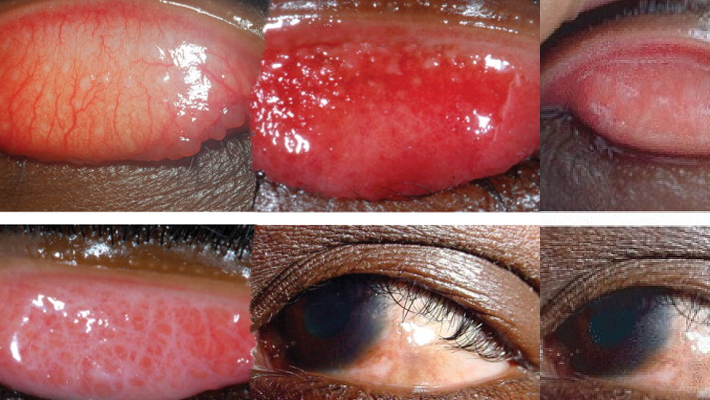
The federal government says Nigeria has achieved more than 85 per cent progress towards eliminating trachoma as a public health problem, with only 11 local government areas (LGAs) yet to attain elimination status.
The Director and Programme Manager, Trachoma Programme, FMoHSW, Nicholas Olobio, stated this during the Accelerate Trachoma Elimination Programme Learning Event organised by SightSavers Nigeria on Thursday in Abuja.
Trachoma, the leading infectious cause of blindness worldwide, is caused by an obligate intracellular bacterium called ‘Chlamydia trachomatis.’
According to the World Health Organisation (WHO), the infection is transmitted by direct or indirect transfer of eye and nose discharges of infected people, particularly young children, while the discharges can be spread by particular species of flies.
Mr Olobio said the country had stopped mass drug administration (MDA) in 116 of the 134 endemic LGAs after meeting the required elimination threshold, representing about 87 per cent progress in eliminating trachoma.
According to him, Nigeria has also performed over 100,000 Trachoma Trichiasis (TT) surgeries out of an estimated target of 150,000, representing nearly 90 per cent achievement.
Mr Olobio said the ministry intensified surveillance in areas with persistent transmission to prevent a resurgence of the disease.
He explained that beyond routine impact surveys, health officials now collect conjunctival swab samples to determine whether active infections still exist in communities where transmission persists.
He stated, “We have also strengthened disease surveillance to ensure trachoma does not return in areas that have achieved elimination.
“Water, sanitation and hygiene are equally critical because medicines alone cannot eliminate trachoma. Communities must have access to clean water, use sanitary toilets and maintain good hygiene to interrupt transmission.”
He noted that improved environmental sanitation had helped eliminate trachoma in other parts of the world and remained central to Nigeria’s elimination strategy.
Also, Chairman of the National Trachoma Task Force (NTTF), Adamu Mohammed, noted the role of the task force in developing national guidelines for trachoma elimination and ensuring their implementation in line with internationally accepted standards and protocols.
Mr Mohammed, who is also a Consultant Ophthalmologist, said that the task force works with key stakeholders to monitor trachoma surgeries, MDA and surveillance activities aimed at achieving nationwide elimination.
He, however, identified insecurity in Borno State as the greatest challenge to achieving complete elimination, noting that seven of the remaining endemic LGAs are located in the state.
“Most of the LGAs yet to achieve elimination are difficult to access because of insecurity.
“Our partners have done tremendously well, but insecurity continues to limit access to affected communities. There is only so much partners can do without adequate security,” he said.
He urged the government to strengthen security and improve access to hard-to-reach communities to enable health workers to deliver medicines, surgeries and other essential interventions.
Also, Country Trachoma Coordinator, SightSavers Nigeria, Teyil Wamyil-Mshelia, said the organisation’s Accelerate Trachoma Elimination Programme significantly accelerated Nigeria’s progress since its launch in 2018.
Ms Wamyil-Mshelia said using the WHO SAFE strategy, the organisation performed over 60,000 TT surgeries across 195 LGAs and distributed almost 29 million doses of azithromycin in endemic communities.
She added that the programme had conducted 174 trachoma surveys, trained over 50,000 community case finders and strengthened digital tracking, hygiene promotion and behaviour change interventions.
She explained that this has helped to sustain Nigeria’s progress towards eliminating trachoma as a public health problem.
The event brought together government officials, development partners, trachoma experts and other stakeholders to showcase achievements, share lessons learnt and reaffirm commitment to eliminating trachoma in Nigeria.
(NAN)

We have recently deactivated our website's comment provider in favour of other channels of distribution and commentary. We encourage you to join the conversation on our stories via our Facebook, Twitter and other social media pages.

More from Peoples Gazette

States
Independence: NBA urges Nigerians to expect better future
The NBA said that ordinary Nigerians should be deriving benefit from the subsidy removal rather than hardship.

Agriculture
FG tasks ECOWAS on leveraging financing strategies for agroecology
The federal government has urged stakeholders in the agriculture and finance sectors in the West Africa region to leverage financing strategies to enhance agroecology practices

Politics
Katsina youths pledge to deliver over 2 million votes to Atiku
“Katsina State is Atiku’s political base because it is his second home.”
Health
World Sight Day: Kaduna govt targets 1,000 residents for eye treatment
The Kaduna government says it has targeted 1,000 vision-impaired persons for free eye care services.

Economy
Nigeria, Africa lose $74 billion yearly to unfair credit ratings: UN
UN says inaccurate, context-poor sovereign credit ratings are estimated to cost African countries about $74.5 billion annually through excessive borrowing costs and lost financing.

World
Texas inmate dies after receiving same lethal drug as Christa Pike
Ms Pike remains alive albeit in critical condition as her lawyers said she suffered pneumonia, blood clot and inability to eat.

Abuja
Dan Orbih made me better governor, says Oshiomhole as Wike hails late PDP stalwart
FCT minister Nyesom Wike said God used the late Daniel Orbih to pave the way for his emergence as Rivers governor in 2015.

World
London phone thefts fall to lowest August level since 2022 despite 165 daily snatches in 2026
After a year‑long investigation, detectives found the men were responsible for trafficking up to 40,000 stolen mobile phones from the UK to China in 2024 and 2025.
Agriculture
Takum farmers seek improved security to boost food production
The land that fed families for generations is now empty. In villages like Tor-Lijam, Akaajo, Abunde and Akase, people are displaced and their farms are destroyed.


