

FG adopts three-year national learning assessment cycle

The federal government says it will institutionalise the National Learning Assessment every three years to tackle learning poverty and improve the quality of education nationwide.
Education minister Tunji Alausa disclosed this on Friday in Abuja after monitoring the ongoing 2026 National Learning Assessment in selected public and private schools in the FCT.
The minister visited Government Secondary School, Kuje; Junior Secondary School, Kuje Central; and Topaz Model School, Kuje, to assess the exercise.
Mr Alausa said the assessment, which covers primary three, primary five, JSS two and senior secondary school two pupils and students, was designed to evaluate literacy, numeracy and cognitive skills.
He said the exercise would henceforth be conducted every three years, adding that the Universal Basic Education Commission (UBEC) had been directed to make budgetary provision for it from 2029.
“The importance of learning assessment is that we need to know the kind of education we are giving our pupils and students at the primary, junior secondary and senior secondary levels to determine whether they are actually learning.
“It is a standard tool that helps us evaluate the quality of education being delivered across different school levels. The last assessment was conducted in 2023 by UBEC, while the previous one was held in 2019 by the Federal Ministry of Education. Going forward, it will become a routine exercise every three years,” he said.
The minister said the assessment had become necessary in view of Nigeria’s learning-poverty challenge, noting that available data showed that millions of children could not read age-appropriate texts by age 10.
According to him, previous reports indicated that more than 42 million Nigerian children were classified as learning poor, although the figure was based on earlier data.
He expressed optimism that ongoing education reforms would improve learning outcomes, saying the assessment would generate updated data to guide evidence-based policymaking.
“We need accurate data to benchmark our literacy and numeracy levels and develop targeted interventions that will improve learning outcomes across the country,” he said.
Mr Alausa also said the federal government had harmonised multiple learning assessment frameworks into a single national assessment system to ensure consistency and enable comparison of learning outcomes over time.
According to him, the initiative is part of the Nigeria Education Sector Renewal Initiative and aligns with President Bola Tinubu’s agenda to transform the education sector as a foundation for national development.
Speaking on private schools, the minister commended their role in expanding access to education, noting that they had helped keep many children in school who might otherwise have been out of the classroom.
He, however, stressed the need for stronger regulation to ensure compliance with minimum standards.
“Private schools have helped us keep many children in school. We need to encourage them, but we must also regulate them effectively and ensure they maintain the required standards,” he said.
Mr Alausa also praised the learning environment in both the public and private schools visited, describing them as clean, conducive and supportive of effective teaching and learning.
(NAN)

We have recently deactivated our website's comment provider in favour of other channels of distribution and commentary. We encourage you to join the conversation on our stories via our Facebook, Twitter and other social media pages.

More from Peoples Gazette

States
Independence: NBA urges Nigerians to expect better future
The NBA said that ordinary Nigerians should be deriving benefit from the subsidy removal rather than hardship.

Agriculture
FG tasks ECOWAS on leveraging financing strategies for agroecology
The federal government has urged stakeholders in the agriculture and finance sectors in the West Africa region to leverage financing strategies to enhance agroecology practices

Politics
Katsina youths pledge to deliver over 2 million votes to Atiku
“Katsina State is Atiku’s political base because it is his second home.”
Politics
LG Elections: OYSIEC opens registration portal for ad hoc staff recruitment
Registration for the required positions will run from October 5 to October 20, 2026.
Diaspora
Trump moves to revoke U.S. citizenship of two Nigerians, 38 others
The prosecutors accused the 58-year-old of applying for immigration benefits under two different identities.
Economy
Nigeria rises four places to eighth in 2026 Bloomberg Economics Investment Risk-O-Meter
The growth was attributed to the economic policies of the Tinubu administration.
Heading 4
Longest-serving Republican speaker Dennis Hastert, soiled by allegations of molesting high school athletes, dies at 84
The deceased, who was speaker from 1999 until 2007, was sentenced in 2016 to more than a year behind bars.
Anti-Corruption
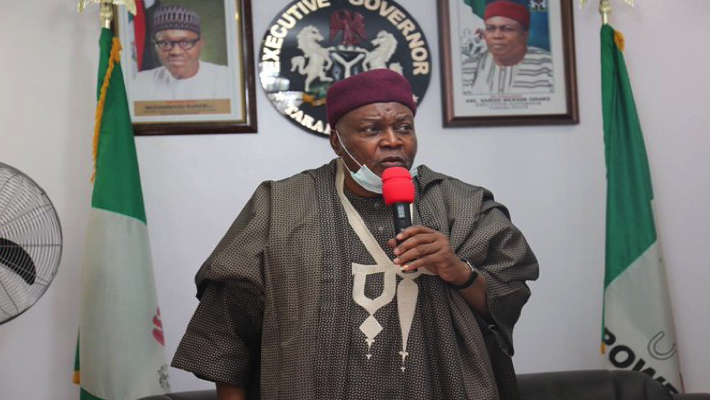
Witness reveals how funds were moved to private accounts in ex-Taraba governor’s trial
The judge adjourned the matter till October 6, 2026, for continuation of the evidence of PW3.
Education
JAMB moves to adopt UTME centre in Canada for 2027
The board said the centre would enable eligible Nigerians living in Canada to take the UTME without travelling to Nigeria.


