


CBN faces growth-inflation dilemma as MPC meets amid calls to hold or cut rates
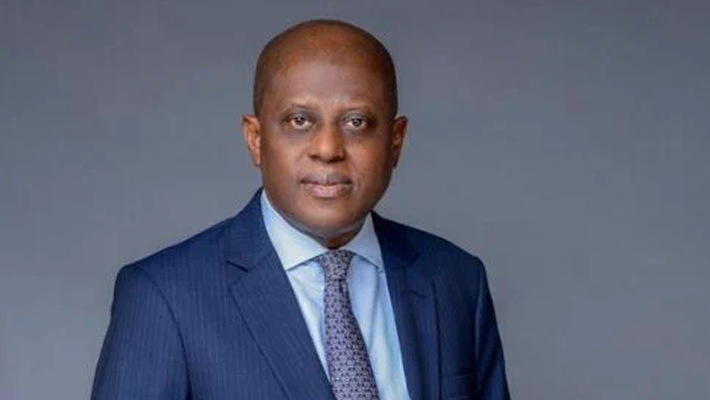
The Central Bank of Nigeria’s (CBN) Monetary Policy Committee (MPC) begins its two-day meeting on Monday under growing pressure to strike a balance between keeping inflation under control and supporting economic growth.
Most economists expect the committee to leave the Monetary Policy Rate (MPR), the benchmark interest rate that influences borrowing costs across the economy, unchanged at 26.5 per cent when it announces its decision on Tuesday.
The likely outcome may appear clear, but the factors informing the committee’s decisions may be more complicated.
Inflation has slowed significantly from where it stood a year ago, raising hopes that the central bank could soon begin lowering interest rates.
At the same time, businesses continue to complain about the high cost of borrowing, saying expensive loans are making it harder to expand and therefore to create fewer jobs. Yet inflation remains above the CBN’s comfort level, food prices are still rising, and fresh global uncertainties continue to threaten the country’s still fragile progress.
The committee now has to decide whether the gains against inflation are strong enough to begin easing monetary policy or if the economy still needs high interest rates.
The meeting
The MPC has spent over two years raising interest rates to curb inflation and restore confidence in the economy.
After cutting the MPR by 0.5 percentage points to 26.5 per cent in February, the committee left the rate unchanged in May, saying inflation and global developments still posed risks. Since then, inflation has shown signs of stabilising.
According to the National Bureau of Statistics (NBS), headline inflation eased slightly to 15.91 per cent in June from 15.93 per cent in May, ending three consecutive months of increases from the 15.06 per cent recorded in January.
While core inflation, which excludes volatile agricultural produce and energy prices, fell to 15.92 per cent from 16.82 per cent, food inflation climbed to 17.52 per cent from 16.96 per cent.
That clearly shows that while overall inflation is easing, we still face pricing pressures, and many Nigerians are still struggling to afford basic food items.
Other factors
The committee is also meeting at a time when Nigeria’s economy is sending mixed signals.
Economic growth has remained positive, while oil production has reached its highest level in more than six years, helping to strengthen export earnings and foreign exchange inflows.
Nigeria produced an average of 1.56 million barrels of crude oil per day in June, exceeding its OPEC production target for the first time in months. The country’s external reserves have also improved over the past year, giving the central bank a stronger buffer against external shocks. But there are some risks.
The renewed tensions in the Middle East may again create uncertainty in global energy markets. Any increase in crude oil prices could push up transport and food costs in Nigeria, making inflation harder to control.
The naira has also faced pressure in recent weeks as demand for dollars increased, reminding policymakers that gains in the foreign exchange market remain fragile. As of Friday, the naira closed at N1,381.50 to the dollar in the official market, while the dollar sold for about N1,422 to N1,425 in the parallel market.
These are some of the factors economists believe will inform the committee’s decision.
Another hold
For many analysts, the safest option is to wait. Matilda Adefalujo, an investment research analyst at Meristem Securities Limited, believes the central bank should resist calls to lower interest rates too soon.
“I expect them to hold rates,” she told Peoples Gazette.
Although inflation has eased, she said the committee needs to be sure that the factors driving higher prices, particularly external shocks, have fully subsided.
“We are not completely out of the woods yet,” stated Ms Adefalujo. “There are geopolitical tensions that are raging. That’s not yet over.”
She also warned that cutting rates too early could reverse recent gains made in attracting foreign investment into Nigeria’s financial markets.
“Now is not a time to cut rates because all of the gains that they’ve been able to establish would be lost,” she said.
The president and chairman of the Council of the Chartered Institute of Bankers of Nigeria (CIBN), Dele Alabi, shared the same view.
“I expect the MPC to keep the interest rate constant and monitor developments over the next couple of months before considering any adjustment,” he said in an interview with the News Agency of Nigeria on Saturday in Lagos.
Lower rates
Not everyone agrees with the idea of a hold.
Aliyu Ilias, an economist and development expert, noted that the central bank should begin easing monetary policy by reducing the benchmark rate by 0.5 percentage points.
He argued that businesses, especially manufacturers, are struggling with high borrowing costs and need cheaper access to credit.
“I would advise the MPC committee to reduce 0.5. That would have made more sense to bring confidence into business, especially small manufacturers, because people need to get money to actually invest,” Mr Ilias said.
For him, a modest rate cut would send a positive signal without significantly undermining the fight against inflation.
“Inflation is not only a monetary problem,” added Mr Ilias.
The Chief Executive Officer of the Centre for the Promotion of Private Enterprise (CPPE), Muda Yusuf, believes keeping rates unchanged is the better option, but for a different reason.
He pointed out that the biggest drivers of inflation are no longer excess spending but structural problems such as high transportation costs, insecurity affecting food production, poor logistics and expensive energy.
“The June inflation figures do not justify any additional monetary tightening. Headline inflation has largely stabilised, core inflation continues to ease, and the main drivers of price pressures remain structural rather than demand-driven,” Mr Yusuf explained.
He said lowering inflation sustainably would require stronger coordination between monetary and fiscal authorities, saying, “The immediate policy priority should be for the monetary authorities to collaborate with the fiscal authorities to accelerate structural reforms that expand food supply, improve logistics, reduce energy and production costs, reduce debt service costs, strengthen domestic value chains and enhance productivity.”
Cardoso signals caution
Recent comments by CBN governor Olayemi Cardoso also suggest the central bank is unlikely to rush into cutting rates.
Speaking at a BusinessDay conference last week, Mr Cardoso acknowledged that inflation had been slowing but said external shocks had disrupted the expected path towards lower prices.
“There were 11 months of continuous disinflation. If not for the fact that we had this, we had projected that going into next year, inflation would have been down to very moderate levels,” he said.
Defending the committee’s decision to keep rates unchanged in May, he said, “We didn’t cut, and believe me, we saw things that most other people didn’t see.”
He said future decisions would continue to be guided by incoming economic data rather than market expectations.
What to expect
Although pressure is growing for the central bank to support businesses by lowering borrowing costs, most indicators still point to another hold.
Inflation has eased but remains above the level the CBN considers consistent with price stability.
Food prices continue to rise, while the uncertainty in global energy markets poses fresh risks.
With today’s meeting, the committee is likely to protect the progress it has made against inflation rather than begin an easing cycle.

We have recently deactivated our website's comment provider in favour of other channels of distribution and commentary. We encourage you to join the conversation on our stories via our Facebook, Twitter and other social media pages.

More from Peoples Gazette

Agriculture
FG tasks ECOWAS on leveraging financing strategies for agroecology
The federal government has urged stakeholders in the agriculture and finance sectors in the West Africa region to leverage financing strategies to enhance agroecology practices

Politics
Katsina youths pledge to deliver over 2 million votes to Atiku
“Katsina State is Atiku’s political base because it is his second home.”

Diaspora
Nigerian Olukanyinsola Odebode jailed 12 years for rape, sexual assault
A UK court has sentenced a Nigerian, Olukanyinsola Odebode, to 12 years in prison for raping a woman and assault another lady.

Africa
Defence minister urges NDC graduates to champion industrialisation for African security
Defence minister Christopher Musa charged graduates of the National Defence College Course-34 to translate their training into policies that drive regional stability across Africa.

Economy
Subsidy return will reverse economic gains: Tinubu Govt
Information minister Mohammed Idrisvhas cautioned against calls to restore the petrol subsidy.

Africa
ECOWAS sub-region remains Africa’s most stable amid existential threat: Commissioner
ECOWAS says the sub-region is the most stable among Africa’s regional economic communities, despite the existential threat confronting it.
Rights
My husband has turned me to punching bag, seven-month-old pregnant woman cries out
“He beats me and threatens to harm me. He has failed in his duties as a father and husband,” the pregnant wife said.

States
Youth leader organises football tournament to discourage drug abuse
A youth leader has organised a football tournament to encourage youths to engage in productive activities and discourage them from drug abuse and other social vices.


