

Ministries seek preventive measures to curb fibre cable cuts
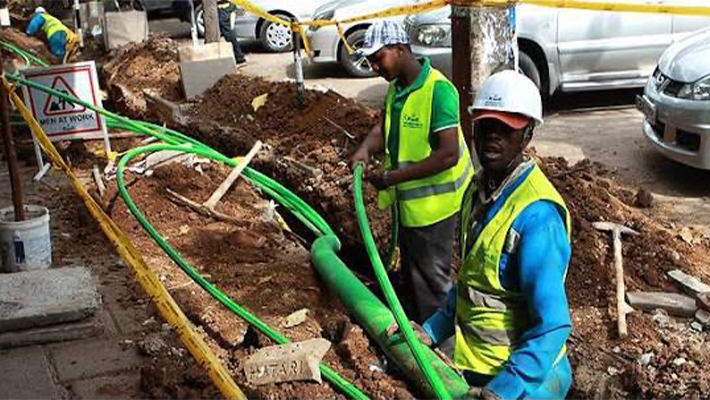
The Ministry of Works and the Ministry of Communications, Innovation and Digital Economy have called for preventive measures to curb fibre optic cable cuts in the country.
They also called for stronger coordination among road contractors, telecommunications operators and relevant government agencies to prevent damage to fibre optic infrastructure during road construction.
The Permanent Secretary of the Ministry of Works, Rafiu Adeladan, made the call on Tuesday in Abuja at a Stakeholders’ Workshop on the Protection of Fibre Optic Infrastructure during road construction activities in Nigeria.
Mr Adeladan said telecommunications infrastructure had become an integral component of Nigeria’s national infrastructure, supporting governance, commerce, education, healthcare, financial services, security and other aspects of socioeconomic life.
He said any damage to fibre optic cables and other telecommunications facilities, even if brief or accidental, could have implications far beyond the immediate physical damage.
“Any damage to fibre optic cables and other telecommunication facilities, whether deliberately or accidentally, has implications far beyond the immediate physical damage,” he said.
He said the ministry, as the agency responsible for developing and maintaining the federal road network, recognised that road construction and telecommunications infrastructure operated within the same physical space.
He said excavation, reconstruction, utility relocation and other road construction activities could expose or damage fibre optic infrastructure where adequate coordination and precautions were not in place.
Mr Adeladan said there was a need for a stronger institutional framework for coordination, information sharing and stakeholder engagement before and during road construction activities.
He said road contractors, consultants and other relevant agencies must have access to accurate information on the location of telecommunications infrastructure before commencing excavation.
The permanent secretary urged stakeholders to move away from a reactive approach to cable damage and make prevention an integral part of project planning and execution.
“This requires improved mapping and placement of underground utilities, appropriate marking and protection of fibre infrastructure, preventive communication and coordination with telecommunications operators, and compliance with established technical and safety standards,” he said.
Mr Adeladan said fibre optic cable cuts could disrupt digital services, reduce productivity, cause financial losses to operators and businesses and inconvenience millions of citizens.
He said the consequences made it necessary for all stakeholders to exercise the highest level of care when undertaking construction and excavation activities.
He commended the inclusion of government institutions, telecommunications operators, contractors, the Ministry of Justice, the police and other stakeholders in the panel discussions.
Mr Adeladan assured stakeholders that the ministry remained committed to deepening cooperation with the NCC, ONSA, telecommunications operators and other relevant stakeholders.
Earlier, the Permanent Secretary, Ministry of Communications, Innovation and Digital Economy, Nadungu Gagare, said protecting telecommunications infrastructure was a shared national responsibility.
Mr Gagare was represented by Stanley Musa, director, Telecoms and Postal Services.
He said fibre optic infrastructure was a strategic national asset supporting economic growth, financial services, healthcare delivery, education, public administration, security operations, innovation and social inclusion.
He said safeguarding the infrastructure aligned with President Bola Tinubu’s Renewed Hope Agenda, noting that resilient digital connectivity was foundational to sustainable national development and economic empowerment.
The permanent secretary said substantial investments had been made in expanding broadband infrastructure across the country.
He, however, said that fibre cuts resulting from road construction and excavation activities continued to undermine such investments.
He said the incidents disrupted essential services, weakened network resilience, increased operational costs, discouraged investment and adversely affected citizens and businesses that depended on uninterrupted connectivity.
He said a tripartite standing committee on the protection of fibre optic infrastructure had been established to strengthen collaboration among relevant stakeholders and promote a coordinated approach to infrastructure protection.
Mr Gagare said the initiative was designed to prevent avoidable damage, strengthen compliance with established standards and right-of-way regulations, enhance information sharing and promote the implementation of the “Dig Once” initiative nationwide.
He said that the ministry had presented a memorandum to the National Economic Council on the harmonisation of right-of-way charges and related strategies.
He said that the NEC approved the memorandum and directed the ministry to develop standards and guidelines required for the construction of shared infrastructure.
“A multi-stakeholder committee had also been constituted to develop national standards, define routes and propose a management structure for shared infrastructure.
“The workshop will provide stakeholders with an opportunity to exchange ideas, identify challenges and develop practical solutions to strengthen infrastructure resilience and support the continued expansion of broadband services nationwide,” he said.
Mr Gagare urged stakeholders to deepen institutional collaboration and remain committed to protecting the infrastructure upon which Nigeria’s digital future depends.
(NAN)

We have recently deactivated our website's comment provider in favour of other channels of distribution and commentary. We encourage you to join the conversation on our stories via our Facebook, Twitter and other social media pages.

More from Peoples Gazette

States
Independence: NBA urges Nigerians to expect better future
The NBA said that ordinary Nigerians should be deriving benefit from the subsidy removal rather than hardship.

Agriculture
FG tasks ECOWAS on leveraging financing strategies for agroecology
The federal government has urged stakeholders in the agriculture and finance sectors in the West Africa region to leverage financing strategies to enhance agroecology practices

Politics
Katsina youths pledge to deliver over 2 million votes to Atiku
“Katsina State is Atiku’s political base because it is his second home.”

Africa
U.S. issues security alert over looting, violence against foreigners in South Africa
This comes amid months of sustained xenophobic attacks targeting African immigrants in South Africa.

Heading 5
IPO: Aliko Dangote Foundation opens wealth creation pathway for two million vulnerable Nigerian women
The initiative is open to several categories of beneficiaries, including independent applicants earning ₦100,000 or less per month.

Heading 4
Immunisation programmes delivered over $30 billion in economic benefits for lower-income countries in 2025: Gavi Alliance
The organisation described the gains as the highest annual total in the alliance’s history.

States
Niger: Gov Bago to flag off dualisation of N1.5 trillion Lambata-Bida-Makera road
The groundbreaking ceremony would be held at 12:00 p.m.
States
Uzodimma praises security agencies, Oyo, Imo govts over corps members’ rescue
The governor urged Nigerians to maintain faith in the federal government.

Education
UBEC to institutionalise public-private partnerships in basic education
UBEC also said that the framework would align with national priorities.


