

APC governors, chieftains in Osun on election day acted like bullies, undermining democracy: Jonathan
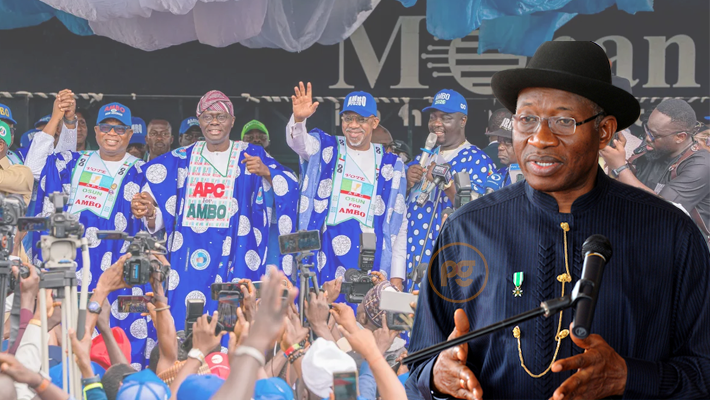
Former President Goodluck Jonathan has condemned the ruling All Progressives Congress for mobilising some of its governors and chieftains to converge on Osun on election day as a threat to democracy, describing APC and its leaders as bullies.
Mr Jonathan commended the Independent National Electoral Commission, security agencies, political parties, and Osun State residents for the peaceful conduct during the poll on Saturday.
“While we commend the electoral process itself, there are developments surrounding the election and, more importantly, an emerging trend in political conduct during off-cycle elections that raises concerns,” stated the former president.
Mr Jonathan censured the national ruling party for attempting to bully and intimidate Osun voters on Saturday, warning them against becoming a menace to society.
“The growing practice whereby serving governors, senior political office holders, party leaders and other influential government functionaries, accompanied by large numbers of aides and heavy security details from outside a state, converge on states where elections are being conducted raises an issue that demands national attention.
“The conduct witnessed around the recent elections in Osun, Ekiti and Ondo States was, in my view, unusual. It is not a practice that should become normal in a democratic society,” said Mr Jonathan in a statement on Tuesday.
He admitted that during his administration some Peoples Democratic Party governors attempted to intimidate the electorate.
“I recall that, as President, similar situations arose during the 2013 Anambra and 2014 Ekiti governorship elections,” Mr Jonathan explained. “On those occasions, senior political leaders mobilised and descended upon the states. Upon being briefed, I ordered party leaders and senior government officials to leave the states immediately.”
He pointed out that “this trend is unwholesome” and if left unchecked, “it could threaten our fragile democracy and have serious long-term implications for democratic stability”.
While political parties are entitled to campaign, mobilise their supporters and deploy their legitimate party structure, Mr Jonathan insisted “there is a point at which political mobilisation, particularly when it involves the overwhelming presence of serving governors, senior public officials and powerful political actors from across the country on election day, can create an atmosphere of apprehension, intimidation, bullying and undue pressure”.
“We must ask ourselves whether the increasing deployment of political power and large-scale mobilisation by senior office holders on election day in states holding elections is consistent with the spirit of free, fair and peaceful democratic competition. This hardly happens in other democratic countries. We must not allow political competition to become a contest in which victory is perceived as something that must be achieved at all costs.
“There is also the question of precedent. If the current trend becomes established, what happens when governors from opposing political parties begin to descend on every state holding a competitive election? What happens when each party seeks to match political power with political power, governmental influence with governmental influence, and mobilisation with counter-mobilisation?
“Such a development would not strengthen our democracy. It would deepen political tensions and could make elections increasingly resemble battles for political survival rather than peaceful contests for the mandate of the people,” Mr Jonathan reasoned.
The former president urged political leaders and parties not to treat the matter as a partisan dispute over the Osun election, describing it as a broader national issue “concerning the future of our electoral democracy”.
Mr Jonathan called for “greater responsibility” from political leaders, pointing out that the power and influence attached to public office should be used to strengthen democratic institutions, not to create apprehension among political opponents or citizens.
“For this reason, I call on the National Peace Committee to convene, as soon as practicable, a stakeholders’ engagement. The purpose of such a meeting should be to provide a neutral and constructive platform for political leaders and other stakeholders to reflect on emerging practices around elections and agree on standards that will protect our democracy and preserve peace.
“The engagement should bring together key stakeholders, including the leadership of registered political parties; the Independent National Electoral Commission (INEC); relevant security agencies; the leadership of the National Assembly; the Nigerian Bar Association (NBA); the Nigeria Governors’ Forum; civil society organisations; and the media, to interrogate this troubling trend.
“I believe that the National Peace Committee is particularly well placed to lead this conversation because of the confidence and moral authority it has built over the years in bringing political leaders together at moments of national tension. An early national conversation can help us establish appropriate boundaries and expectations for political conduct before practices that are unusual today become accepted as normal tomorrow,” the former president advised.

We have recently deactivated our website's comment provider in favour of other channels of distribution and commentary. We encourage you to join the conversation on our stories via our Facebook, Twitter and other social media pages.

More from Peoples Gazette

States
Independence: NBA urges Nigerians to expect better future
The NBA said that ordinary Nigerians should be deriving benefit from the subsidy removal rather than hardship.

Agriculture
FG tasks ECOWAS on leveraging financing strategies for agroecology
The federal government has urged stakeholders in the agriculture and finance sectors in the West Africa region to leverage financing strategies to enhance agroecology practices

Politics
Katsina youths pledge to deliver over 2 million votes to Atiku
“Katsina State is Atiku’s political base because it is his second home.”
States
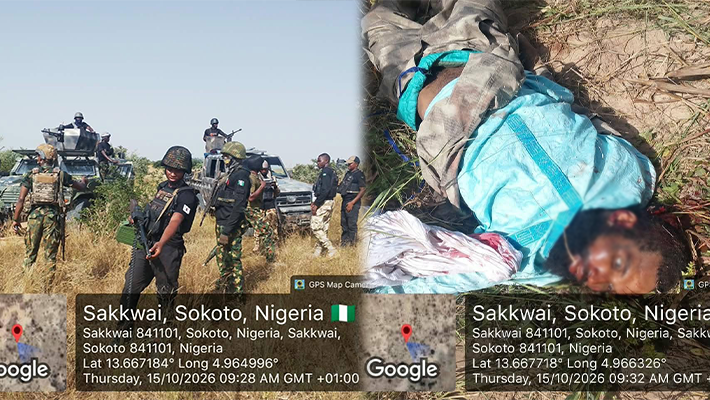
Troops kill Lakurawa fighters, recover five motorcycles in Sokoto operation
The spokesperson for the operation, made the announcement in a statement on Thursday.

Showbiz
Nollywood directors seek grants, tax relief from FG
Mr Agbo said, “Documentary films are primarily for educational purposes.”

Sport
Ajibade updates on injury after Super Falcons trounced Comoros 5-0
Ajibade said, “I am proud of how our team began its road to the Olympics.”
Africa
Algeria pledges to improve investment environment, intra-African connectivity
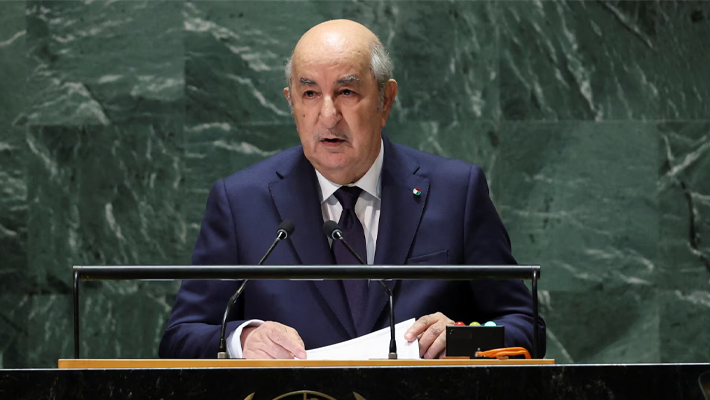
Algerian President Abdelmadjid Tebboune vowed on Wednesday to make 2027 a key year in the nation’s shift to a liberal emerging economy and boost African integration.

Heading 2
Zimbabwean writer Kundizeza fights allegation of using AI to write Caine Prize award-winning novel
Mr Kundizeza has denied using artificial intelligence to write the short story, The Blue Fighter, following a publication in The Atlantic alleging so.

Heading 2
Colleagues, fans mourn gospel singer Toluwanisings
Dare Melody wrote, “Such a rude shock. This one hits differently.”


