

Women make up nearly 70% of global health workforce, study reveals
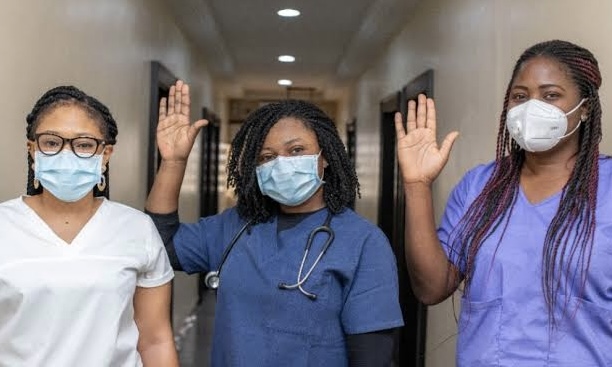
Women now make up nearly 70 per cent of health workers worldwide but remain concentrated in lower-paid professions with fewer leadership opportunities, according to a new Global Burden of Disease study.
The study estimated that 34.4 million additional doctors, nurses, midwives, dentists and pharmacists would be needed to achieve moderate universal health coverage, with the largest shortages in South Asia and sub-Saharan Africa.
Published on The Lancet medical journal website on Tuesday, the study was conducted by the Institute for Health Metrics and Evaluation (IHME), an independent population health research organisation.
IHME is based at the University of Washington School of Medicine and works with collaborators worldwide to develop timely, relevant and scientifically valid evidence on global health.
Based on Global Burden of Disease 2023 estimates, the study published the first global, sex-disaggregated estimates of 20 health worker cadres across 204 countries and territories from 1990 to 2023.
The cadres include doctors, nurses, midwives, pharmacists, dentists, and community health workers, and the study provides the first global estimates of community health workers.
The study found that women’s dominance in the workforce had not translated into equal economic or professional advancement, as they remained concentrated in lower-paid occupations.
The global health workforce nearly tripled between 1990 and 2023, yet major shortages remain, the report stated, noting that women also had fewer opportunities to progress into leadership positions despite their substantial contribution to healthcare delivery.
The findings were particularly significant for sub-Saharan Africa, one of the regions facing the largest health workforce shortages globally.
The report noted that the shortage threatened efforts to expand healthcare access and achieve universal health coverage, particularly in countries with inadequate numbers and uneven distribution of trained professionals.
The study therefore called for stronger workforce planning, education, recruitment and retention, alongside investments that address gender inequalities within the sector.
It recommended gender-responsive policies, including leadership development, workplace protections, paid parental leave and flexible work arrangements, to support women throughout their health careers.
According to the study, closing global workforce gaps will require sustained investment in health worker education, recruitment, retention and supportive working conditions.
For sub-Saharan Africa, the study affirmed that such investments could increase the number of trained professionals while improving their distribution and retention in underserved communities.
According to the study, data can support targeted workforce policies by showing where shortages exist and how health workers are distributed across countries and professional groups.
It highlighted that the projected requirement for 34.4 million additional health professionals underscored the scale of the challenge facing countries seeking to expand healthcare coverage.
Achieving universal health coverage, the study noted, would require governments to plan for both the number and composition of health workers needed to meet future demand.
It said the workforce density benchmarks provided countries with a measurable basis for assessing whether their health systems have enough professionals to deliver essential services.
The study emphasised that building a well-supported health workforce was essential to expand access to care and prepare health systems for future challenges.
For Africa, it noted that the findings reinforced the need for sustained investment in health worker education, recruitment, retention and leadership to strengthen health systems and improve access.
According to the report, the study provides policymakers with a broader evidence base for designing health workforce strategies and allocating resources.
It emphasised that expanding healthcare access would depend not only on increasing the number of health workers, but also on ensuring they were adequately supported and fairly treated.
(NAN)

We have recently deactivated our website's comment provider in favour of other channels of distribution and commentary. We encourage you to join the conversation on our stories via our Facebook, Twitter and other social media pages.

More from Peoples Gazette

States
Independence: NBA urges Nigerians to expect better future
The NBA said that ordinary Nigerians should be deriving benefit from the subsidy removal rather than hardship.

Agriculture
FG tasks ECOWAS on leveraging financing strategies for agroecology
The federal government has urged stakeholders in the agriculture and finance sectors in the West Africa region to leverage financing strategies to enhance agroecology practices

Politics
Katsina youths pledge to deliver over 2 million votes to Atiku
“Katsina State is Atiku’s political base because it is his second home.”

Politics
ADC senatorial candidate promises Benue people good life
Mr Olofu, a former Benue finance commissioner, made the promise on Tuesday in Makurdi while presenting his agenda ahead of the 2027 elections.

Health
BSAC urges AMR conference delegates to turn global commitments into action
BSAC urged delegates attending the Fifth Global High-Level Ministerial Conference on Antimicrobial Resistance in Nigeria to translate global commitments into concrete action.

World
Francis Halzen wins 2026 Nobel Prize in Physics
This year’s physics prize is about ghostly messengers from space, Ms Moons added.

Africa
Nigeria, Ghana sign deal to establish Pan-African legal institute
The Nigerian Law Society and the Ghana Law Society on Monday signed a memorandum of understanding to establish the Pan-African Institute for Continuing Legal Education.
Health
Kenya records first case of Ebola, patient dies
Kenyan authorities on Tuesday confirmed the first case of Ebola virus infection in a citizen who lived in the Democratic Republic of Congo for the past seven years.
States
NAF releases names of 25 officers killed in Ondo plane crash
The Nigerian Air Force has confirmed and named officers, including passengers, who died on board an ATR 42 aircraft, NAF 931, which crashed in the Igbokoda area of Ondo.


