

The peace treaty of the Thieves’ Guild
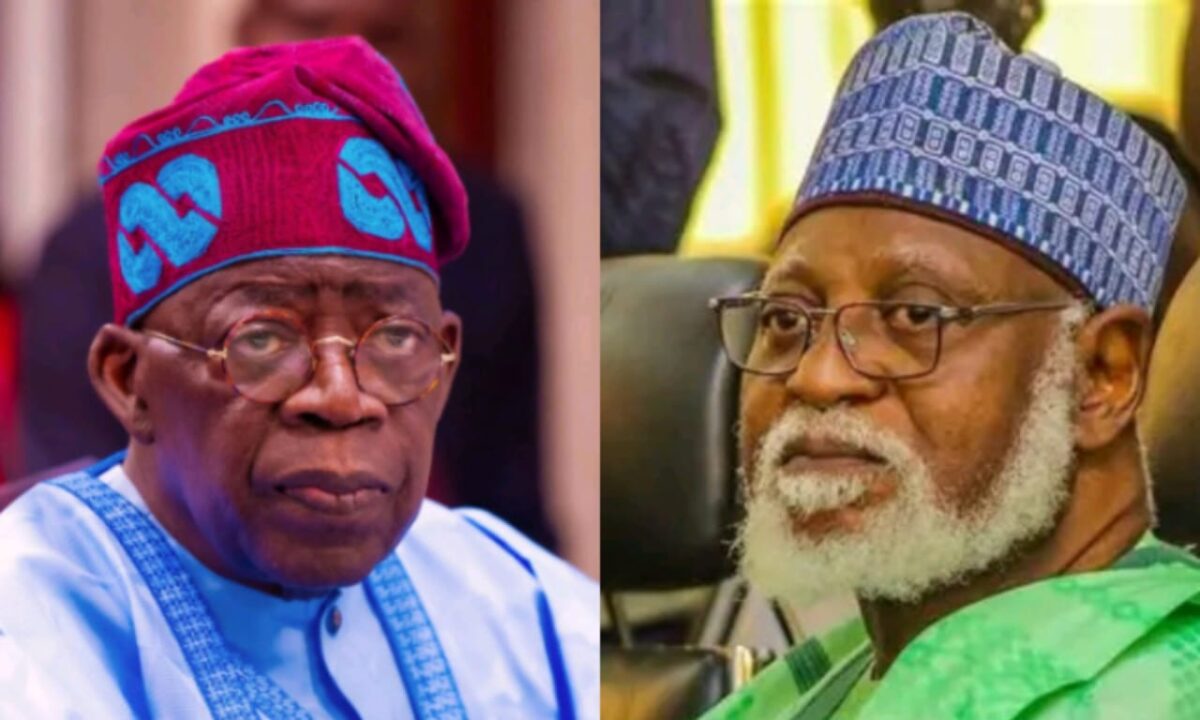
There are moments in political life when satire becomes almost unnecessary because reality, having exhausted the possibilities of seriousness, begins to write the jokes itself. Last week’s peace-signing ceremony for the 2027 general election, convened by the National Peace Committee, led by General Abubakar Abdulsalami, belongs to that rare category of events in which men who have spent months preparing to defeat, discredit and occasionally destroy one another suddenly gathered beneath solemn banners to promise that they would behave themselves when the general election arrives. The ceremony, a familiar ritual since 2014, and like most rituals that survive long enough, has acquired the peculiar dignity of repetition without producing the peace it solemnly promises at every election cycle.
The contemporary satirist, Terry Pratchett, would have understood the arrangement immediately. In Ankh-Morpork, the Thieves’ Guild has the good sense to recognise what respectable society often refuses to admit: crime becomes considerably more manageable when criminals are organised and given a predictable quota. The Guild does not abolish thieving; that would be commercially unreasonable.
Instead, it regulates thievery, establishes who steals, determines how much stealing is permissible, and ensures that the streets are protected from unauthorised competitors. Civilisation, in Pratchett’s world, therefore consists partly in persuading thieves to sign the appropriate paperwork. Nigeria’s political peace agreements sometimes sound remarkably like an Ankh-Morpork arrangement, except that our thieves are called candidates, their guilds are political parties, and the Guildmaster answers to the more respectable title of party chairman. The merchandise being contested, however, is not somebody’s purse in a dark alley but the sovereign authority of the Nigerian people. The difference is that Pratchett’s thieves are more honest about their occupation.
John Gay, the neoclassical satirist whose profound works I encountered over two decades ago in a bookshop in Henley-upon-Thames, would probably have found the Nigerian electoral theatre equally irresistible. In The Beggar’s Opera, first performed in 1728, respectable society and the criminal underworld deliberately resemble one another until the distinction becomes almost comic.
Macheath and his associates conduct their affairs with the efficiency of businessmen, while the supposedly respectable world around them is revealed as animated by bribery, corruption, patronage, and self-interest. Gay’s genius lay partly in allowing the audience to discover that the beggars, thieves, and politicians belong to the same amoral economy.
The Nigerian political class has improved upon Gay’s invention by adding a ceremonial signing table. Here, political parties and their candidates assemble to sign a document promising peaceful elections, while everyone present understands that the real contest will take place elsewhere, in the machinery of mobilisation, patronage, inducement, intimidation and the ingenious conversion of public poverty into dubious electoral arithmetic. The agreement, therefore, performs the useful function of allowing everybody to declare himself committed to peace without requiring anybody to surrender the methods by which political victory is pursued.
One can almost imagine Pratchett’s Lord Vetinari explaining the Nigerian arrangement to a visitor from another world: the thieves have agreed not to steal too aggressively from one another during the election, provided everyone understands that stealing from the electorate remains a matter for negotiation. The visitor might ask whether this means that votes will no longer be bought. Vetinari would probably pause, adjust his gloves and ask the more important question: bought by whom, at what price and under whose supervision?
The joke becomes darker when one considers what the peace agreement is actually being asked to regulate. Nigeria does not ordinarily suffer from a shortage of solemn declarations. The country has signed enough agreements to furnish several archives, but the electoral marketplace has continued to operate according to incentives that no piece of ceremonial paper can repeal. When political competition is treated as a war for access to state resources and winning is regarded as an existential necessity, a peace pledge can become little more than the etiquette observed before the real business begins, particularly when the material circumstances of millions make five thousand naira or a small bag of rice capable of influencing a vote.
The genius of the Pratchett arrangement was its candour. The Thieves’ Guild did not pretend that Ankh-Morpork had become a city without thieves; it simply created rules under which thieves could operate predictably. Nigeria’s political class, by contrast, continues to insist that the peace-signing ceremony represents a moral commitment to democratic conduct, even when the electoral process has repeatedly shown that the real competition concerns control of the violent instruments through which votes are harvested, purchased, manipulated or frightened into existence. Gay would have recognised the satirical spectacle immediately when politicians arrived in respectable agbada, including my comrade, Omoyele Sowore, who turned up in a designer suit, surrounded by solemn language, religious invocations and declarations of patriotic duty, while the electorate watched a contrived stage production in which everyone was assigned the role of patriot.
At least the criminals in The Beggar’s Opera knew they were conducting business; Nigerian politicians prefer to conduct a similar business under the guise of democracy.
Perhaps, the most honest version of the National Peace Committee’s ceremony would therefore be a Pratchett-style document entitled Agreement for the Regulation of Electoral Mischief and the Prevention of Organised Violence (AREMPOV). Each party could declare its expected share of the electoral marketplace, agree not to interfere excessively with the other guilds, and solemnly undertake that any intimidation, inducement or manipulation shall be conducted with appropriate restraint and within mutually recognised professional limits.
Such an agreement would at least have the virtue of candour.
The present version asks Nigerians to believe that the men preparing to fight for power have gathered principally to preserve the peace. This is rather like asking gangs of kidnappers to organise a national conference on the moral dangers of kidnapping. They may sign the declaration with impressive seriousness, but the first question afterwards will remain the one that matters to them: who keeps the ransom?
Nigeria does not need another ceremony in which politicians promise not to behave badly. The country needs an electoral order in which behaving badly becomes electorally, politically and legally expensive. The peace agreement is what Pratchett and Gay would probably have recognised as its most appropriate description: a respectable document signed by politicians who intend to keep the peace, provided the peace does not interfere with the business of stealing votes and maiming voters.
Abdul Mahmud, a human rights attorney in Abuja, writes weekly for The Gazette

We have recently deactivated our website's comment provider in favour of other channels of distribution and commentary. We encourage you to join the conversation on our stories via our Facebook, Twitter and other social media pages.

More from Peoples Gazette

States
Independence: NBA urges Nigerians to expect better future
The NBA said that ordinary Nigerians should be deriving benefit from the subsidy removal rather than hardship.

Agriculture
FG tasks ECOWAS on leveraging financing strategies for agroecology
The federal government has urged stakeholders in the agriculture and finance sectors in the West Africa region to leverage financing strategies to enhance agroecology practices

Politics
Katsina youths pledge to deliver over 2 million votes to Atiku
“Katsina State is Atiku’s political base because it is his second home.”
Politics
2027: Only eight women on INEC’s list of Katsina’s 420 legislative candidates
The final list released by INEC showed that only eight women will be contesting in the general elections in Katsina.

World
Finland’s Appeal Court reduces terrorism sentence of IPOB agitator Simon Ekpa
A Finnish district court had last year sentenced Mr Ekpa to six years’ imprisonment for terrorism and tax fraud.
NationWide
2027: ‘No vacancy’ for Akpabio’s seat, senators declare
The lawmaker said Mr Akpabio had already secured the Senate presidency in the 11th assembly.

Kano
Kano police arrest two suspects over possession of firearm
Mr Kiyawa stated that the police team attached to the farm centre intercepted a tricycle on reasonable suspicion.
Heading 3
Tinubu wants another term but ashamed to face Nigerians to account for his first term: Atiku
“Now he wants another mandate. Before asking Nigerians for one, he must face them and account for the first term,” Mr Abubakar said.

Health
Diphtheria: 93% of affected children didn’t receive full vaccine doses, says NPHCDA
The NPHCDA CEO said some affected children had either not received any vaccine or received only one of the three recommended doses.


