

Dolly Parton never made it to Nnobi—but her songs did
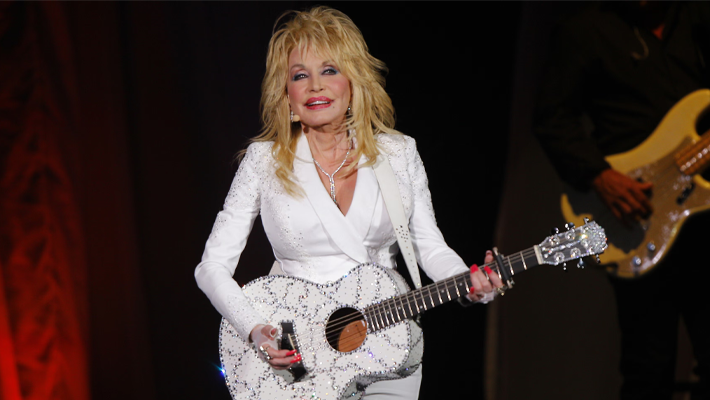
With the death of Dolly Parton at 80, another of my dreams died.
It is not what you are thinking, my dear. It is a lot worse.
I don’t remember exactly how I got into country music, but I did, in my very formative years. And it made all the difference.
The first country song that came onto my radar was Glen Campbell’s “Try a Little Kindness.” It was simple, sensitive, and instructive. Country music taught character, dignity, faith, hope, and love, all the ingredients of a healthy upbringing.
From Campbell, I graduated to Jim Reeves. Soon, voices like Don Williams, Dolly Parton, and Kenny Rogers took over.
More than anything else, it was their storytelling that endeared me to country music.
In those formative years, the distance did not matter, and neither did the cultural differences. I didn’t even know the difference between black and white, then. These musicians told stories I could relate to. They helped me understand the world and my place in it. Children who miss that kind of guidance often spend a long time trying to find their way.
During those puppy-love years of grappling with love, pain, rejection, and belonging, Dolly Parton, Don Williams, and Kenny Rogers became my griots. Through cassette tapes, they counselled me.
They were saying, “Look at what happened between Jolene and me.” Look at what happened to Johnny in “Coward of the County” and how he finally fought back.
They reminded me that what I was feeling as a young Nigerian kid thousands of miles away was not very different from what people felt in Tennessee, Texas, or wherever these stories were set. Heartbreak did not need a passport to travel the world. It gets around just like the air. Loneliness has no flag or banner under which it travels. Neither did love need boats to cross rivers or wings to fly across deserts.
In retrospect, the country musician I consider most dangerous is Jim Reeves, for the emotional and psychological damage he inflicted on me with just one song: “This World Is Not My Home.”
But that is a story for another day.
Years later, when I started writing seriously, I discovered that country music had already taught me some of the fundamentals of storytelling.
Everything you need to know about telling a story can be found in the structure of the lyrics of Dolly Parton’s “Coat of Many Colors” or Kenny Rogers’ “Coward of the County.”
There is a beginning. There is a middle. There is an ending. There is conflict and escalation. There is a crescendo. And when the story ends, something remains with you.
Sometimes there is irony. Sometimes satire. Often, there is a piercing metaphor hidden inside a seemingly simple line.
Those songs became templates for the stories I would eventually write.
So, I owe a lot of what I became as a storyteller to country musicians like Dolly Parton.
Of course, there are stories, and there are stories.
When it comes to Dolly, the stories she told spoke to me in a particular way.
Take “Jolene.”
What shocked me when I first encountered the song was that someone could respond to such a threat with an appeal instead of a fight. The character in the song was more like the kind of person I understood myself to be: making a case instead of throwing punches and issuing threats. By the way, it was Nelson Mandela’s favorite song at Robben Island prison.
Then there was “I Will Always Love You.”
As we say in Nigeria, that one “finished it” for me.
I knew it was an extraordinary song long before Whitney Houston transformed it into a global pop anthem for The Bodyguard.
There is another Dolly Parton song that I have always felt deserves similar recognition: “Touch Your Woman.”
In 9 to 5, I went beyond its message of all of us demanding fair treatment of women in the workplace to include the empowerment of workers. It also taught me the power of resilience and solidarity in difficult situations.
These songs expressed sentiments that accompanied me as I grew up. They reflected my own approach to matters of the heart: vulnerability without being a walkover, love without being possessive, pain without necessarily turning it into anger.
So, when I came to the United States, I had a dream.
I dreamt that one day I would take Dolly Parton, Kenny Rogers, and Don Williams on a tour of Nigeria.
It was not a joke.
I actually imagined it. I checked and found that, apart from Dolly Parton performing at the Sun City Super Bowl in 1982, there was no other record of her performing anywhere else in Africa. As for Kenny Rogers, he performed in Morocco in 2013 and in South Africa in 2015. That was it.
I imagined Dolly Parton and Kenny Rogers standing on stages in Lagos, Abuja, and Enugu singing “Islands in the Stream.” I imagined taking her to Adamawa and having her do to Abubakar Atiku what Toni Braxton did to Godwin Emefiele in Lagos in 2019.
And then, for the grand finale, I imagined bringing them to my hometown of Nnobi to sing for my first girlfriend and me.
There, Dolly and Kenny would sing “You Can’t Make Old Friends.”
Imagine that.
Nnobi.
Dolly Parton.
Kenny Rogers.
“You Can’t Make Old Friends.”
What a night that would have been.
One by one, however, the dream began to disappear.
Don Williams died in 2017.
Kenny Rogers died in 2020.
And now Dolly Parton is gone.
That concert in Nnobi will never happen.
Maybe that is why Dolly’s death hit me differently. We don’t mourn only the people who die. Sometimes, we mourn the things we imagined we would one day do with them.
Dolly Rebecca Parton was born into poverty in rural Tennessee, the fourth of 12 children. She started singing in church at the age of six. Her first guitar was homemade, later an uncle bought her a real guitar when she was eight.
From those beginnings emerged one of the greatest songwriters and entertainers of modern times.
But the most remarkable thing about Dolly was that wealth never seemed to erase her understanding of what poverty had taught her.
“You can be rich in spirit, in kindness, love, and all those things that you can’t put a dollar sign on,” she once said.
That philosophy showed up not only in her songs but in how she lived.
Much has been written about her nearly six-decade relationship with her husband, Carl Dean, whom she met at a Nashville laundromat in 1964 when she was 18 and he was 21. They married in 1966. Carl stayed largely outside the limelight until he died in 2025.
Dolly had no children of her own, yet millions of children became beneficiaries of her generosity.
Through the Dollywood Foundation and especially her Imagination Library, she turned childhood literacy into one of her life’s great missions. Children around the world received books because a girl who had grown up poor in the mountains of Tennessee understood what opportunity could mean.
She also left behind Dollywood, an enormous body of music, generations of musicians she influenced, and songs that will continue to play long after those of us who first heard them on cassette tapes are gone.
Her life itself became one of those country songs she taught me to understand.
It had a beginning.
A girl was born poor in Tennessee.
It had a middle.
She took her voice, her guitar, her stories, her wit, her faith, her enormous talent, and, against incredible odds, carried them around the world.
And now it has an ending.
But, like every great country song, the ending leaves you with something.
Dolly once described beginning her days with gratitude to God and a prayer that her life might uplift other people.
That is the real measure of a life.
Not how much money you accumulated.
Not how famous you became.
Not how many people knew your name.
But how many people were a little better because you passed through this world?
Somewhere in Nigeria, decades ago, a young boy inserted a cassette into a player and listened to a woman from Tennessee sing stories about love, poverty, jealousy, heartbreak, dignity, and hope.
She did not know him.
She would never know what those songs were teaching him.
She could not have imagined that many years later, that boy would recognize some of her storytelling techniques in his own work.
That is what I call influence. It is what legacy looks like to me.
Such a life captures the stuff that immortality is made of.
And that leaves the rest of us with one question:
When your own song ends, what will people remember you for?
Rudolf Ogoo Okonkwo teaches Post-colonial African History, Diasporic African Literature, and African Folktales at the School of Visual Arts in New York City. He is the author of “This American Life Sef.” His latest book is “A Kiss That Never Was.”

We have recently deactivated our website's comment provider in favour of other channels of distribution and commentary. We encourage you to join the conversation on our stories via our Facebook, Twitter and other social media pages.

More from Peoples Gazette

States
Independence: NBA urges Nigerians to expect better future
The NBA said that ordinary Nigerians should be deriving benefit from the subsidy removal rather than hardship.

Agriculture
FG tasks ECOWAS on leveraging financing strategies for agroecology
The federal government has urged stakeholders in the agriculture and finance sectors in the West Africa region to leverage financing strategies to enhance agroecology practices

Politics
Katsina youths pledge to deliver over 2 million votes to Atiku
“Katsina State is Atiku’s political base because it is his second home.”

Health
Pate warns politicians against politicising Ebola case
Mr Pate said health is a unifying issue that transcends political, ethnic and religious affiliations.

Economy
Tinubu’s economic reforms paving way for prosperity: Minister
The minister explained that the reforms were deliberate and courageous, aimed at addressing longstanding structural weaknesses.

Health
Kaduna expands last-mile health supply project to 1,000 facilities
Ms Isyaku said four zonal warehouses in Ikara, Sabon Gari, Zaria and Kafanchan, established under the project, were operational.

Anti-Corruption
EFCC freezes bank account over alleged N1.06 billion theft
EFCC said the account was allegedly linked to the transfer of N1,065,500,000 from Renmoney Microfinance Bank.
Economy
NICA to convene stakeholders on expanding Nigeria’s credit economy
Mr Onalo said limited access to credit constrained businesses’ capacity to expand.
Heading 4
Female Ebola patient in Nigeria is Uganda-born, travelled to Uganda since September 16: Africa CDC
Uganda’s health ministry on Tuesday denied exporting Ebola to Nigeria, insisting the patient only passed through the country.


