

NASENI set to commercialise local technologies
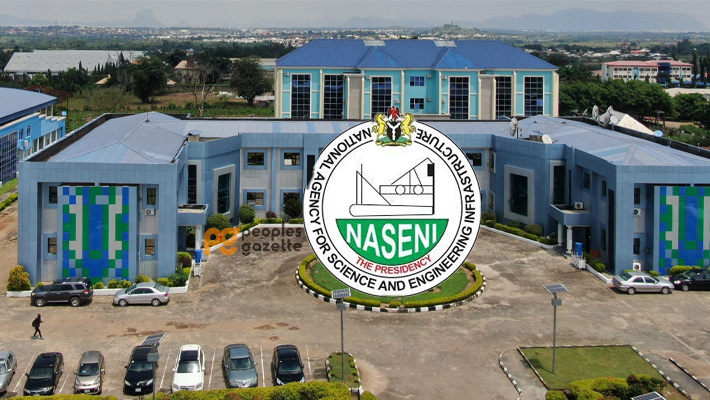
The National Agency for Science and Engineering Infrastructure (NASENI) says it is moving to commercialise locally developed technologies, including solar irrigation systems, electric vehicles, compressed natural gas (CNG) solutions and medical diagnostics.
NASENI executive vice chairman Khalil Halilu made this known in a statement on Friday in Lagos.
Mr Halilu said that the agency’s three-year transformation was focused on converting Nigerian research and engineering ideas into products, factories, businesses and jobs.
He said that NASENI had developed and introduced more than 40 products across renewable energy, mobility, agriculture, healthcare, information technology, clean cooking and education.
Mr Halilu said the agency was now building the industrial infrastructure and partnerships required to take such technologies beyond development and testing into sustained production and market adoption.
“Nigeria has capable engineers, researchers and innovators. What has often been missing is a connected system that can identify promising ideas, develop them, finance them, manufacture them and take them to the market,” he said.
The executive vice chairman said NASENI had established systems that connect talent discovery, research funding, product development, incubation, financing, manufacturing, and market access.
According to him, the approach aims to prevent Nigerian innovations from remaining prototypes without a clear pathway to commercial production.
He said NASENI’s Research Commercialisation Grant Programme awarded N229 million to 14 researchers in 2025 for projects in agriculture, clean energy, healthcare, mobility and digital security.
Mr Halilu said the agency was also implementing DELTA-2, a Nigeria-Czech Republic programme supporting applied research, experimental development and technology transfer.
He said NASENI HoldCo was being positioned to commercialise market-ready technologies, while the NASENI Showroom would give investors and procurement institutions a platform to access locally developed products.
“A competition can discover an inventor, but that inventor still needs product-development support, finance, manufacturing capacity and access to customers.
“We are building these components as one connected system rather than as isolated programmes,” Mr Halilu said.
He said that the agency’s manufacturing drive was particularly evident in renewable energy, where it was developing the 40-hectare Solar Industrial Park in Gora, Nasarawa State.
According to him, the park is being developed as an integrated platform for solar research, manufacturing, testing and deployment.
He said NASENI DevFrontier was advancing local production of solar streetlights, while NASRacks was being established to manufacture solar mounting structures.
According to him, the agency is also working with local and international partners to develop domestic capacity for photovoltaic modules, inverters, batteries and other solar components.
He said the objective was to increase Nigeria’s participation in the solar manufacturing value chain, instead of depending mainly on imported systems.
In agriculture, Mr Halilu said NASENI was deploying solar-powered irrigation technologies to enable farmers to produce year-round while reducing dependence on petrol and diesel pumps.
He said the Irrigate Nigeria Project was designed to reduce production costs and improve food security through locally adapted irrigation technology.
The NASENI boss said that the agency had recently demonstrated its solar irrigation system to farmers in Gabasawa and Kumbotso Local Government Areas of Kano State.
Mr Halilu said that NASENI was also restoring idle tractors and other public machinery under its National Asset Restoration, Refurbishment and Redeployment Project.
According to him, the programme will extend the lifespan of agricultural equipment, support mechanisation and reduce the cost of replacing functional machinery.
On transportation, Halilu said that the agency was developing an electric vehicle assembly facility at Abuja Technology Village, including capacity for the NASENI electric keke.
He said the agency had also established CNG conversion and reverse engineering centres in Abuja to support cleaner and more affordable transportation.
According to him, the centres will provide conversion services, technical training and opportunities for local fabrication and adaptation of CNG components.
Mr Halilu said NASENI was pursuing similar local manufacturing capacity in healthcare through the NASENI-Troment Rapid Diagnostics Factory in Abuja.
He said the facility would strengthen domestic production of essential medical diagnostic products and reduce dependence on imported diagnostics.
He said the Centre of Excellence for Precision Manufacturing in Abuja would support production of high-accuracy components for aerospace, defence, automotive, renewable energy, electronics and medical device industries.
Beyond products and factories, Mr Halilu said that the agency was developing the skilled workforce needed to sustain local manufacturing.
He said NASENI’s Skills Acquisition Centres were training young Nigerians in electrical installation, solar technology, automotive maintenance and other productive trades.
He said that DELT-Her and SheFly were increasing women’s participation in engineering and emerging technologies, while FutureMakers was developing an early pipeline of future engineers and inventors.
Mr Halilu said NASENI had also established more than 50 local and international partnerships covering renewable energy, automotive technology, agriculture, healthcare, defence, aerospace and research commercialisation.
He said the partnerships would be judged by technology transferred, skills developed, production capacity established, investment mobilised and products delivered.
According to him, NASENI is working with the Bureau of Public Procurement and other institutions to encourage adoption of credible locally developed technologies.
Mr Halilu said the agency’s next phase would focus on scaling production, strengthening local content, improving standards and certification, and increasing factory utilisation.
He said NASENI would also measure its performance through products sold, jobs created, local suppliers engaged, import savings, people trained and technologies transferred.
“The number of products, projects or partnerships is important, but it is not the final measure of success.
“The real test is whether our products are adopted, our factories operate sustainably; our partnerships transfer useful capabilities; our trainees secure livelihoods and more value remains within the Nigerian economy,” Mr Halilu said.
(NAN)

We have recently deactivated our website's comment provider in favour of other channels of distribution and commentary. We encourage you to join the conversation on our stories via our Facebook, Twitter and other social media pages.

More from Peoples Gazette

States
Independence: NBA urges Nigerians to expect better future
The NBA said that ordinary Nigerians should be deriving benefit from the subsidy removal rather than hardship.

Agriculture
FG tasks ECOWAS on leveraging financing strategies for agroecology
The federal government has urged stakeholders in the agriculture and finance sectors in the West Africa region to leverage financing strategies to enhance agroecology practices

Politics
Katsina youths pledge to deliver over 2 million votes to Atiku
“Katsina State is Atiku’s political base because it is his second home.”
States
Kano: KAROTA sanctions officers for misconduct
The managing director of the Kano State Roads Traffic Agency (KAROTA), Faisal Mahmud-Kabir, has stripped two officers of their portfolios over alleged misconduct.
Health
Ebola: Expert seeks wider contact tracing, stronger digital surveillance
Peter Adewuyi, a public health physician and senior field epidemiologist, has called for comprehensive contact tracing and stronger digital surveillance.
Politics
Lagos-Calabar Highway will expand trade, aid transportation of agricultural products: Tinubu’s Aide
Gift Johnbull, the senior special assistant to the president on community engagement, South-South, made this known while speaking to journalists on Friday in Abuja.

Africa
ECOMOG veterans seek repatriation of fallen soldiers, national memorial
ECOMOG veterans appealed for repatriation of the remains of Nigerian soldiers killed during peacekeeping operations in Liberia and Sierra Leone for proper military burial.

Africa
Many feared trapped as multi-storey tower collapses in Kenya
A viral video on social media captured the moment the building collapsed, throwing its surroundings into dust and rubble.

Economy
JPMorgan gets preliminary CBN approval for Nigerian merchant bank
The CBN described JPMorgan’s proposed expansion as evidence of growing international interest in Nigeria’s financial markets.


