

Despite growing financial inclusion, six in 10 Nigerians face severe liquidity distress: Report
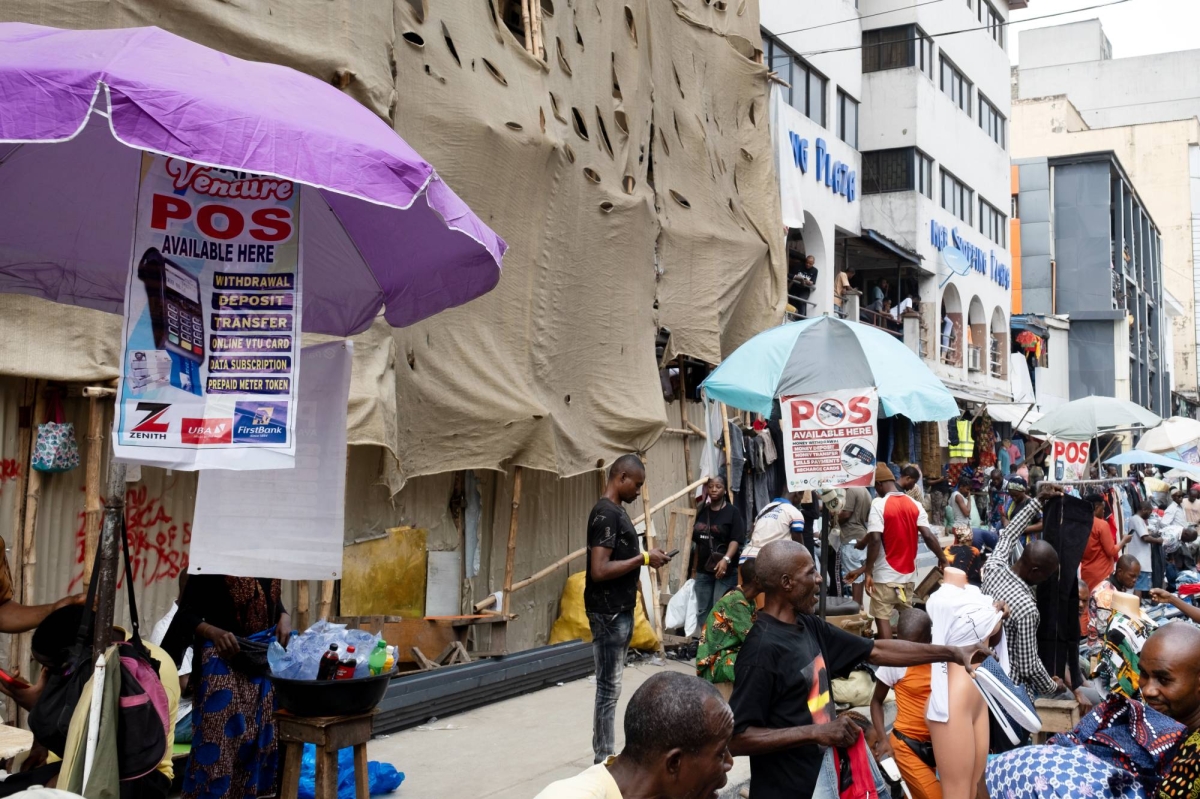
Despite increased access to formal and digital financial services, a new report found that about six in every 10 Nigerian adults remain in severe liquidity distress.
The 2026 Access to Financial Services in Nigeria (A2F) Survey found that 61 per cent of adults were experiencing severe liquidity distress, suggesting that wider access to financial services has not translated into financial security for many Nigerians.
The report, released on Wednesday in Abuja by Enhancing Financial Inclusion and Advancement (EFInA), also found that debt stress had increased, despite several measures of financial inclusion and improved financial health.
The findings came to light as Nigerian households continue to grapple with rising living costs and pressure on disposable incomes.
The latest A2F survey shows that Nigeria’s financial exclusion rate fell to 21 per cent in 2026, from 26 per cent in 2023. Formal financial inclusion also increased to 73 per cent, representing about 87.2 million adults.
However, the report said that being connected to the financial system does not necessarily mean that households are financially secure.
Coping with financial shocks
The survey said Nigerians who experienced financial shocks overwhelmingly relied on measures that could further weaken their finances.
About 71.6 per cent of adults who experienced shocks relied on what the survey classified as fragile or erosive coping mechanisms, compared with 13.8 per cent who used protective or adaptive measures.
These coping mechanisms include borrowing, selling assets or cutting essential spending to deal with an immediate financial problem.
While these measures may help households meet urgent needs, EFInA said they could reduce the chance of withstanding another financial shock.
The findings point to a gap between access to financial services and financial products that protect people when incomes fall, or unexpected expenses arise.
More Nigerians go digital
According to the survey, Nigerians’ use of digital financial services is growing significantly. Digital financial usage increased from about 47 per cent in 2023 to 64 per cent in 2026, while mobile money usage more than tripled from 12 per cent to 38 per cent over the same period.
Nigerians are also increasingly using mobile money beyond transfers, including paying bills, making purchases, and receiving money. Formal savings increased from 38 per cent in 2023 to 53 per cent.
But access to other financial products that could help households and businesses manage risks or finance economic activities remains low.
Formal credit remained at 10 per cent, while only about five per cent of adults has formal insurance and about nine per cent participated in a pension scheme.
The figures show that the financial system has expanded more rapidly in payments and savings than in credit, insurance and pensions.
EFInA said this showed why financial inclusion should increasingly be measured by what people can achieve with financial services rather than simply whether they have access to them.
Poor Nigerians left behind
The survey also found that the Nigerians who remain outside the financial system are increasingly concentrated among the poorest.
“53% of adults in the poorest quintile remain financially excluded, compared with just 1% of adults in the richest quintile,” it said.
Almost half of all financially excluded Nigerians were among the poorest 20 per cent of the population. The findings suggest that poverty is becoming an important dividing line in financial inclusion.
Among middle-wealth Nigerians, for example, the exclusion rate was the same, 16 per cent, for rural and urban residents.
EFInA said this showed that geography alone could not explain who remained outside the financial system and that interventions would increasingly need to account for people’s economic circumstances.
The finding builds on the organisation’s 2023 survey, which had already identified poverty as a major barrier to financial inclusion. At the time, EFInA reported that nearly half of adults without a financial account said they had no income.
Farmers remain vulnerable
The financial pressure was also evident among Nigerian farmers. About 51.2 per cent of farmers surveyed had experienced a financial shock, while 52.2 per cent of those exposed to shocks resorted to coping mechanisms.
The survey found that 76 per cent experienced residual distress after a shock. Despite the rapid expansion of digital finance, cash also remains important in agriculture. About 92 per cent of agricultural workers said they still received their payments in cash.
The report said this showed that a completely digital approach to financial inclusion would be premature, particularly as smartphone access, connectivity and digital skills remain uneven.
The A2F survey has been conducted periodically since 2008 and tracks how Nigerians use formal and informal financial services, including how they save, borrow, make payments and respond to financial emergencies.
The 2026 edition is the ninth survey, following previous rounds in 2008, 2010, 2012, 2014, 2016, 2018, 2020 and 2023.
EFInA Chief Executive Officer Foyinsolami Akinjayeju said the 2026 survey targeted 18,950 adults aged 18 and above, with 18,679 respondents eventually interviewed, recording a response rate of about 98 per cent.
She said the National Bureau of Statistics supported the survey design, while data collection took place between April and June. The sample was designed to produce indicators at national, regional and state levels.
The previous A2F survey showed that financial exclusion fell from 32 per cent in 2020 to 26 per cent in 2023, while formal financial inclusion increased from 56 per cent to 64 per cent during the period.

We have recently deactivated our website's comment provider in favour of other channels of distribution and commentary. We encourage you to join the conversation on our stories via our Facebook, Twitter and other social media pages.

More from Peoples Gazette

Agriculture
FG tasks ECOWAS on leveraging financing strategies for agroecology
The federal government has urged stakeholders in the agriculture and finance sectors in the West Africa region to leverage financing strategies to enhance agroecology practices

Politics
Katsina youths pledge to deliver over 2 million votes to Atiku
“Katsina State is Atiku’s political base because it is his second home.”

Economy
Air Peace slams NCAA, says August flight delay report inaccurate
Air Peace has disagreed with the flight delay figures in the NCAA’s August report, saying they did not reflect the airline’s total flight operations.

Africa
Ethiopian PM announces implementation of major projects
Ethiopian Prime Minister Abiy Ahmed said 2019 under the Ethiopian calendar (2026–2027 under the Gregorian calendar) will mark the start of implementing major government projects.
![Vessels along Strait of Hormuz (Photo credit: Benoit Tessier/File Photo/Reuters]](https://gazettengr.com/wp-content/uploads/cxk79fQB.jpg)
Economy
Hormuz ship traffic falls to three vessels
Commodity vessel traffic through the Strait of Hormuz fell to three ships on Wednesday, down from 12 the previous day and below the 10-day average of about 17.
Anti-Corruption
Extradition of 235 internet fraudsters from Nigeria, other countries secured: FBI
Kash Patel said the FBI’s crackdown on international fraudsters led to the extradition of 235 fraudsters from Nigeria and other countries.
Education
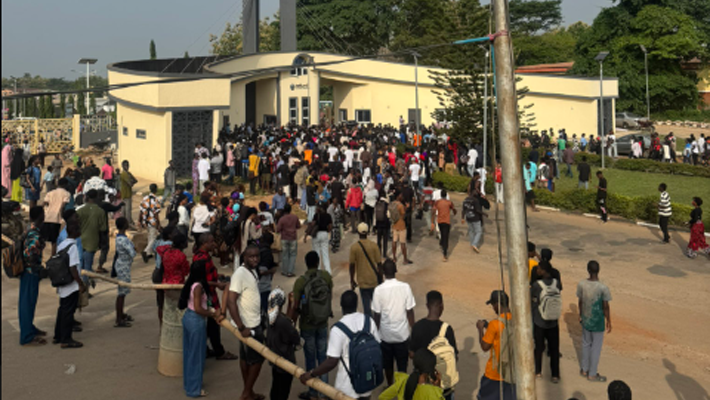
Police investigating alleged suicide of final-year student: OAU
The university urged students experiencing severe emotional distress, relationship difficulties, financial pressures or other personal challenges to seek help promptly.

Economy
Tariff War: Trump threatens EU with further sanctions over Canada
President Donald Trump has threatened to impose “serious tariffs” on the European Union’s 27 member states.


