

Nigeria, Norway deepen partnership on aquaculture, seafood trade
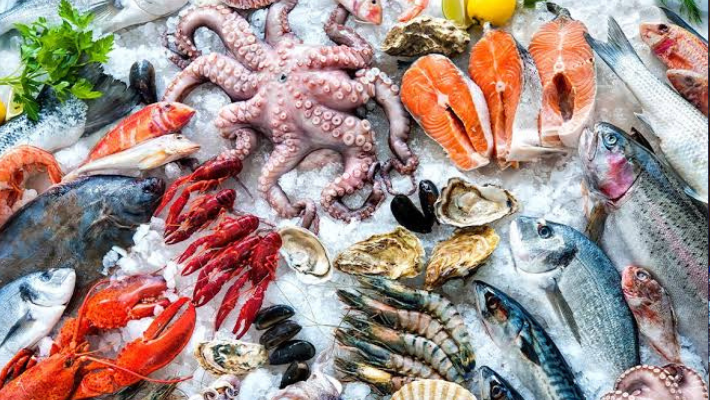
Nigeria and Norway have renewed their commitment to strengthening cooperation in aquaculture, seafood trade and fisheries management.
The partnership was renewed at an interactive seminar on stockfish, seafood and aquaculture held on Tuesday in Lagos.
The seminar was organised for stakeholders and regulatory authorities involved in seafood and aquaculture imports, exports and trade in Nigeria.
The session brought together Norwegian seafood exporters, Nigerian importers, fish farmers, fisheries consultants and regulators.
It also attracted representatives of relevant government agencies involved in fisheries, seafood and aquaculture activities.
The Norwegian Ambassador to Nigeria, Svein Bæra, said the partnership would strengthen the long-standing stockfish trade between both countries and promote knowledge exchange.
Mr Bæra said Norwegian stockfish had been a household product in Nigeria for more than 100 years.
He said both countries also shared common interests in aquaculture and that Norway was willing to share its fish-farming experience with Nigeria.
He said the knowledge would help Nigeria develop an industry capable of contributing to food security, employment and economic growth.
“Norway and Nigeria have been partners since 1960. We built this business partnership on many years of political and economic partnership.
“Also, within oil and gas, Nigeria and Norway have a lot of things in common, so we find it easy to work together.
“This also applies when it comes to seafood and fish farming,” he said.
The ambassador said Norwegian experts at the seminar included representatives with experience in fish farming, adding that Nigerian farmers could benefit from their knowledge.
He said the objective was to help Nigerian practitioners increase production, improve income and create more jobs while ensuring adequate fish supply.
Also speaking, Jonny Haaberg, director for Africa and the Middle East at the Norwegian Seafood Council, said Nigeria remained an important market for Norwegian stockfish.
Mr Haaberg said the long-standing trade had created strong commercial and cultural connections between the two countries.
He said Norway also recognised Nigeria’s need to increase domestic seafood production through aquaculture.
According to him, Norway had accumulated considerable knowledge from decades of developing its aquaculture industry and was willing to share it with Nigeria.
“It’s part of the thinking about that business is basically partnership over time. So if you develop, we develop.
“I think it’s giving and taking. So for us to have this trade with Nigeria, it’s important that we look upon ourselves as partners in this development,” he said.
Mr Haaberg said Norway, as a major seafood exporter, also imported products it could not produce locally.
He said both countries could benefit from continued seafood trade.
Mr Haaberg attributed the previous decline in seafood trade between both countries partly to the COVID-19 pandemic and economic challenges.
He said the naira’s relative stability in recent times benefited exporters and importers by providing greater certainty for business planning.
Ole Olsen, the chief executive officer of SUFI Premium Seafood, a Norwegian exporter of stockfish products to Nigeria, described Nigeria as a major market.
Mr Olsen said Nigeria and Italy were traditionally the major markets for Norwegian stockfish products.
He added that many of the products exported to Nigeria were particularly popular among Nigerian consumers.
Mr Olsen said his company had exported to Nigeria for many years and regarded the country as a key market.
According to him, SUFI exports between 50 million and 100 million Norwegian kroner worth of products to Nigeria annually.
He said the value was equivalent to about five million to $10 million.
“For us as a company, that makes it very, very important, especially considering that a lot of the products we are selling to Nigeria are not sold to other markets,” he said.
Mr Olsen said the sharp increase in raw material prices in the previous year had created difficulties for exporters and importers.
He, however, said the situation appeared to be stabilising, noting that naira stability and raw-material supply could prevent further significant price increases.
He said Norwegian exporters were also working to improve the quality of stockfish products supplied to the Nigerian market.
Mr Olsen expressed optimism that improved quality and stable prices would benefit exporters and Nigerian importers.
Abiodun Cheke, fisheries consultant to the Norwegian Seafood Council in Nigeria and coordinator of the seminar, said the meeting aimed to support aquaculture development.
Ms Cheke said the meeting would also improve access to international markets for Nigerian fish products.
She said Norway had previously supported training for Nigerian government regulatory authorities and aquaculture practitioners.
According to her, the training included farm visits and focused on improving practices required for Nigerian aquaculture products to meet international standards.
Ms Cheke said the latest seminar was designed to review progress and identify ways of facilitating greater access for Nigerian aquaculture products to international markets.
“The Norwegian government is trying to assist Nigeria to vacate the ban on Nigeria’s fish farm products in the international market,” she said.
Ms Cheke said the meeting also gave Nigerian stakeholders an opportunity to understand regulatory requirements governing seafood imports and exports.
She said representatives of WorldFish, fisheries authorities and the Nigeria Customs Service were among those expected to provide information on relevant guidelines.
“We don’t cut corners, and we don’t like our customers to cut corners or break the laws of Nigeria,” she said.
Ms Cheke said improved compliance, fish-health management and sustainable production could help Nigerian aquaculture practitioners gain greater acceptance in international markets.
She noted that increased access to international markets could encourage greater investment in aquaculture and fish processing, create jobs and increase government revenue.
She said the sector’s development could ultimately contribute to Nigeria’s gross domestic product.
(NAN)

We have recently deactivated our website's comment provider in favour of other channels of distribution and commentary. We encourage you to join the conversation on our stories via our Facebook, Twitter and other social media pages.

More from Peoples Gazette

Agriculture
FG tasks ECOWAS on leveraging financing strategies for agroecology
The federal government has urged stakeholders in the agriculture and finance sectors in the West Africa region to leverage financing strategies to enhance agroecology practices

Politics
Katsina youths pledge to deliver over 2 million votes to Atiku
“Katsina State is Atiku’s political base because it is his second home.”
Economy
Edible oil tanker drivers suspend planned strike
NUEOTDN President Ilias Aperun said the decision followed interventions by the federal government and the State Security Service (SSS).

States
Lagos APC governorship candidate Hamzat rallies voters for 2027
Mr Hamzat expressed concern about declining voter participation, noting that of the 6.2 million registered voters in Lagos in the last election, only about 1.2 million voted.
Economy
NMDPRA begins consultations on anti-competition regulations in petroleum sector
The proposed regulations are designed to address abuse of dominance and promote fair, non-discriminatory access to essential petroleum infrastructure.
States
Gov Bago inaugurates nine-member judicial commission to probe 37 miners’ deaths in NSCDC custody
The commission is mandated to investigate the circumstances surrounding the arrest and the legality of the deceased’s custody, and their condition and treatment while in custody.
Economy
Nigeria, Norway deepen partnership on aquaculture, seafood trade
The Norwegian Ambassador to Nigeria, Svein Bæra, said the partnership would strengthen the long-standing stockfish trade between the two countries and promote knowledge exchange.
NationWide
Umahi promises pedestrian bridges, improved road access to tertiary institutions
Mr Umahi said the government had taken special note of the need to incorporate access routes to campuses into future road construction projects where possible.


