

What Nigeria loses as Tinubu skips UNGA yet again
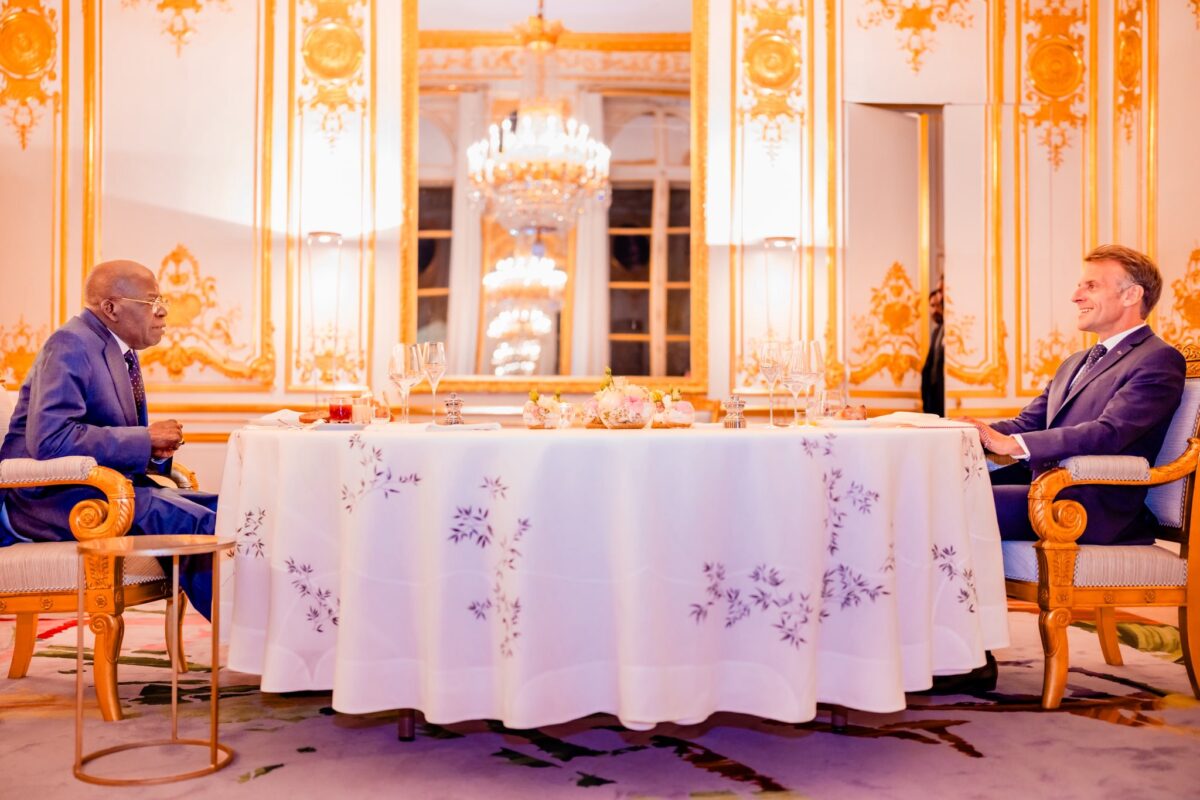
When Vice-President Kashim Shettima delivers Nigeria’s national statement to the United Nations General Assembly (UNGA) tomorrow 24 September, Nigeria will be represented. Its Permanent Mission will remain at its post, and its officials will participate in the UNGA and related meetings. In that formal sense, Nigeria will not be absent from the United Nations.
But another question deserves attention: what does Nigeria lose when its President is not physically present?
President Bola Ahmed Tinubu last attended the UNGA in 2023. He was represented by Vice-President Shettima at the 79th and 80th sessions, and Shettima will again represent him at the 81st. The Presidency confirmed on 21 September that Tinubu had extended his working vacation and would return to Nigeria at the weekend, while Shettima had already departed for New York to present Nigeria’s national statement.
That arrangement is legally possible. International law does not require a Head of State to personally attend every UNGA. A State may participate through an authorised delegation. The question, therefore, is not whether Shettima can represent Nigeria. He can. The question is: what can presidential presence accomplish that cannot be completely delegated?
Diplomacy is not exhausted by the delivery of a prepared speech.
The UN describes the General Debate as the annual meeting at which Heads of State and Government, and other high-level representatives, address global challenges. Nearly 130 Heads of State and Government are expected to attend High-Level Week in person this year. The value of being there, therefore, extends beyond the rostrum: it includes bilateral meetings, informal consultations, coalition-building and direct engagement with other leaders.
A President can delegate attendance. He cannot delegate his personal political capital in its entirety.
This matters particularly for Nigeria because of the country’s historical foreign-policy identity. Africa has been the centrepiece of Nigeria’s foreign policy since independence. Nigeria invested diplomatic and material resources in African liberation, decolonisation, opposition to apartheid, peacekeeping, regional integration and conflict resolution. The UN was one of the arenas through which Nigeria projected these concerns beyond the continent.
The point is not nostalgia. Nigeria’s own constitutional foreign-policy objectives include the promotion of African integration and support for African unity, international cooperation for universal peace, respect for international law and the promotion of a just world economic order. The Tinubu administration’s 4D foreign-policy framework likewise presents Nigeria as seeking proactive engagement and regional leadership in Africa and beyond.
If Africa remains central to Nigeria’s foreign policy, the UN cannot be peripheral. African interests are negotiated there. International peace and security are debated there. So are development, climate finance, global economic governance and reform of the UN Security Council (UNSC).
Nigeria has reasons to be visible in these conversations. Africa still has no permanent seat on the UNSC. Nigeria has served five times as an elected non-permanent member and continues to participate in negotiations on the UNSC’s reform, including the African position, which calls for at least two permanent African seats and five non-permanent seats.
The same argument applies to Nigeria’s security challenges.
Nigeria’s insecurity has regional and international dimensions that can engage the wider international community, including the UNSC, where situations are determined to constitute threats to international peace and security. UNGA week provides an unusual concentration of governments and international partners with whom Nigeria can discuss its security challenges, humanitarian consequences and regional and international cooperation.
My earlier research, International Law and Sustainable Internal Security in Nigeria: The Responsibility of the International Community, examined Nigeria’s historical engagement, or non-engagement, with regional mechanisms during the Boko Haram insurgency, including arguments that Nigeria had not requested military support from ECOWAS. The point was not that Nigeria should surrender its sovereignty, but that security threats with regional consequences raise questions about regional and international responsibility.
That history should not be misread as evidence that Nigeria no longer works with ECOWAS or the African Union. Rather, it demonstrates why sustained engagement at regional, continental and global levels matters.
The issue, therefore, is opportunity cost.
Every UNGA brings an extraordinary concentration of diplomatic opportunity. For Nigeria, that opportunity involves not only speaking to the world but listening to it; not only defending Nigerian interests but building coalitions; not only discussing Africa but demonstrating Nigeria’s willingness to occupy diplomatic space commensurate with its history and responsibilities.
Nigeria historically approached international diplomacy with a consciousness of responsibility to Africa and to peoples emerging from colonialism and racial domination. That history should not be romanticised, and Nigeria’s foreign policy must ultimately serve Nigerian interests. But national interest and African leadership are not mutually exclusive.
The question confronting Nigeria is, therefore, larger than Tinubu’s attendance at one General Assembly: is Nigeria still prepared to occupy the diplomatic space its history, population, economy, security responsibilities and continental role have traditionally demanded?
Yes, Tinubu may have sent his vice to represent him and present Nigeria’s national statement at this year’s UNGA. However, the president’s personal political capital, the access his presence creates and the opportunity to demonstrate, at the highest level, that Nigeria is prepared to occupy the diplomatic space its history, population, economy, security responsibilities and continental role have traditionally demanded, cannot be fully delegated.
While the speech to be delivered by Shettima will last minutes, the diplomacy around Tinubu’s presence can shape relationships for years.
Uche Young Ndumele is an international law specialist, legal practitioner and author whose works are catalogued in the eLibrary of the African Court on Human and Peoples’ Rights. He writes from Canada.

We have recently deactivated our website's comment provider in favour of other channels of distribution and commentary. We encourage you to join the conversation on our stories via our Facebook, Twitter and other social media pages.

More from Peoples Gazette

Agriculture
FG tasks ECOWAS on leveraging financing strategies for agroecology
The federal government has urged stakeholders in the agriculture and finance sectors in the West Africa region to leverage financing strategies to enhance agroecology practices

Politics
Katsina youths pledge to deliver over 2 million votes to Atiku
“Katsina State is Atiku’s political base because it is his second home.”
States
Alleged Contempt: Ex-Edo deputy governor seeks out-of-court settlement
The judgement was on the suit marked FHC/ABJ/CS/478/2024 with Mr Shuaibu as the plaintiff.

Lagos
LASEPA seals 12 establishments over environmental violations
Mr Ajayi said environmental compliance was a collective responsibility.
World
Mahama holds trade partnerships, economic cooperation meeting with world leaders
Mr Ruto commended Mr Mahama for spearheading the Accra reset agenda.

Economy
Court allows Trump admin to exchange land with Musk’s SpaceX in Texas
A U.S. federal court has approved a land exchange between the Fish and Wildlife Service and SpaceX in South Texas.

Abuja
TCN announces six-hour power outage in parts of Abuja
The Transmission Company of Nigeria has announced a six-hour planned power outage in parts of Abuja on Wednesday.
States
Benue stakeholders fine-tune action plan to boost women’s security
Stakeholders have fine-tuned a new Benue ‘Action Plan for Women, Peace and Security’ to enhance the security and well-being of women, youth and children.


