

Abuja residents cry out over rising food prices as yuletide approaches
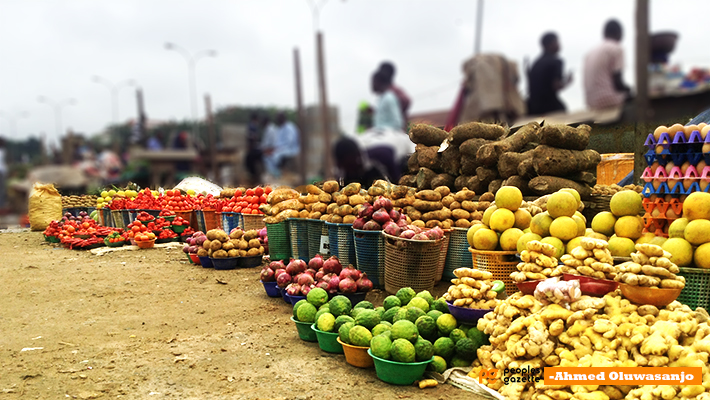
Abuja residents and traders across its community markets have expressed concern over rising food prices ahead of yuletide, saying rising costs reduce purchasing power and patronage.
A visit to Dei-Dei, Kubwa and Dutse markets on Thursday showed that staple food prices, including rice, beans, garri, yam, cooking oil, onions and tomatoes, remained high.
A survey of the markets showed that customers thronged stalls in November, hoping to find lower prices ahead of the Christmas shopping rush and costs.
The survey showed that a 50kg bag of local rice sells for N72,000 to N80,000, while foreign rice costs between N95,000 and N110,000, depending on location and brand.
A 50kg bag of beans costs between N85,000 and N100,000, while a small ‘paint’ bucket of garri costs N3,000 to N4,000.
Palm oil price ranges from N2,200 to N2,800 per litre, while vegetable oil costs between N2,800 and N3,500 per litre.
A basket of tomatoes sells between N28,000 and N40,000 depending on its size and quality; a medium-sized basket of pepper costs between N18,000 and N30,000, while a small ‘dustbin’ basket of onions sells for N11,000 to N13,000 depending on location.
Many traders attributed the price increases to rising transportation costs, high fuel prices, poor road conditions in food-producing areas and increasing production expenses.
Onyinyechi Umeh, a civil servant in Kubwa, said preparing for the festive season had become more difficult because of the high cost of food.
”Last year, I could buy enough food items for my family without much stress, but this year everything is more expensive. We have had to reduce the quantity of food we buy because our income has remained the same,” she said.
Usman Sani, a commercial driver in Dei-Dei, said rising food prices had placed additional pressure on low-income earners.
”Transportation costs have gone up, and food prices keep rising. It is becoming difficult to provide for our families,” he said.
A trader at Dei-Dei Market, Esther John, attributed the price increases to higher transportation costs, rising wholesale prices and increased operating expenses. She said many customers now bought food in smaller quantities or postponed purchases because of limited income.
”The market is no longer as busy as it used to be before festive periods. People come to ask for prices but end up buying less. We understand the difficulties customers are facing, but we also buy at higher prices. Transporting goods from producing states has become more expensive,” she said.
Abdullahi Ibrahim, a grains dealer at Dutse Market, said patronage had declined despite expectations of increased sales during the festive season. According to him, many traders worry sales may remain low if prices keep rising.
”Business is not moving as expected because prices are high. Customers spend more time comparing prices before making purchases,” he said.
At Dutse Market, Aisha Ibrahim, a tomato seller, said the cost of transporting produce from northern states had increased significantly.
”Transport fares have gone up, and that affects the final price. We cannot sell below our cost because we also need to make a profit,” she said.
Some residents said the high prices had compelled them to adjust their shopping plans for the festive season. They urged governments at all levels to implement measures to curb food inflation, improve transportation infrastructure and support farmers to boost food production.
According to them, such interventions will help stabilise prices and make food more affordable for households.
Although festive periods are traditionally associated with increased shopping, many residents said prevailing economic conditions had forced them to prioritise essential needs over extensive festive purchases.
(NAN)

We have recently deactivated our website's comment provider in favour of other channels of distribution and commentary. We encourage you to join the conversation on our stories via our Facebook, Twitter and other social media pages.

More from Peoples Gazette

States
Independence: NBA urges Nigerians to expect better future
The NBA said that ordinary Nigerians should be deriving benefit from the subsidy removal rather than hardship.

Agriculture
FG tasks ECOWAS on leveraging financing strategies for agroecology
The federal government has urged stakeholders in the agriculture and finance sectors in the West Africa region to leverage financing strategies to enhance agroecology practices

Politics
Katsina youths pledge to deliver over 2 million votes to Atiku
“Katsina State is Atiku’s political base because it is his second home.”

States
40-year-old Ekiti man arraigned over alleged N200,000 fraud
The defendant pleaded not guilty to the charge.
Abuja
Abuja residents cry out over rising food prices as yuletide approaches
Abuja residents and traders across its community markets have expressed concern over rising food prices ahead of yuletide.

States
EFCC recovers N211.4 million for two property fraud victims in Delta
Mr Sa’ad reaffirmed the commission’s commitment to recovering proceeds of crime.

Health
KADCHMA launches enrolment centre to boost informal sector participation
KADCHMA has expanded its health insurance awareness campaign into the informal sector to increase access to affordable healthcare.

Rights
Nigerian father gets N300,000 fine, 20 lashes for sexually assaulting four-year-old daughter repeatedly
The police command in Adamawa says a 45-year-old father has been convicted of sexually assaulting his four-year-old daughter.

World
Xi calls for peaceful reunification of Taiwan with China
Xi Jinping has called for the peaceful reunification of Taiwan with China, reaffirming his commitment to implementing a ‘one country, two systems’ policy.


