

World Bank mobilising $6 billion for Nigeria targeting agriculture, MSMEs, 850,000 jobs

Unlocking $5.79 Billion in private financing: The World Bank Group Is leading the charge for Private Capital Mobilization in Nigeria
From reform to investment: A coordinated World Bank Group approach
This effort reflects a coordinated World Bank Group approach. The World Bank supports reforms and projects that improve the investment environment and create viable opportunities. IFC complements this work by structuring investments, deploying its own capital, and bringing commercial lenders and institutional investors into those opportunities. MIGA provides guarantees that reduce risks for investors. Together, the institutions are helping make private investment a stronger driver of infrastructure, productivity, and jobs.
Creating the conditions for private capital to move
Since mid-2023, Nigeria has undertaken reforms to improve foreign-exchange management, strengthen public finances, reform fuel subsidies, and create more predictable conditions for investment. Supported in part by the World Bank’s RESET and NAIJA development policy financing programs, these measures are helping strengthen policy credibility. Further reforms aim to deepen capital markets, expand digital trade, enable greater private participation in electricity, and improve competitiveness—reducing risks and opening new opportunities for private capital.
Reforms can open the door to investment, but their impact is felt only when capital begins to flow into projects that change people’s lives. Across digital infrastructure, agriculture, and finance for small businesses, World Bank Group-supported projects and investment platforms are translating improved conditions into concrete opportunities for private capital.
Connecting millions to opportunity
In the digital sector, the Building Resilient Digital Infrastructure for Growth (BRIDGE) Project represents a new model for infrastructure development. Instead of relying solely on public financing, the project will use a public-private partnership to build, own, and operate a nationwide open-access fiber-optic network. The first round of investor selection is expected to mobilize at least $156 million in private equity, while subsequent financing rounds could unlock up to $1.1 billion in private investment by 2030.
The scale of that investment is matched by the reach of its potential impact. BRIDGE will bring affordable broadband access to an additional 58 million people, expanding coverage from 92 million people in 2025 to 150 million by 2030. The beneficiaries include an additional 42 million young people and 15 million women. The project will also connect millions of households, 38,800 public schools, 16,900 health facilities, and 3,400 local government offices to high-speed broadband internet—bringing connectivity closer to the places where people learn, seek care, access public services, and build livelihoods.
Planting the foundations for stronger farms and food systems
For Nigeria’s farmers, limited access to quality seeds, affordable fertilizer, digital services, and reliable markets constrains productivity and incomes. The World Bank Group’s AgriConnect approach links public-sector reforms and investment platforms with IFC financing to address these barriers across agricultural value chains. The Agricultural Value Chains for Growth (AGROW) Project targets one million smallholder farmers, including women and young people, by improving seed and fertilizer systems, strengthening digital platforms, increasing transparency, and expanding links to markets. AGROW is expected to mobilize approximately $220 million from agribusiness firms and a further $22 million from certified seed producers. These interventions are intended to reduce investment risks, strengthen food security and productivity, and create more reliable opportunities for farmers and agribusinesses.
Giving small businesses the capital to grow
The Fostering Inclusive Finance for MSMEs in Nigeria program (FINCLUDE) is designed to expand the availability and quality of finance for more than 250,000 micro, small, and medium enterprises in job-intensive sectors, with 30 percent of financing targeted to women-led businesses. A $500 million package from the International Bank for Reconstruction and Development and the International Development Association combines financing and risk-sharing tools to encourage financial institutions and other investors to provide additional capital to underserved firms. The program is expected to mobilize nearly $1.89 billion in private financing and support an estimated 850,000 direct and indirect jobs.
Turning opportunity into investment at scale
Creating stronger agricultural value chains requires both better systems for farmers and investment in the businesses that supply the inputs they need. Building on the World Bank-supported platforms described above, IFC is helping turn viable opportunities into investments—using direct financing, partnerships with other lenders, and capital-markets instruments to mobilize additional private capital at scale.
In support of the broader AgriConnect agenda, IFC financing for Dangote Industries Limited and Indorama Fertilizer is helping expand domestic fertilizer production and improve access to inputs for more than 10 million smallholder farmers. IFC helped mobilize $1.02 billion for Dangote through refinancing and financing from development institutions and commercial lenders, and $282.5 million for Indorama through syndicated financing. With an aggregate production capacity of 6.8 million metric tons per year, the two projects can reduce reliance on imported inputs, improve affordability, and strengthen food security. Together with AGROW, these investments show how reforms, public programs, and private financing can reinforce different parts of the same agricultural value chain.
The same approach—using IFC participation to draw in private investors and expand essential infrastructure—is also advancing Nigeria’s digital transformation. In telecommunications, IFC served as an anchor investor in a $1.2 billion bond issuance by IHS Towers, helping mobilize more than $1.1 billion from private investors and broaden participation in the transaction. The issuance demonstrated investor confidence not only in Nigeria’s digital infrastructure sector but also in the country’s capital markets. Through its tower-sharing model, IHS Towers enables mobile network operators to expand connectivity more quickly and at lower cost while reducing the environmental footprint of network deployment.
One Group, complementary tools, greater impact
Taken together, these examples show how the World Bank Group’s institutions contribute distinct but complementary tools. Policy reforms improve the enabling environment; investment projects and platforms create viable opportunities; IFC helps structure and mobilize financing around them; and MIGA can mitigate risks that deter investors. This sequencing helps public resources catalyze larger pools of private capital while maintaining a clear focus on development impact.
Together, these reforms, platforms, guarantees, and investments are helping mobilize up to $5.79 billion in private financing in fiscal year 2026. The significance of that figure lies in what it can deliver: more affordable broadband, stronger agricultural value chains, better access to finance for small businesses, and more opportunities for women and young people. It demonstrates how scarce public resources can reduce risk, attract private investment, and support job-rich growth at scale.
As reforms advance and investment opportunities expand, the significance of this coordinated approach will be measured not only in capital mobilized, but in what that capital makes possible: farmers reaching stronger markets, businesses gaining room to grow, communities connecting to essential services, and more women and young people finding pathways to opportunity. By helping close infrastructure and financing gaps, the World Bank Group is supporting a more resilient, productive, and private sector-led Nigerian economy.

We have recently deactivated our website's comment provider in favour of other channels of distribution and commentary. We encourage you to join the conversation on our stories via our Facebook, Twitter and other social media pages.

More from Peoples Gazette

States
Independence: NBA urges Nigerians to expect better future
The NBA said that ordinary Nigerians should be deriving benefit from the subsidy removal rather than hardship.

Agriculture
FG tasks ECOWAS on leveraging financing strategies for agroecology
The federal government has urged stakeholders in the agriculture and finance sectors in the West Africa region to leverage financing strategies to enhance agroecology practices

Politics
Katsina youths pledge to deliver over 2 million votes to Atiku
“Katsina State is Atiku’s political base because it is his second home.”
Health
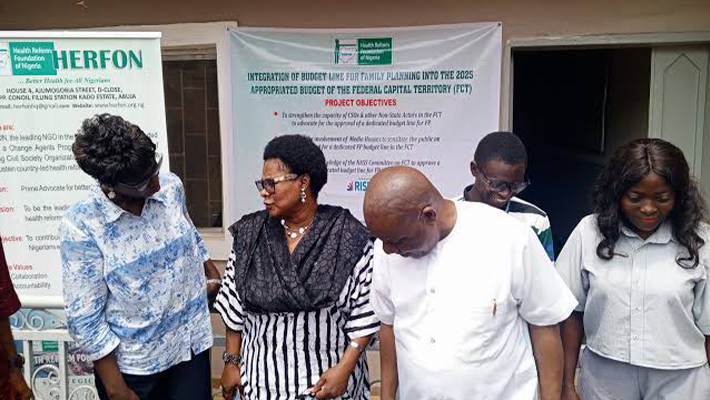
HERFON to unveil two-volume book on non-communicable diseases
HERFON says it will unveil a two-volume book on non-communicable diseases on October 15 in Abuja, alongside free health screening for participants.
World
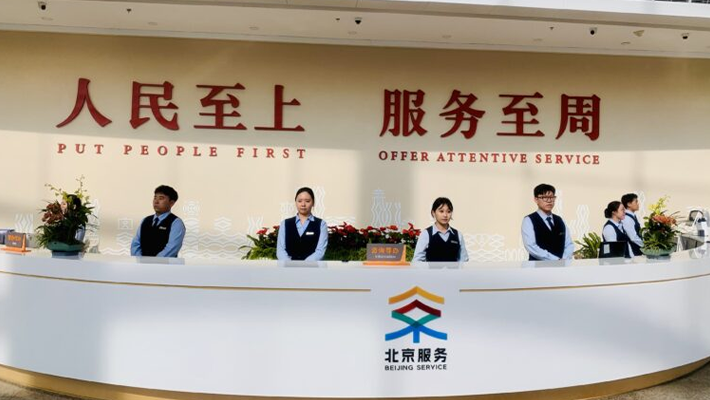
Beijing’s 12345 hotline sets pace in citizen-centred urban governance
Beijing 12345 Hotline Citizen Service Centre is emerging as a model of technology-driven urban governance, placing residents’ needs at the centre of public service delivery.
Anti-Corruption
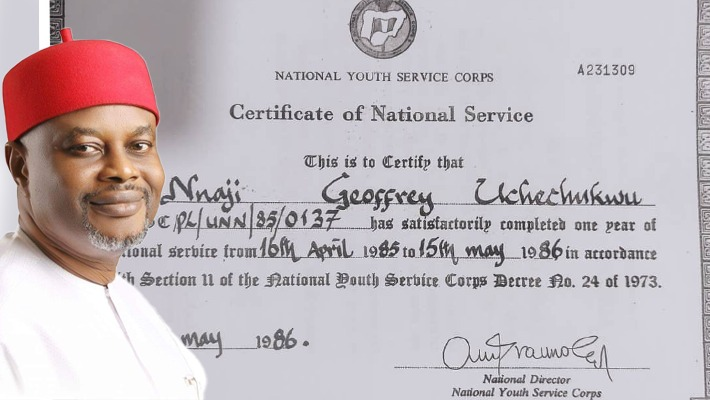
Uche Nnaji drops forged NYSC certificate, submits only WAEC result to INEC for governorship election
Mr Nnaji’s corruption trial will resume on October 26 as the ICPC seeks his conviction for forging his NYSC and UNN degree certificates.

Opinion
Abdul Mahmud: When the ruling party needs guns to win election
No president should need an AK-47 to win an election, and no ruling party should need the threat of one to persuade Nigerians to vote for its candidate.

World
Heavy social media use linked to lower life ratings among youths in 16 countries: Gallup
“What stands out is that moderate social media use for adults is associated with better outcomes on many wellbeing measures,” said Gallup chief.
States
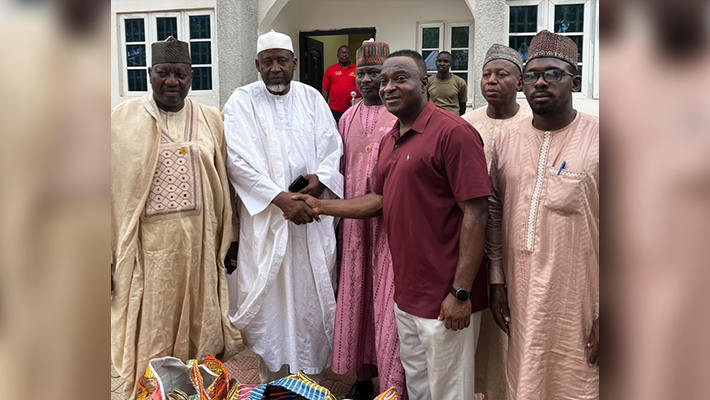
Sokoto govt donates N38 million, grains to families of fallen heroes
The Sokoto government donated N38.25 million and bags of grains to the families of 24 fallen soldiers and 57 injured personnel in recognition of their sacrifices in service.


