

Personal branding and the future of Africa’s knowledge industry

Conversations about Africa’s place in the global economy often focus on its natural resources, emerging markets and the challenges confronting its development. While these conversations are important, I believe there is another resource whose value we have not fully explored: the knowledge, expertise and lived experiences of Africans.
Across the continent are professionals who have spent decades building businesses, developing industries and navigating systems. There are entrepreneurs who have learnt valuable lessons from building businesses in challenging environments, professionals with deep industry knowledge and individuals whose experiences could help others make better decisions. Yet much of this knowledge remains confined to the environment where it was acquired.
I believe personal branding can play a significant role in changing this. Beyond visibility and reputation management, it offers African professionals and thought leaders an opportunity to communicate what they know, establish their authority and make their expertise accessible to a wider audience. More importantly, it can provide a pathway for turning individual knowledge into intellectual assets that contribute to Africa’s knowledge industry.
One of the things I have observed through my work in personal branding is that many experienced professionals underestimate the value of what they know. What may seem routine to someone who has accumulated fifteen or twenty years of experience could be valuable insight to a young professional, an entrepreneur entering the industry or trying to solve a particular problem.
This is one of the reasons I believe we need to change how we think about personal branding in Africa. It should not be reduced to having a social media profile or gaining followers. These may be useful parts of building a personal brand, but they are not the destination. An effective personal brand communicates what an individual knows and the value of their contribution.
An African financial expert who understands the complexities of doing business across different African markets has knowledge worth sharing. A healthcare professional who has spent years navigating healthcare delivery challenges has insights that could inform wider conversations. An entrepreneur who has built a sustainable business despite economic constraints has lessons to share.
The first step is to move from experience to knowledge contribution.
There is a difference between having experience and making that experience useful to others. Years of professional practice do not automatically translate into thought leadership. The value emerges when individuals reflect on what they have learnt, articulate their perspectives and contribute meaningfully to conversations within their industries.
This requires more than posting motivational statements or sharing occasional professional achievements. It means discussing industry developments, explaining lessons from practical experience, offering informed opinions, and providing useful perspectives on problems within one’s field.
Digital platforms have made this increasingly accessible. LinkedIn, podcasts, and other channels allow professionals to reach audiences beyond their networks. Someone working in Lagos can contribute to conversations involving professionals in Nairobi or New York without necessarily being physically present in those spaces.
However, visibility should not become the ultimate measure of success. The objective should be to make valuable knowledge discoverable, accessible and useful. We must begin to ask not only how many people are seeing our content, but also what people are learning from it and what opportunities it creates for meaningful knowledge exchange.
The second step is to move beyond content creation and begin productifying expertise.
One of my concerns about the growing conversation around personal branding is that it sometimes places too much emphasis on content creation. Professionals are encouraged to post consistently, build an audience and become more visible, but there is often little conversation about what happens to the knowledge they are sharing or how it can be developed into something more enduring.
Content creation is important, but it should not be the final destination for someone with substantial experience and expertise.
An individual who has spent twenty years in human resources, for instance, may have developed practical approaches to talent management, organisational development, and leadership. Rather than limiting that knowledge to social media posts, the individual could develop a book, create an online course or establish a mentorship programme around those areas of expertise.
A lawyer could develop practical learning resources around business compliance. An experienced educator could create a course for emerging teachers. A business leader could establish a mentorship platform that helps young entrepreneurs understand the realities of building and managing businesses. A finance professional could develop learning products that make complex financial concepts more accessible to small business owners.
These are examples of how professional knowledge can move from being individually held to becoming structured intellectual assets. They also create opportunities for professionals to build sustainable business models around their expertise.
It is not simply about monetising everything one knows. It is about recognising that valuable knowledge deserves structure, preservation and distribution. Where there is a clear need, it can also become a viable commercial offering.
The third step is to build a knowledge industry that can compete globally.
I believe Africa must become more intentional about how it contributes to the global knowledge economy. We have often been represented internationally through conversations about corruption, poverty, and other development challenges. These issues deserve attention, but they do not represent the entirety of the continent’s intellectual contributions or potential.
Africa is home to people developing solutions, building businesses, leading institutions and gaining expertise across virtually every professional field. Yet we cannot expect these contributions to influence global conversations if they remain largely undocumented or inaccessible beyond their immediate environments.
We must build a stronger culture of knowledge production, publishing, distribution and exchange.
This also requires us to think beyond creating content for social media algorithms. African professionals should be writing books that can reach international readers, developing courses that serve learners across geographical boundaries, establishing mentorship platforms that connect experienced practitioners with emerging talent and contributing research and informed opinions to global conversations.
Technology has lowered many of the barriers to distributing knowledge. An expert in Nigeria can now teach someone in another country through an online course or a book, but it requires intentional investment in the quality and accessibility of what we create.
We must also recognise that global relevance is not achieved simply by attaching an African identity to a product. The knowledge we share must be credible, useful and capable of addressing real needs. Our lived experiences and cultural perspectives can provide valuable context, but they must be supported by depth and a commitment to quality.
Through my work at Glass & Craft PR, I have become increasingly convinced that there is a significant opportunity at the intersection of personal branding and knowledge commercialisation. My interest goes beyond helping professionals become more visible. I want to see more African experts become known for what they know and develop intellectual assets from their expertise through which their knowledge can serve people beyond their immediate circles.
If Africa is to become a global knowledge hub, we must move from simply telling our stories to systematically building, preserving and exporting the knowledge.
- Preciousgift Ogunsanya is the founder of Glass & Craft PR, a personal branding agency that helps African professionals, executives and thought leaders build personal brands and transform their expertise into intellectual assets.

We have recently deactivated our website's comment provider in favour of other channels of distribution and commentary. We encourage you to join the conversation on our stories via our Facebook, Twitter and other social media pages.

More from Peoples Gazette

States
Independence: NBA urges Nigerians to expect better future
The NBA said that ordinary Nigerians should be deriving benefit from the subsidy removal rather than hardship.

Agriculture
FG tasks ECOWAS on leveraging financing strategies for agroecology
The federal government has urged stakeholders in the agriculture and finance sectors in the West Africa region to leverage financing strategies to enhance agroecology practices

Politics
Katsina youths pledge to deliver over 2 million votes to Atiku
“Katsina State is Atiku’s political base because it is his second home.”
Hot news Home top
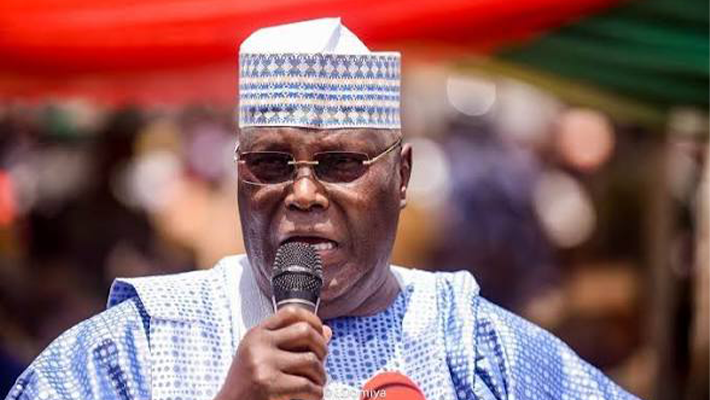
Ridiculous ruling can’t stop me from rescuing Nigerians from APC-imposed hardship, says Atiku
Mr Atiku said the judgment also raises serious legal concerns.

Showbiz
Blessing CEO announces breakup from IVD
Ms Okoro made the disclosure in a video on Wednesday.

States
Adamawa: Resident allegedly stabs neighbour to death over roasted meat
The police command in Adamawa has arrested a 28-year-old man, Ibrahim Augustine, for stabbing a 21-year-old man, Haggai Markus, to death over roasted meat.

Anti-Corruption
Court jails Edo man two years for fraud, impersonation
The Edo State High Court division in Benin City, has sentenced Samuel Akove Adavize to two years’ imprisonment for impersonation and fraud.
States
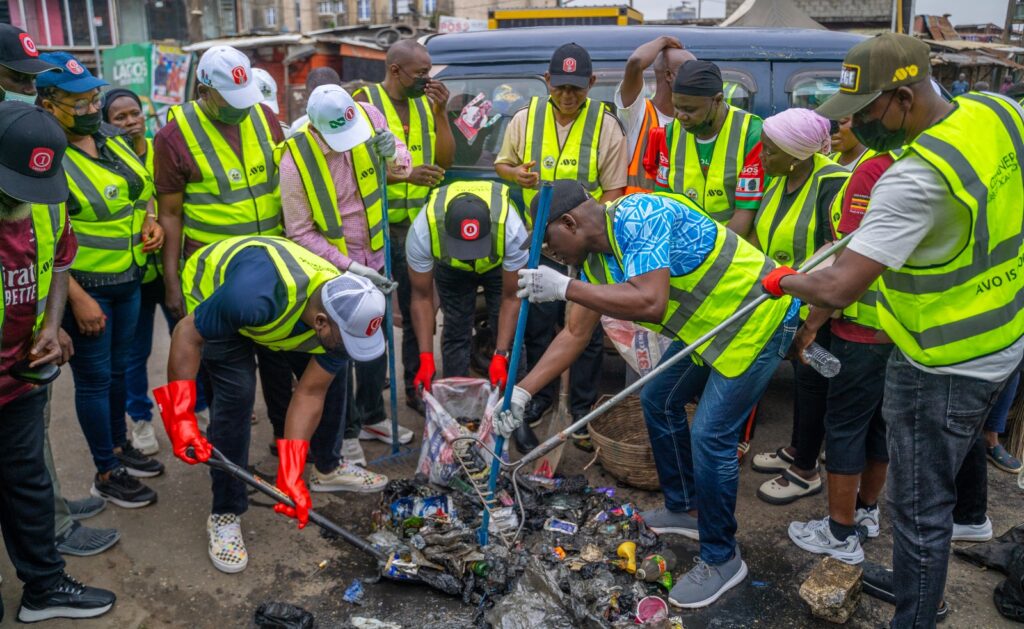
North-East stakeholders seek more funding, manpower for sanitary inspection
Zanna Lawal, an environmentalist, attributed the challenges in sanitary inspection to corruption and weak enforcement of sanitation laws.

World
Bomb threats forces multiple planes into emergency landing in Europe
For the second time this week, bomb threats forced airlines across Europe to make emergency landings on Thursday for safety reasons.


