

UN chief calls for legally binding instrument for ‘killer robots’
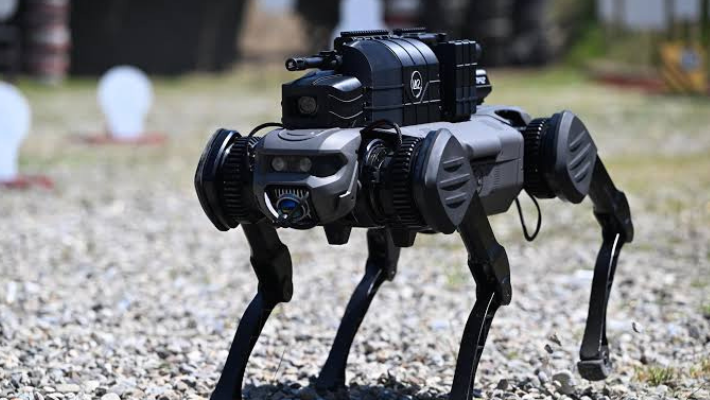
UN secretary-general Antonio Guterres has urged member states to move towards negotiating a legally binding instrument on lethal autonomous weapons systems, often referred to as “killer robots”.
Mr Guterres, who made the call on Monday in Geneva while addressing delegates from more than 120 member states, urged them to regulate the technology, including “clear prohibitions and restrictions”.
Legally binding killer weapons systems means an agreement, contract, or promise made regarding their production carries the full weight of the law and can be enforced in court. Therefore, if one party fails to keep its side of the agreement, the other party can seek legal remedies—such as financial damages or a court order to force compliance.
Even war has limits, and the nature of warfare is changing, according to Mr Guterres at the seventh Review Conference of the Convention on Certain Conventional Weapons.
“New technologies, including autonomous weapons systems, present new humanitarian, legal, ethical and security challenges. I urge you to seize this moment. Take action to prevent the use and spread of these merciless weapons,” he said.
In his video message, the UN chief also insisted that “we must never stop shielding civilians from the carnage and devastation of armed conflict and preventing unnecessary suffering”.
The development follows a strong earlier appeal from UN human rights chief Volker Türk for states to urgently agree to such a treaty.
Not all countries agree on controls, although UN General Assembly Resolution 78/241 from December 2023, confirming that lethal autonomous weapons systems must respect the laws of war, received support from 152 countries, with four against and 11 abstentions.
In a statement, Mr Turk, who is the high commissioner for human rights, cited the rapid pace of technological development and the risk that autonomous weapons systems could soon become widely accessible.
“A machine must never have the power to decide whether a human being survives or dies,” he said.
He called for prohibitions on autonomous weapons that target people—either by design or in practice—and for a ban on weapons whose functions and effects human users could not fully understand, predict, explain, and control.
Human judgement and responsibility must remain at the centre of decisions involving the use of force, the high commissioner stressed, as machines do not understand the value of human life, assess context the way humans can, or make the complex judgements required by international law.
For more than 40 years, the Convention on Certain Conventional Weapons has reached common ground to reduce human suffering caused by landmines, improvised explosive devices, incendiary weapons and explosive remnants of war.
It is understood that there is currently no agreement on the nature of a possible new instrument for lethal autonomous weapons systems—whether legally binding or not, as well as the timeframe.
The conference is also expected to consider the humanitarian impact of landmines and emerging methods of warfare not covered by other international instruments. Discussions are organised by the UN Office for Disarmament Affairs (UNODA).
The Convention on Certain Conventional Weapons is a key pillar of international disarmament discussions. Currently, it has 128 so-called “high contracting parties”—the term used to describe countries that have formally joined the convention and accepted its legal obligations.
(NAN)

We have recently deactivated our website's comment provider in favour of other channels of distribution and commentary. We encourage you to join the conversation on our stories via our Facebook, Twitter and other social media pages.

More from Peoples Gazette

States
Independence: NBA urges Nigerians to expect better future
The NBA said that ordinary Nigerians should be deriving benefit from the subsidy removal rather than hardship.

Agriculture
FG tasks ECOWAS on leveraging financing strategies for agroecology
The federal government has urged stakeholders in the agriculture and finance sectors in the West Africa region to leverage financing strategies to enhance agroecology practices

Politics
Katsina youths pledge to deliver over 2 million votes to Atiku
“Katsina State is Atiku’s political base because it is his second home.”

Economy
Jeff Bezos donates $199 million in Amazon shares
Amazon founder donated shares worth $198.9 million to nonprofit organisations, bringing the estimated value of his charitable stock donations in 2026 to more than $629 million.
World
UN chief calls for legally binding instrument for ‘killer robots’
Mr Guterres urged them to regulate the technology, including “clear prohibitions and restrictions”.

Faith
Benue approves N3 billion for Christian pilgrimage to Israel
The Benue government has approved N2.69 billion to sponsor 500 people for a Christian pilgrimage to Israel, information commissioner Solomon Iorpev disclosed on Monday.

Rights
ECOWAS urges stronger regional cooperation against human trafficking
ECOWAS Commission has urged member states to strengthen cooperation and coordination against human trafficking while respecting the rule of law.

Anti-Corruption
U.S. cracks down on alleged consulate bribery, money laundering with first foreign extortion case
The former consul general was arrested alongside three others, including her two sons, and a former employee of the consulate.

Agriculture
Shettima directs release of three million fertiliser bags for dry season farming
Vice-President Kashim Shettima has directed relevant government agencies and stakeholders to expedite the release of over three million bags of fertiliser to farmers.


