

Skilled health worker migration is a lesson Nigeria must learn
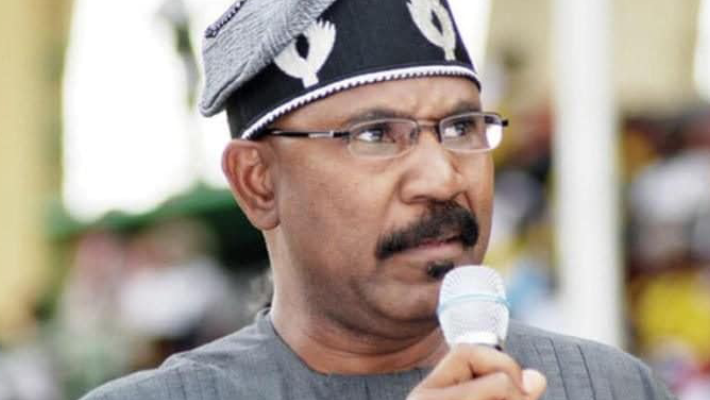
In early June 2021, Nigeria’s Minister of State for Health Olorunnimbe Mamora revealed that the Federal Government is renewing its focus towards discouraging Nigerian health workers, especially physicians from leaving the country. The statement was made while expressing concern over the continued increase in the number of doctors emigrating out of the country which is believed to be a major contributor to Nigeria’s failing health sector.
However, the belief that medical “brain-drain” will keep devaluing Nigeria’s healthcare system is one that needs reevaluation by the government and a narrative that should be desensitized for the general public. Although a shortage of medical personnel is not the primary issue facing Nigeria’s healthcare sector, it has been reported that 40 per cent of the country’s trained medical doctors are unemployed, and for this reason, restricting skilled health worker migration should not be the Nigerian government’s priority when it comes to healthcare.
In Nigeria, doctors’ strikes are frequently the consequence of the same set of grievances: inadequate salary, absence of pay, poor healthcare worker welfare, and terrible working conditions.
The current trend from a survey report by NOI Polls in 2018 shows that 88 per cent of Nigerian medical doctors seek work opportunities abroad, due to their dissatisfaction with health financing in Nigeria as well as a knowledge gap. This makes it clear that strike actions will continue to occur, skilled health workers will continue to emigrate and the Nigerian government will continue promising and failing to meet skilled health workers’ demands until a better long-term solution to Nigeria’s pre-existing healthcare problems is found!
In a 2013 policy brief on migration and development, Michael Clemens, an American development economist and the team lead for the Migration and Policy Initiative of Center for Global Development theorized that stopping migration without addressing the reasons for migrating requires the use of force and in the case of Nigeria, there was speculation over the use of security officials to prevent consultant medical practitioners from writing a Saudi Arabia recruitment examination amidst ongoing negotiations for better working conditions in August 2021. The Nigerian government needs to know that it is retrogressive to stop health-worker migration without first addressing the cause of the desire to migrate which is the lack of a properly functioning healthcare system.
It is high time the Nigerian government needs to know that preventing people from seeking out better opportunities in the form of training, work experience or further study is a terrible injustice and far from the characteristic of a democratic society. Individuals have the freedom to choose where they work or study, yet the truth is that world-class higher education possibilities are only available in industrialized countries.
Education is the foundation of development, and the majority of emigrating health workers in Nigeria are those who simply want to get the best education possible so that they can contribute value to their country’s healthcare infrastructure while also increasing their earning power.
Nigeria needs to learn that “brain drain” can be easily avoided if governments embrace global skills partnerships as a labor migration model that can create genuine progress for all parties involved by facilitating organised skill and technology exchange across countries.
Nigeria causes its own high level of skilled worker migration, and against these stereotypes — it is a great lesson that worker mobility through skills partnerships makes workers return to their home countries upon completion of further studies and professional training schemes after creating a network in the diaspora for continued research and sharing of gains across borders.
What is needed in Nigeria is for the government, policymakers, and decision-making bodies to make efforts to capitalize on the natural movement of people towards a better life, enhanced innovation, development and transfer of skills. Some countries in Africa with low rates of skilled health worker migration still have terrible overall health conditions due to the insufficient improvement of healthcare services over time.
The ability of individuals to contribute to the development of their home countries lies in their ability to be self-sufficient through improved skill. Hence, skilled health workers should be allowed to improve their skills abroad and then return home to apply knowledge gained for the benefit of the country and its people!
Anna Suberu is a writing fellow at the African Liberty.

We have recently deactivated our website's comment provider in favour of other channels of distribution and commentary. We encourage you to join the conversation on our stories via our Facebook, Twitter and other social media pages.

More from Peoples Gazette

States
Independence: NBA urges Nigerians to expect better future
The NBA said that ordinary Nigerians should be deriving benefit from the subsidy removal rather than hardship.

Agriculture
FG tasks ECOWAS on leveraging financing strategies for agroecology
The federal government has urged stakeholders in the agriculture and finance sectors in the West Africa region to leverage financing strategies to enhance agroecology practices

Politics
Katsina youths pledge to deliver over 2 million votes to Atiku
“Katsina State is Atiku’s political base because it is his second home.”

Agriculture
OAU, IAR&T seek urgent action on sustainable soil management
Mr Oluwatosin identified phosphorus as the bottleneck no one talked about in food security.

Heading 4
#EndSARS: Atiku demands justice for murdered protesters
The politician accused the APC of failing Nigerians.
NationWide
Ovarian disorder can raise diabetes, heart disease risks in women, says gynaecologist
Mr Jay advised women to adopt healthy lifestyle habits.

States
Police mobilise Cross River communities against crime
The police commissioner in Cross River, Ajo Ordue, has urged communities to partner with the police to tackle crime, electoral violence, cultism and drug abuse.

Politics
Otti mourns 2023 APGA governorship standard-bearer in Abia
Governor Alex Otti has expressed sadness over the death of APGA’s 2023 governorship candidate in Abia, Gregory Ibe, describing the news as “shocking”.

NationWide
SDP presidential candidate promises to focus on public welfare
SDP presidential candidate Adewole Adebayo has promised to redirect trillions of naira from lavish political lifestyles to public education, healthcare, and infrastructure.


