

418 million Nigerians, other Africans drink unclean water: Report

A joint special report by UNICEF and WHO says about 418 million Nigerians and other Africans lack basic levels of potable water service.
The information is in the Joint Monitoring Programme for Water Supply, Sanitation and Hygiene (JMP) report launched on Tuesday in Dakar, Senegal, at the ongoing ninth World Water Forum on ‘Water Security for Peace and Development’.
A statement by UNICEF after the report’s launch stated that between 2000 and 2020, Africa’s population increased from 800 million to 1.3 billion people, adding that about 500 million people gained access to basic potable water and 290 million to basic sanitation services.
According to the report, 779 million people lack basic sanitation services, including 208 million who still practise open defecation and 839 million who still lack basic hygiene services.
It noted that achieving the Sustainable Development Goals (SDGs) targets on water, sanitation and hygiene in Africa would require dramatic acceleration in the current rates of progress.
It noted that “achieving the SDG targets in Africa will require a 12-fold increase in current rates of progress on safely managed drinking water, a 20-fold increase for safely managed sanitation and a 42-fold increase for basic hygiene services.”
The report called for urgent action on a continent where water scarcity, weak sanitation and hygiene services could threaten peace and development.
It indicated significant inequalities within countries, including between urban and rural, between sub-national regions and between the rich and the poor.
The report also mentioned that two out of five people lacked safely managed drinking water in urban areas, while two out of three lacked safely managed sanitation, and half the population lacked basic hygiene services.
In rural areas, it stated that four out of five people lacked safely managed drinking water, three out of four people lacked safely managed sanitation, and seven out of 10 lacked basic hygiene services.
Marie-Pierre Poirier, the UNICEF regional director for West and Central Africa, said equitable access to drinking water, sanitation and hygiene were the foundation for good health and development, especially for children and communities.
(NAN)

We have recently deactivated our website's comment provider in favour of other channels of distribution and commentary. We encourage you to join the conversation on our stories via our Facebook, Twitter and other social media pages.

More from Peoples Gazette

Agriculture
FG tasks ECOWAS on leveraging financing strategies for agroecology
The federal government has urged stakeholders in the agriculture and finance sectors in the West Africa region to leverage financing strategies to enhance agroecology practices

Politics
Katsina youths pledge to deliver over 2 million votes to Atiku
“Katsina State is Atiku’s political base because it is his second home.”

NationWide
Insecurity: Nigeria, UN to deepen West Africa border policing, says envoy
Mr Ibrahim described the region’s porous borders as a major security challenge.
Africa
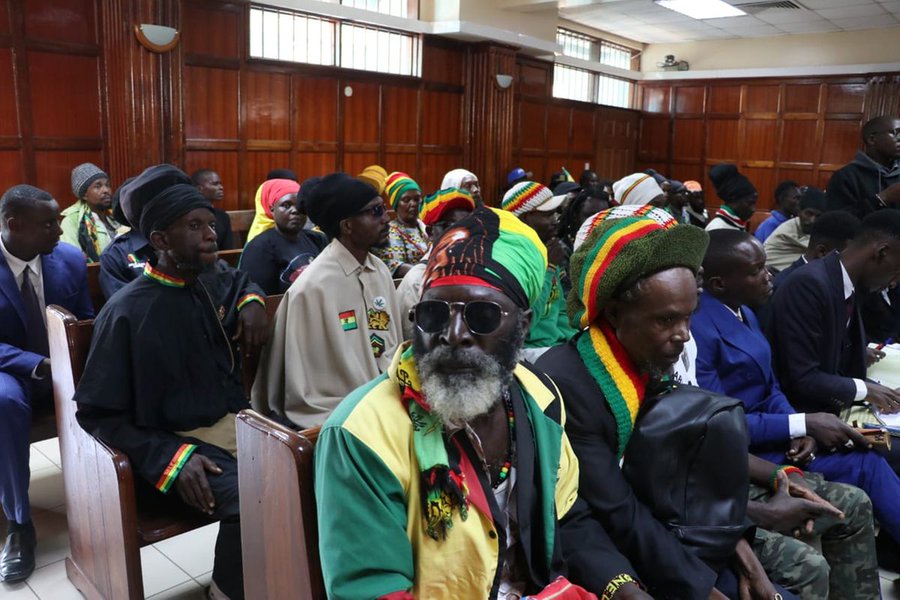
Kenya dismisses suit seeking legalisation of cannabis for Rastafarian worshippers
They petitioned the court to allow members to grow and use cannabis during worship.

States
Two suspects arrested over alleged car theft in Bauchi
The suspects were arrested in an intelligence operation at Yelwa area on July 12, 2026 at 10: 30 p.m.

NationWide
Kogi Abduction: Atiku decries normalisation of insecurity under Tinubu
The abduction occurred on Tuesday at about 5:25 p.m. when the students were writing their exam.
States
Ogun, GIZ meet to sustain skills, enterprise initiatives
Ms Sofela reaffirmed the government’s commitment to private sector-led industrialisation.
NationWide
ITF targets 200,000 artisans under SUPA 2026 programme
Mr Ogun said that the SUPA programme is a presidential initiative.


