

Global trade risks recession because of Russia-Ukraine war: WTO
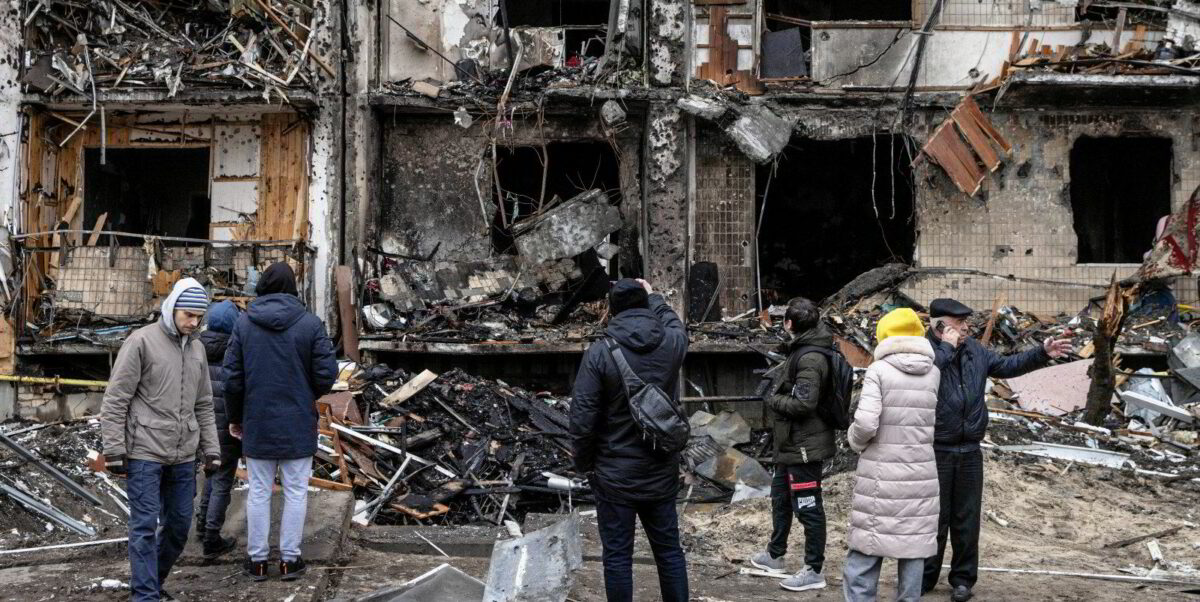
The World Trade Organisation (WTO) says the Russia-Ukraine war has created immense human suffering, putting the fragile recovery of global trade at risk.
“Smaller supplies and higher prices for food mean that the world’s poor could be forced to do without. This must not be allowed to happen,” Ms Ngozi Okonjo-Iweala, the WTO director-general, said on Tuesday.
The war is taking place as other factors impact global trade, including the latest COVID-19 lockdowns in China, which are again disrupting maritime trade just as supply chain pressures appeared to be easing.
Ms Okonjo-Iweala urged governments to work with multilateral organisations like WTO to facilitate trade.
“In a crisis, more trade is needed to ensure stable, equitable access to necessities. Restricting trade will threaten the wellbeing of families and businesses and make more fraught the task of building a durable economic recovery from COVID‑19,” she said.
World merchandise trade volume is expected to grow just three per cent in 2022, down from the previous forecast of 4.7 per cent and 3.4 per cent in 2023, though these figures could be revised given the uncertainty surrounding the conflict.
The Russian invasion began on February 24, and WTO said the most immediate impact of the war had been a sharp rise in commodity prices. Both Russia and Ukraine are key suppliers of essential goods such as food, energy, and fertilizers, supplies of which are now threatened.
Grain shipments through Black Sea ports have also been halted, with possible dire consequences, particularly for poorer countries.
Given the scant data on the economic impact of the conflict, WTO economists have had to rely on simulations for their assumptions about global GDP growth through 2023.
Their estimates capture the direct impact of the war, including the destruction of infrastructure and increased trade costs; the impact of Russian sanctions, including blocking Russian banks from the SWIFT international banking payments system; and reduced aggregate demand in the rest of the world – in part due to rising uncertainty.
WTO said world GDP at market exchange rates should increase by 2.8 per cent this year, or 1.3 percentage points down from the previous forecast.
Output growth should rise to 3.2 per cent in 2023, “assuming persistent geopolitical and economic uncertainty,” which is close to the 3.0 per cent average rate for the period 2010-2019.
In the Commonwealth of Independent States (CIS) region — created after the dissolution of the Soviet Union in 1991 and which excludes Ukraine — GDP is expected to drop 7.9 per cent, leading to a 12 per cent decline in imports.
However, exports should increase by nearly five per cent as other countries continue to rely on Russian energy.
“If the situation were to change, we might see stronger export volume growth in other fuel producing regions,” said WTO.
Given the current GDP assumptions, the agency has projected that merchandise trade volume growth this year could be as low as 0.5 per cent or as high as 5.5 per cent.
World merchandise trade volume grew roughly twice as fast as world GDP in the two decades before the 2007-2008 global financial crisis. The ratio fell to around 1:1 on average in the wake of the crisis.
If the current forecast plays out, it suggests there will be no fundamental change in the relationship between trade and output.
“Risks to the forecast are mixed and difficult to assess objectively. There is some upside potential if the war in Ukraine ends sooner than expected, but substantial downside risks could emerge if fighting persists for a long time or if the conflict escalates,” WTO stated.
WTO said higher oil prices might reduce real incomes and import demand worldwide, while higher natural gas prices would probably have a greater impact in Europe.
The trade forecast was released together with annual merchandise and commercial services trade statistics.
The volume of merchandise trade, measured by the average of exports and imports, rose 9.8 per cent in 2021, with the value growing 26 per cent to $22.4 trillion.
Commercial services trade, which includes the transport sector and covers container shipping and the passenger airline industry, was also up 15 per cent in 2021, reaching $5.7 trillion.

We have recently deactivated our website's comment provider in favour of other channels of distribution and commentary. We encourage you to join the conversation on our stories via our Facebook, Twitter and other social media pages.

More from Peoples Gazette

Agriculture
FG tasks ECOWAS on leveraging financing strategies for agroecology
The federal government has urged stakeholders in the agriculture and finance sectors in the West Africa region to leverage financing strategies to enhance agroecology practices

Politics
Katsina youths pledge to deliver over 2 million votes to Atiku
“Katsina State is Atiku’s political base because it is his second home.”
Economy
FG pledges policy support for sustainable aviation fuel
He stated that while aviation remains critical to economic growth, the sector must also contribute meaningfully to global efforts to address climate change.

NationWide
Cost-reflective tariffs will improve Nigeria’s power sector: Expert
“Cost-reflective tariffs will not only improve delivery but also encourage new investments in both fossil-fuel and renewable energy generation,” he said.

World
Iran confirms U.S. proposal to resume talks amid latest attacks
Iran says it received proposals from mediators about resuming negotiations with the United States.

World
I’ve made UK better, stronger than my predecessor: Keir Starmer
Mr Starmer hailed himself for taking the Labour Party from “historic defeat” in 2019 to winning the country’s general election in 2024, when it ousted the Conservative Party.

Economy
CSCS declares N1 interim dividend after half-year earnings
The company noted that the interim dividend represented 56 per cent of the total dividend of N1.78 per share paid for the 2025 financial year.

Health
Mental health key to attaining excellence in children, says expert
He said children perform better academically and socially when the learning environment supports their emotional well-being.


