


Why we buy ‘second hand’ clothes: Abuja residents
![Second hand clothes used to illustrate the story. [PHOTO CREDIT: The Guardian]](https://gazettengr.com/wp-content/uploads/Second-hand-clothes-used-to-illustrate-the-story.jpg)
Some residents of the Federal Capital Territory (FCT) in Bwari Area Council say they patronise the clothes not only because of its affordability but also for the upgraded standard.
The buyers spoke in separate interviews with NAN at the Dutse-Alhaji market on Sunday in Abuja.
The buyers were seen patronising the items from their dealers in the market, which was known for the cheap sale of second hand clothing in the district.
Ada Micheal, one of the buyers, told NAN that when it came to especially shoes, school or women bags, she preferred the second hand ones because they were almost new and last longer.
” Not all of these items you see here are fairly used; most of them are new or almost new.
” Some even come with tags from probably the stores they were initially hung for sale or because they were rated as substandard in the foreign market.
” I have purchased so many that were brand new here and they have good quality and last longer than the so called brand new I buy from some shops. Especially children’s wears.
” You find good children’s shoes for as low as N2,500, or N3,000 and they are durable compared to the new ones that cost as high as N6,000 and will only last a short while then spoil and you are back to square one,” she said.
Mrs. Micheal also said that the prices of some of the items had gone up compared to previous years, adding that it was still worthwhile.
Another buyer, Mary Zaki, a student, said that she found second hand clothes “unique” with high quality, yet cheap.
According to her, the supposed used clothes are viewed before as the exclusive preserve of the low and medium income earners.
However, she added that patronage today cuts across every social strata.
” Some of us cannot compromise quality and I believe these second hand clothes symbolise that because they are in various grades and the highest grade is expensive irrespective of how it may be perceived.
” Believe me, these clothes are also bought by highly classy people in the society. When you go to Wuse market or Garki market where these clothes are being sold, you will see the classy buyers.
” There are some that are compelled by economic circumstances to patronise these used clothes. But the truth is, you find even designer wear here,” she said.
Rose Ugo, also called “Mama Chi” in the market, sold second hand children’s wear.
She described the business as a good one but a bit risky if one had to travel all the way to border towns like Cotonou to bring them in.
She said she had suppliers from both Lagos and Kaduna who sent the bale to her at a negotiable price.
She explained that in the past, she bought a bale of children’s wear at the rate of N80,000 to N90,000 but the same bale now costs as high as N200, 000.
She said: “The price of dollars contributed to the business.
“We used to sell these singlets for children before now for N150 or N100 but now it goes for N300. Tops for both girls and boys used to go for N300 to N500, but we now sell at N700 no less.
” The coronavirus pandemic and the border closure in 2020 also contributed to the hike in price and even the scarcity of the produce.
” Those who had, before the closure hoarded their bales until this last Christmas before they sold to us.
” This is because they wanted to sell more and because the demand is usually higher during the festive season. No matter how tight the economy is, the business strives for us and we are grateful to God,” she said.
Speaking on the health effect of using second hand wear, Dr. Ameh Gabriel, a physician in Bwari, said that handling or using second hand clothes could lead to various kinds of infections on the body.
Some of such, he explained, included vaginal or skin candidiasis from both underwear and clothes.
” Fungal infections like Tinea (Ringworm) and viral infections like genital warts and even parasitic infestations such as scabies and body lice can be transferred from the clothes to the users.
” An even higher risk is when the user fails to wash, disinfect and iron the used clothes before reusing it. Bacteria is very resistant and survives extreme conditions for long, hanging on clothes.
” Washing regularly may sometimes not get rid of some of the bacteria, particularly those that come with discharge from the body of a previous user.
”So if you must buy used items/clothes, ensure that you use strong reagents to get rid of these bacteria as well as iron properly before wearing them,” he said.

We have recently deactivated our website's comment provider in favour of other channels of distribution and commentary. We encourage you to join the conversation on our stories via our Facebook, Twitter and other social media pages.

More from Peoples Gazette

Agriculture
FG tasks ECOWAS on leveraging financing strategies for agroecology
The federal government has urged stakeholders in the agriculture and finance sectors in the West Africa region to leverage financing strategies to enhance agroecology practices

Politics
Katsina youths pledge to deliver over 2 million votes to Atiku
“Katsina State is Atiku’s political base because it is his second home.”
NationWide
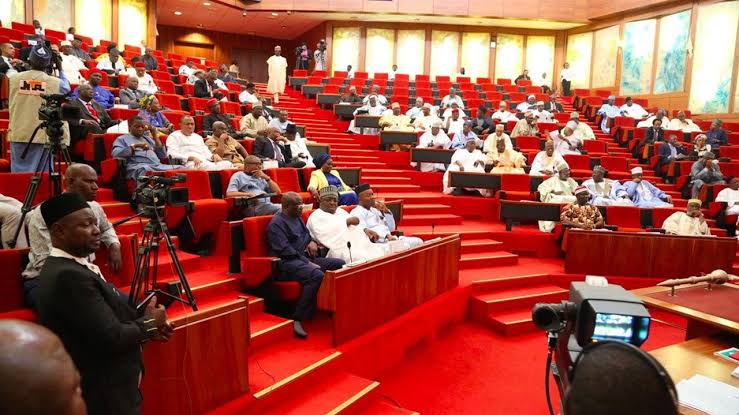
Senate approves N11 trillion revenue target for customs
The upper chamber also approved N1.235 trillion expenditure estimate for the 2026 fiscal year.

Economy
FG urges Ogun, Ondo communities on total support for Dangote Industrial City, Deep Seaport project
Mr Abubakar further disclosed that Aliko Dangote had directed the project team to carry out a comprehensive needs assessment of the host communities.

Sport
Oliver Glasner becomes Forest’s fifth coach in one year
Forest owner Evangelos Marinakis described the manager as “a winner,” acknowledging his leadership and style of play.

Sport
Balogun’s Red Card: FIFA rejects Belgium’s appeal
The RBFA accused FIFA of breaching its own rules and vowed to consider other necessary options if Balogun is listed for their round-of-16 knockout tie.
States
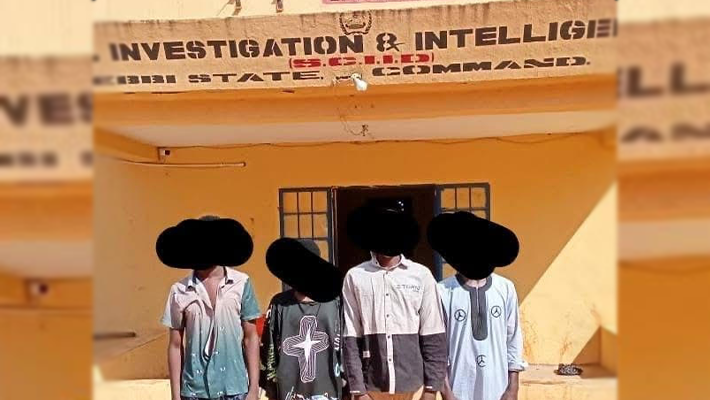
Police arrest suspects in Kebbi over kidnap threat, N30 million ransom demand
The police said the suspects were arrested following a complaint by Aminu Garba, who reported receiving anonymous phone calls demanding N30 million.

NationWide
Nigeria lost about N2.4 trillion to grid underutilisation since 2015: NISO
The NISO boss said Nigeria has lost about N2.4 trillion in capacity payments due to underutilisation of the power sector grid since 2015.


