

About one million people in forced labour in Nigeria, National Bureau of Statistics reveals
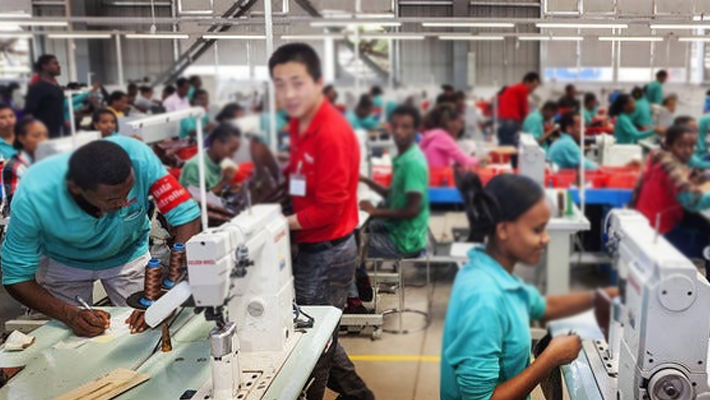
The National Bureau of Statistics (NBS) says that in 2022, 617,503 individuals were in forced labour in their current jobs.
The NBS disclosed this in its Nigeria Forced Labour Survey Report 2022, released on Thursday.
The bureau said forced labour, as described in the International Labour Organisation (ILO) Forced Labour Convention, 1930 (No. 29), referred to “all work or service which is exacted from any person under the menace of any penalty and for which the said person has not offered himself voluntarily.”
The report said 5.2 out of every 1,000 individuals were in forced labour in their current job in 2022.
It said 36.2 per cent of individuals in forced labour in their current job were found in the agricultural sector.
“While 36.9 per cent of individuals in forced labour in their current job are found in the service sector, other than domestic work,” said the report.
The report revealed that 451,300 males and 166,203 females were in forced labour, while 270,545 were in urban areas and 346,958 were in rural areas.
In terms of age group, 191,418 people were in forced labour in the 18 to 29 years old age group and 317,052 people in the 30 to 49 years old age group. In the 50-year-old age group, 99,391 people were forced to work, the report said.
The NBS said overall, the prevalence of forced labour was similar across education levels for all groups except for individuals with a primary education level.
It said, “This result shows that even highly educated individuals could be at risk of falling into situations of forced labour. The prevalence of forced labour is highest among individuals with primary education, for which 7.2 of every thousand individuals are in a situation of forced labour.
“This may be partially explained by the fact that individuals with only a primary education are not as well protected by their skills as the medium and highly educated individuals.”
The report revealed that married adults were slightly more likely to be in forced labour than unmarried individuals.
With forced labour prevalence at 5.8 per every thousand individuals among married adults as compared to 4.1 per every thousand individuals among unmarried adults, the report stressed.
It said out of individuals in forced labour in their current job, the most common form of coercion was withholding payment of wages or benefits which was experienced by 35.2 per cent of individuals.
The report said among individuals in forced labour in their current job, the most common circumstance of involuntariness experienced was being made to work with no freedom or limited freedom to terminate their work contract at 29.7 per cent.
This was followed by being made to stay at their job longer than agreed to without consent, which was experienced by 26.8 per cent of individuals in forced labour in their current jobs.
(NAN)

We have recently deactivated our website's comment provider in favour of other channels of distribution and commentary. We encourage you to join the conversation on our stories via our Facebook, Twitter and other social media pages.

More from Peoples Gazette

States
Independence: NBA urges Nigerians to expect better future
The NBA said that ordinary Nigerians should be deriving benefit from the subsidy removal rather than hardship.

Agriculture
FG tasks ECOWAS on leveraging financing strategies for agroecology
The federal government has urged stakeholders in the agriculture and finance sectors in the West Africa region to leverage financing strategies to enhance agroecology practices

Politics
Katsina youths pledge to deliver over 2 million votes to Atiku
“Katsina State is Atiku’s political base because it is his second home.”
Heading 1
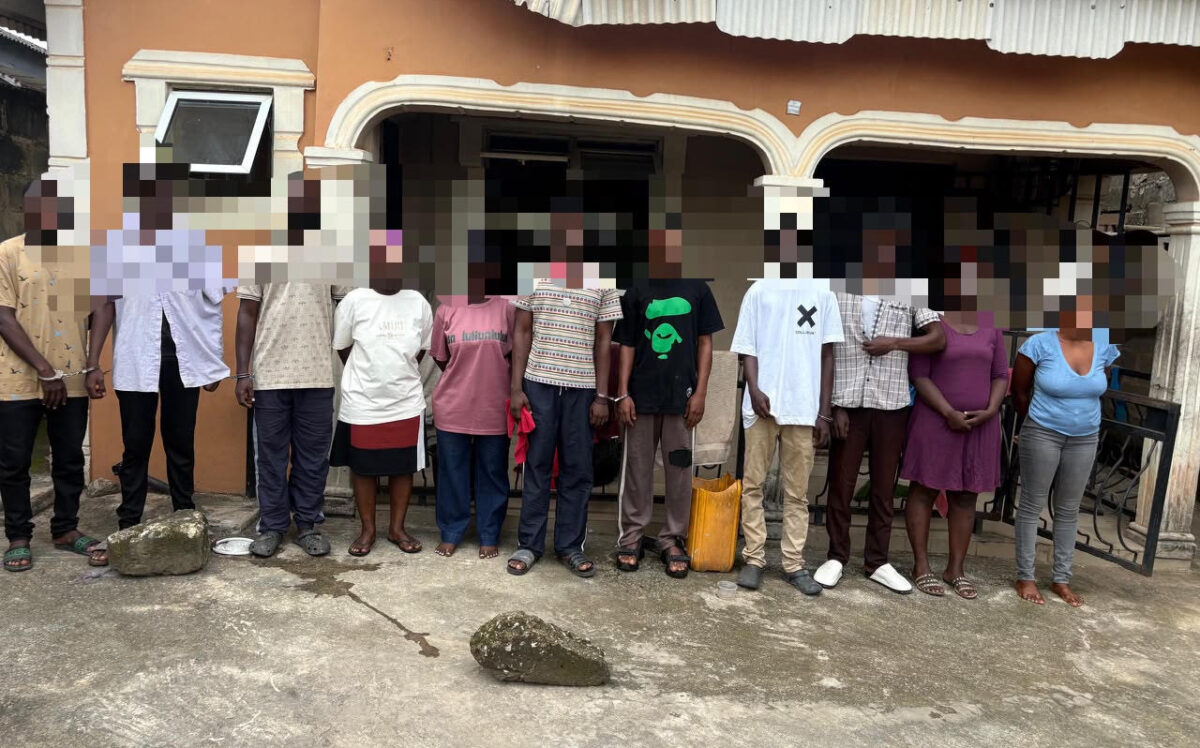
11 Ghanaians held hostage in Nigeria over promise of Canadian visa by fraudsters
The police command in Ogun says it has rescued 11 Ghanaian nationals allegedly held hostage in Sagamu after being lured to Nigeria with promises of Canadian and Spanish visas.
Health
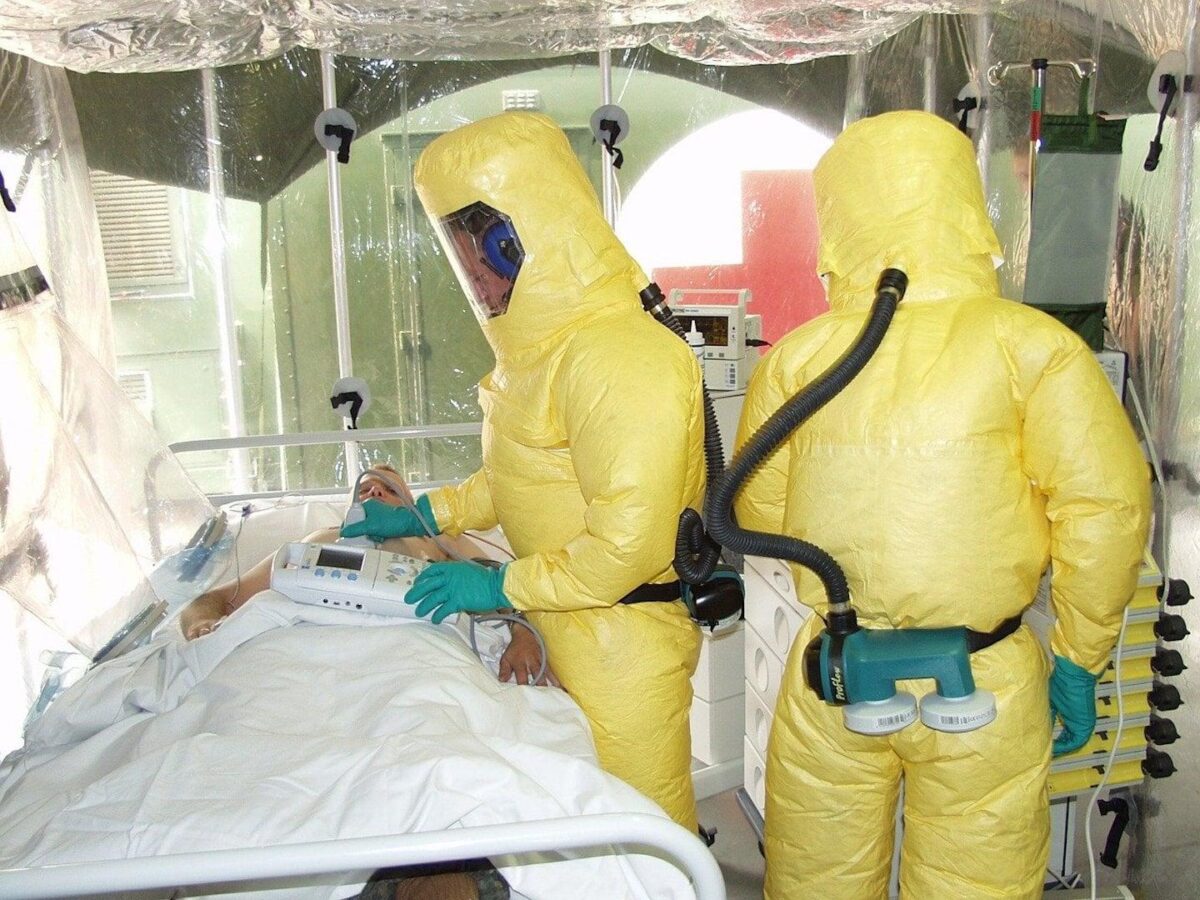
WHO urges strong surveillance as Nigeria confirms new Ebola case
The World Health Organisation has urged countries to maintain strong disease surveillance and rapid alert investigation after Nigeria confirmeda new case of deadly Ebola virus on Tuesday.
![Doctor in hazmat [Photo Credit: Aekno]](https://gazettengr.com/wp-content/uploads/Vy6rmwZbTIdy0CQNJ3JspejDukymQtkzYIu8u8LCBOBZkLvqkYHuQPOr-84dk23zNQLvZGzDZv2NjPnISqnojWoMnXIMBjU5wmpYscMKcmbMpVNcdTD3zhWUJSTq-h7pQ7HObQyeQc5UWLlv36S2OvuftvEQzRb-9I2XmZ4TNQqAYgTVDoX94OK6X-oddxX-1200x801.jpg)
Health
Uganda dismisses claims of exporting Ebola to Nigeria, reports zero active case
Uganda was declared Ebola-free in August after completing the WHO’s required 42-day period without a new case.
Abuja
NLC suspends indefinite strike in Abuja
The NLC chair said the suspension was agreed upon in the spirit of social dialogue and industrial harmony.

Health
Ebola: Africa CDC seeks urgent international support for Nigeria
Mr Kaseya said Africa CDC had begun mobilising support for Nigeria while intensifying response efforts in DRC, Congo and Kenya.

States
Police raid kidnappers’ hideouts in Nasarawa forests
Mr Jidda added that police personnel were already operating in the forests and would extend the operation to other forested areas.


