

Abuja women differ on charging fee for surrogacy

A cross-section of Abuja women in the Bwari council on Monday expressed different views on surrogacy for a fee.
While some of the women frowned at being surrogate mothers for a fee, others see it as a sacrifice to assist couples with fertility challenges to have children.
Some of the women who frowned at the idea of surrogacy for a fee said that becoming surrogate mothers for a fee was shaped by a complex mix of cultural, religious, economic, and ethical factors.
Kemi Olagunji, a midwife and mother of two, said that she could not be a surrogate mother for any price because it was “morally questionable and unnatural”.
According to her, there is a strong tie to motherhood; this links a woman’s identity and social status, and as such, the idea of handing over a child for money after birth is not acceptable.
She noted that unless it was practised within a family, where a sacrifice had to be made for another and money was not involved, the woman may suffer societal judgment.
”In this part of the world, surrogacy may be associated with loss of dignity or shame, promiscuity, or child-selling, especially in rural areas where traditional values are strong. So, unless you are doing it for a family member, where money is not involved but pure sacrifice for someone who cannot conceive, there’s always that stigma,’’ she said.
Ms Olagunji also said that in economically deprived rural communities, women may consider surrogacy out of desperation and not choice, with a promise of payment, which could range from N500,000 to N2 million or more.
She said that though the money could be life-changing for the surrogate, it sometimes led to exploitation, especially where intermediaries or illegal “baby factories” were involved, and so should not be encouraged.
Similarly, Millicent Terna, a resident, said that she could not bear giving up a child after carrying it for nine months and going through the pain of childbirth for any amount.
She noted that, although surrogacy is normal, especially in foreign countries, it is perceived differently in most Nigerian rural communities due to religious beliefs.
According to her, some religious leaders frown upon surrogacy because it involves payment, and sometimes, couples can become so desperate to have a child that they become impatient and commercialise the process.
”Some even perceive it as sinful or akin to adultery, especially in cases where a woman has to sleep with someone’s husband to conceive and be paid for it. Though nowadays it mostly involves donor sperm or eggs, I cannot do it,” Ms Terna said.
Also, Joy Thomas, a widow, said, “It is not something a married woman should do. Who will respect you after that? But I hear young girls do it in the city and get paid, but you can’t talk about it. If it will feed my children, I will do it quietly, but nobody will know about it.”
However, Chizoba Emmanuel, a resident and teacher, said the practice was harmless as long as the individuals involved came to an understanding and kept to their agreements.
According to her, many rural women lacked the understanding of what surrogacy entailed medically, legally, or emotionally.
She said that although it might be perceived negatively due to cultural and religious beliefs, advocacy and proper awareness of the practice should be encouraged.
”While economic hardship can push some women to consider it, the decision is usually fraught with fear, secrecy, and potential social consequences. If there’s improvement in its education, regulation, and awareness, it can help shift perceptions over time, but significant cultural and moral hurdles remain,” she said.
Ms Emmanuel added that without a comprehensive legal framework for surrogacy, many women who practise it will remain vulnerable to exploitation or abandonment.
(NAN)

We have recently deactivated our website's comment provider in favour of other channels of distribution and commentary. We encourage you to join the conversation on our stories via our Facebook, Twitter and other social media pages.

More from Peoples Gazette

States
Independence: NBA urges Nigerians to expect better future
The NBA said that ordinary Nigerians should be deriving benefit from the subsidy removal rather than hardship.

Agriculture
FG tasks ECOWAS on leveraging financing strategies for agroecology
The federal government has urged stakeholders in the agriculture and finance sectors in the West Africa region to leverage financing strategies to enhance agroecology practices

Politics
Katsina youths pledge to deliver over 2 million votes to Atiku
“Katsina State is Atiku’s political base because it is his second home.”

Economy
Ondo assembly seeks faster C of O processing to boost investment
The committee’s chairman, Abiola Oladapo, said efficient land administration was critical to creating an enabling environment for businesses.

Heading 4
Minister calls for greater involvement of oncology nurses in cancer care
The minister said cancer’s complexity made multidisciplinary collaboration essential.

Education
NOUN matriculates 70 inmates in Enugu custodial centre
Mr Nwakuche said the NCoS was committed to using education as an instrument for reformation.
Agriculture
Gombe inaugurates state-wide livestock vaccination campaign
Mr Yahaya said the exercise was aimed at protecting animal health.
NationWide
Asaba Massacre: Obasanjo urges forgiveness, reconciliation
He described the massacre as one of the most painful and terrible aspects of the Nigerian Civil War.
World
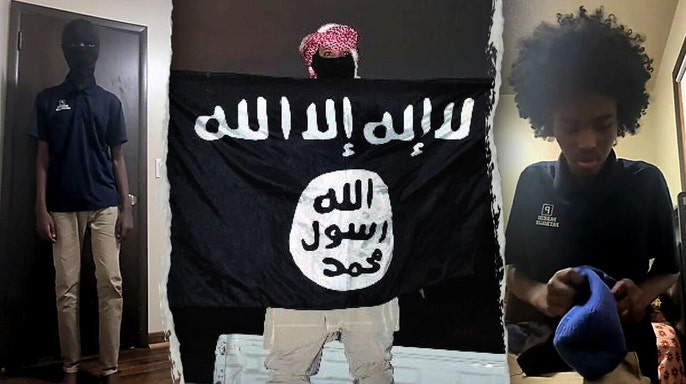
FBI nabs ISIS-linked Sheikhdoon Mohamud for plottting terrorist attack on Mall of America
He was arrested after buying an AK-47-style rifle, magazines and ammunition from an undercover FBI agent.


