

AEPB urges vigilance to safeguard sewer lines
The Abuja Environmental Protection Board (AEPB) has cautioned residents of the Federal Capital Territory against improper waste disposal practices threatening the integrity of the city’s sewer system.
Ndidi Emma-Agbodike, assistant director at Wupa Basin Treatment Plant, AEPB, issued the warning on the sidelines of the National Workshop on Safely Managed Sanitation, in Abuja on Wednesday.
He said residents should refrain from dumping solid waste into sewer manholes, which are provided as crucial channels for sewage flow and the prevention of spillage.
According to him, improper waste disposal practices are becoming alarming in the territory, thereby increasing the level of blockages of the sewer system.
“Such actions have dire consequences, as the waste and remains do not reach the treatment plants, necessitating additional efforts for removal.
“Once it starts to rain, people tend to disregard the consequences of their actions, exacerbating the problem. This not only obstructs the sewer lines but also poses a threat to the overall environmental health of the region,” he said.
Mr Emma-Agbodike said the practice had caused extensive damage along sewer lines; as such, the public needed to stop the practice and cooperate with the AEPB to ensure the proper functioning of the sewer system.
According to him, the AEPB is considering educational and awareness campaigns to enlighten residents about responsible waste disposal practices to address the problem.
He emphasised that fostering a sense of community responsibility would help authorities curb the current threats to the FCT sewer infrastructure.
The director urged the private sector to invest in waste disposal, treatment and management in the territory, including providing bio-digesters for effective waste treatment.
The workshop brought together stakeholders from national and subnational levels, development partners and the private sector to explore ways of achieving universal and sustainable access to sanitation.
Nigeria is currently off-track to meet the Sustainable Development Goals (SDGs) for Water, Sanitation and Hygiene (WASH) by 2030.
The WHO-UNICEF Joint Monitoring Programme estimates that sanitation coverage needs to quadruple for Nigeria to achieve universal access to safely managed services by 2030.
(NAN)

We have recently deactivated our website's comment provider in favour of other channels of distribution and commentary. We encourage you to join the conversation on our stories via our Facebook, Twitter and other social media pages.

More from Peoples Gazette

States
Independence: NBA urges Nigerians to expect better future
The NBA said that ordinary Nigerians should be deriving benefit from the subsidy removal rather than hardship.

Agriculture
FG tasks ECOWAS on leveraging financing strategies for agroecology
The federal government has urged stakeholders in the agriculture and finance sectors in the West Africa region to leverage financing strategies to enhance agroecology practices

Politics
Katsina youths pledge to deliver over 2 million votes to Atiku
“Katsina State is Atiku’s political base because it is his second home.”
Anti-Corruption
Court dismisses Akwa Ibom’s suit challenging EFCC powers
The case started in 2016 when some indigenes of the state petitioned the office of its chairman over alleged diversion of state resources.

Rights
Nigeria, three other African countries elected to UN Assembly human rights council
Nigeria, Ghana, Burundi and Zambia were among the 15 countries elected to the United Nations General Assembly Human Rights Council.

Economy
IMF, World Bank launch global plan to combat cyber-enabled financial fraud
IMF and the World Bank have launched a framework called the ‘Bangkok Blueprint’ to help countries worldwide tackle the rise of cyber-enabled fraud in digital financial services.
Rights
Over one million complaints received, 716,000 petitions resolved, says PCC
The Public Complaints Commission says it received 1,281,984 complaints in the last two years and resolved 716,688 of them.
Economy
UNDP warns 800 million youths in Nigeria, other nations facing future without jobs
The United Nations Development Programme has warned that 800 million youths in Nigeria and other developing nations face a future without jobs.
World
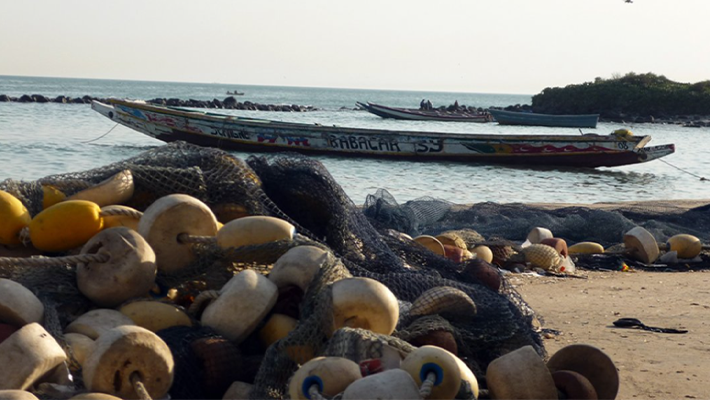
Number of West Africans rushing to Europe drops 59% as routes get deadlier: IOM
According to IOM, 4,566 migrants from Mali, Senegal, Guinea and The Gambia were registered arriving in Europe by sea between January and June 2026.


