

AfDB urges Nigeria to close $31.5 billion annual development financing gap
The African Development Bank (AfDB) has restated the urgent need for Nigeria to close its annual development financing gap of $31.5 billion.
Abdul Kamara, AfDB’s director-general (D-G) for Nigeria, said this was part of the findings of the Bank’s 2025 Nigeria Country Focus Report (CFR) inaugurated on Thursday
Mr Kamara said the call was crucial, especially as the country pursued bold economic reforms aimed at fostering long-term growth and macroeconomic stability.
The theme of the report is: “Making Nigeria’s Capital Work Better for Its Development.”
The director-general said the report underscored the need for a more strategic and coordinated approach to mobilising and deploying Nigeria’s diverse capital resources.
He listed the resources to include fiscal, financial, human, natural, and business capital needed to drive structural transformation and inclusive development
Mr Kamara described the report as a timely intervention that aligned with the country’s current reform trajectory.
“This report is both timely and practical. Nigeria is demonstrating bold leadership through difficult but necessary reforms.
“Its capital is more than financial. It includes human, natural, and institutional assets.
“What this report shows is the need for integrated strategies that make every form of capital work together to drive inclusive and sustainable transformation,” he said.
He said the report comes as Nigeria implements key policy shifts, including the removal of fuel subsidies, exchange rate unification, and comprehensive tax reforms, all aimed at stabilising the economy and boosting investor confidence.
Mr Kamara said in spite of these reform efforts, the CFR projected a slight decline in Nigeria’s real Gross Domestic Product (GDP) growth from 3.4 per cent in 2024 to 3.2 per cent in 2025 and 3.1 per cent in 2026.
The director-general said the rate was due to persistent structural challenges and heightened global uncertainties.
According to Mr Kamara, domestic resource mobilisation is a critical factor that can help in closing the financing gap in the country.
The report noted that Nigeria’s tax-to-GDP ratio remains among the lowest in the region, as the informal sector continues to undermine revenue performance,” he said.
Olufemi Olarinde, head of fiscal and tax reforms implementation at the Federal Inland Revenue Service (FIRS), officially inaugurated the report on behalf of the federal government
Mr Olarinde welcomed the findings and said they reflected Nigeria’s ongoing efforts to reform its fiscal landscape.
“We appreciate the efforts of the African Development Bank in contributing to this important report, which reflects our ongoing work in fiscal and tax reforms.
“It accurately captures both the strides we are making and the challenges we face as we strengthen Nigeria’s public finance system,” he said.
According to Mr Olarinde, the CFR recommends broadening the tax base, improving compliance, reducing tax expenditures, and strengthening the capacity of revenue-generating institutions to enhance domestic resource mobilisation.
“It also identifies poor institutional coordination, fragmented oversight, and weak governance as major barriers to efficient capital utilisation and investor trust,” he said.
Jacob Oduor, AfDB’s lead economist for West Africa, said that while Nigeria’s fiscal reforms were commendable, long-term success depended on credible institutions and disciplined macroeconomic management.
“Market-based tools like exchange rate reforms can support resilience, but they must be backed by strong institutions and sound fiscal discipline,” he said.
Echoing this view, Peter Rasmussen, AfDB Country Economist for Nigeria, said enhanced public financial management and reduced reliance on oil revenues would provide the fiscal space to invest in infrastructure and human capital.
Private sector stakeholders also welcomed the CFR findings.
Joseph Ogebe, head of research at the Nigeria Economic Summit Group (NESG), stressed the urgency of tackling inflation and boosting productivity.
“Price stability remains a pressing concern, especially for small and medium-sized businesses.
” We support a productivity-led deflation strategy and urge policies that ensure growth with depth,” he said.
The 2025 Country Focus Report forms part of the AfDB’s annual series, providing country-specific analysis to inform policy dialogue, development planning, and reform implementation across its regional member countries.
(NAN)

We have recently deactivated our website's comment provider in favour of other channels of distribution and commentary. We encourage you to join the conversation on our stories via our Facebook, Twitter and other social media pages.

More from Peoples Gazette

Agriculture
FG tasks ECOWAS on leveraging financing strategies for agroecology
The federal government has urged stakeholders in the agriculture and finance sectors in the West Africa region to leverage financing strategies to enhance agroecology practices

Politics
Katsina youths pledge to deliver over 2 million votes to Atiku
“Katsina State is Atiku’s political base because it is his second home.”

States
Insecurity: Plans ongoing to establish military bases in Kogi communities, lawmaker says
Kogi lawmaker says plans are ongoing to establish military bases in some communities in the state.

World
11 dead as wildfire ravages southern Spain
At least 11 people have been killed and eight injured as wildfire ravages Los Gallardos, Almería, in Southern Spain.
Lagos
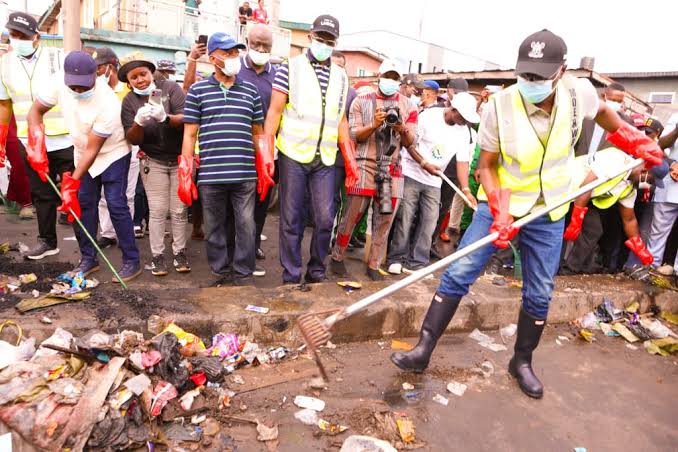
Residents commend waste evacuation in Lagos
The ongoing evacuation of accumulated waste by the Lagos government has drawn commendation from residents.

Anti-Corruption
Again, court adjourns judgement in forfeiture case against Malami
The EFCC had, in the suit, sought the final forfeiture of the properties reasonably suspected to be proceeds of unlawful activities.

Africa
Anti-migrant protests risk economic blowback for South Africa: Economists
Economists warned on Friday that the departure of foreign workers in South Africa could hurt the labour market.
Africa
Senegal’s top court calls parliament-backed reform unconstitutional
Senegal’s top court has struck down changes to the country’s constitution that would have altered the balance of power in government.


