

Africa grapples with forecasting challenge as weather disasters loom

Hamid Abakar Souleymane, deputy director of Chad’s National Meteorological Agency, waggled his finger up and down to demonstrate how a motionless humidity gauge at the agency’s headquarters should have been working.
The broken hygrothermograph was among the dust-blown outdoor equipment in the capital, N’Djamena, which was meant to help the agency known as ANAM track weather patterns.
The situation in Chad is replicated across much of Africa, a continent sorely lacking the reliable forecasts that are a keystone of disaster management as climate change makes extreme weather more frequent.
At COP29 climate talks on Wednesday, UN Secretary-General Antonio Guterres called for urgent action to overcome a shortage of data and funding.
The aim is to meet a target for universal protection by end-2027 from early warning systems to help prepare for extreme weather events.
For Chad, that appears to be a particularly ambitious goal.
Around 80 per cent of the devices at the agency’s site in N’Djamena are not operational, Deputy Director Hamid Abakar Souleymane told Reuters in October, as Chad battled another season of devastating floods.
“The reliability of weather information depends on the resources invested in producing it,” he said, describing a relentless push for more funding and trained personnel.
Africa, a continent of 1.5 billion people, has the world’s least-developed weather and climate observation network, with fewer stations operating to global basic standards than Germany, according to the World Meteorological Organisation.
“There are many declared stations that exist or may not exist. Many of them are not sharing data,” said Albert Fischer, director of the WMO Integrated Global Observing System division.
As of the third quarter of 2024, only two out of 53 African WMO countries were compliant with basic requirements for ground-level observation stations, Fischer said.
Being unprepared has deadly consequences. Floods not only happen more often across Africa than in Europe and North America combined, but they kill four times more people on average due to a lack of preparedness and warnings, a 2023 article in the journal Nature said.
Good weather data alone is not enough, as evidenced by deadly floods in October in Spain when some local authorities were blamed for failing to raise the alarm in time.
Chad’s plight nevertheless shows the scale of what can happen when disaster strikes one of the most vulnerable and data-poor regions on earth.
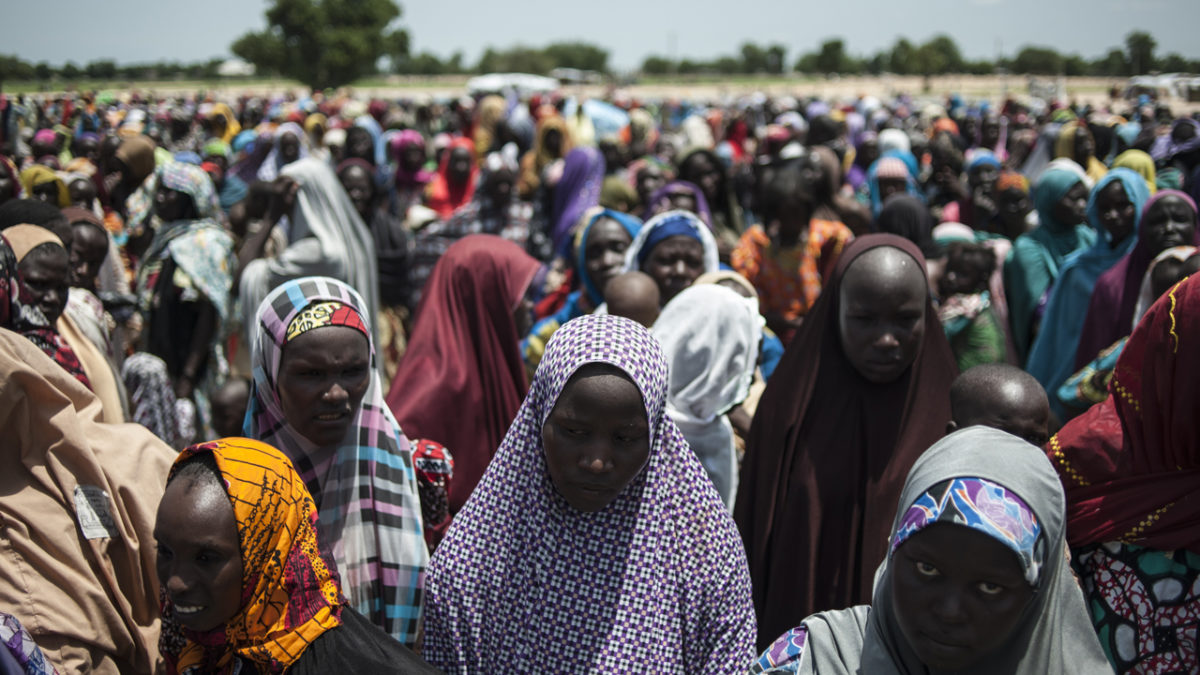
Heavier-than-usual seasonal rains in parts of West and Central Africa drove rivers to break their banks in recent months, leading to floods in every one of Chad’s provinces, with 1.9 million people affected, over 570 killed, and 72,000 heads of cattle swept away.
“Everywhere is flooded. We have lost our fields of sorrel, beans, and grain. Everything is destroyed now because no one warned us of such a catastrophe,” mother-of-four Josiane Allasra said, speaking at a makeshift camp for displaced people on the outskirts of N’Djamena in late October. “We’re hungry, and we have nowhere to shelter our children.”
ANAM did not have the resources to track the worsening conditions as the disaster unfolded across a country the size of France and Spain combined.
“We have significantly less than we need. We need stations, and we need funding,” Mr Souleymane said during a tour of ANAM’s N’Djamena facilities, where stacks of old weather data spilt out over the floor of the archive and packaged equipment gathered dust.
A 2023 review of Chad’s hydromet capacity found that it had just two trained forecasters, making round-the-clock forecasting and warning impossible.
The report said the agency also lacks the financial and technical means to maintain a network of new automatic weather stations from the United Nations Development Programme (UNDP), which only covered the south and centre of the country.
Chad currently has one surface-land weather station.
To avoid a situation where authorities find themselves with technology, they do not have the expertise and funds to maintain, SOFF’s strategy includes using advisers from developed countries.
Since mid-2022, SOFF has supported 23 African countries. However, its funding outlook is uncertain. Since 2020, it has raised $94 million out of a target of 200 million dollars by 2025.
(Reuters/NAN)

We have recently deactivated our website's comment provider in favour of other channels of distribution and commentary. We encourage you to join the conversation on our stories via our Facebook, Twitter and other social media pages.

More from Peoples Gazette

States
Independence: NBA urges Nigerians to expect better future
The NBA said that ordinary Nigerians should be deriving benefit from the subsidy removal rather than hardship.

Agriculture
FG tasks ECOWAS on leveraging financing strategies for agroecology
The federal government has urged stakeholders in the agriculture and finance sectors in the West Africa region to leverage financing strategies to enhance agroecology practices

Politics
Katsina youths pledge to deliver over 2 million votes to Atiku
“Katsina State is Atiku’s political base because it is his second home.”

Opinion
Leadership and storytelling in election season
Compelling stories create impact that shapes the future. And leaders who fail to tell honest stories shape nothing but frustration and disappointment.
Rights
Kebbi: Gov Idris vows to resettle IDPs uprooted by bandits to their ancestral homes
“We are not here for politics, but we are here to sympathise with you over the recent bandit attacks,” the Kebbi governor said.

Anti-Corruption
Stephen Odiboh sentenced to 33 months for multi-victim wire fraud, romance scams
Stephen Odiboh has been sentenced to 33 months in prison for conspiracy to commit wire fraud. His sentencing was announced on Thursday.

Rights
Nigeria questions UN femicide data, seeks stronger action against women trafficking
Nigeria has raised concerns about the reliability of international statistics on femicide in Africa, citing inadequate data collection and reporting mechanisms.

World
Trump admin to livestream Fort Hood shooter’s public execution, says Pentagon
Mr Hegseth told Real America’s Voice that Mr Hasan would be executed by firing squad to send a message that there are consequences for terrorist acts.

Diaspora
Adetoros, Walters: Three sisters who drowned in sea like their mother died by suicide, coroner rules
Their mother, Janice Adetoro, drowned at sea at the age of 43.


