

Agbakoba offers ‘South Africa’ solution to shield state police from governors’ abuse

A former president of the Nigerian Bar Association, Olisa Agbakoba, has drawn on the Constitution of South Africa to suggest ways to prevent governors from abusing state policing.
“Nigeria need not look far for a tested solution. The Constitution of South Africa offers an instructive model,” Mr Agbakoba stated in a letter dated 26 June 2026 and addressed to the secretary to the government of the federation, George Akume. “Chapter 9, titled ‘Institutions Supporting Constitutional Democracy’, establishes and protects a range of independent state institutions, including the Public Protector, the Human Rights Commission, the Electoral Commission, and the auditor general, and crucially insulates them from executive interference.”
Mr Agbakoba noted that these institutions were not merely created by statute, adding they derived their independence directly from the Constitution itself, with security of tenure for their heads, guaranteed funding, and accountability to parliament rather than to the executive.
He added, “The result is that in South Africa, neither the President nor any provincial governor can dictate to or manipulate these critical institutions.”
Citing the need for Nigeria to adopt this model, Mr Agbakoba suggested that “critical institutions such as the Nigeria Police Force, INEC, the EFCC, the ICPC, the CBN, the National Judicial Council, the attorney general, the accountant general, the National Human Rights Commission, the Code of Conduct Bureau, and the Office of the Public Defender, which are currently listed under Section 153 of the 1999 Constitution as executive institutions, should be insulated from executive control and established as constitutionally protected institutions that consolidate democracy”.
According to him, these institutions should enjoy security of tenure, their funding should be a direct charge on the consolidated revenue fund, and their accountability should be under the supervision of the national assembly or the state houses of assembly and not the president or any governor.
“This process has been described by Professor Ben Nwabueze as the concept of limited government, which is the principle that executive power is not at large but is constrained by independent institutions guaranteed by the Constitution,” he stated.
Mr Agbakoba insisted that the state police would be a welcome and progressive development if built on this constitutional architecture of independence and accountability, warning they would inevitably become tools of oppression if handed to governors without these protections.
“If the proposed state police framework is built on this constitutional architecture of independence and accountability, it is a welcome and progressive development. If not, if state police are simply handed to governors without these protections, they will inevitably become tools of oppression, and Nigeria will have traded one problem for a far worse one,” the legal expert advised.
Mr Agbakoba’s suggestions came amid concerns that the state police might be abused by governors if eventually implemented.
The presidential candidate of the Nigeria Democratic Congress, Peter Obi, demanded that the implementation of state police be delayed until after the 2027 elections , fearing it could be used by President Bola Tinubu’s government to rig the elections.

We have recently deactivated our website's comment provider in favour of other channels of distribution and commentary. We encourage you to join the conversation on our stories via our Facebook, Twitter and other social media pages.

More from Peoples Gazette

States
Independence: NBA urges Nigerians to expect better future
The NBA said that ordinary Nigerians should be deriving benefit from the subsidy removal rather than hardship.

Agriculture
FG tasks ECOWAS on leveraging financing strategies for agroecology
The federal government has urged stakeholders in the agriculture and finance sectors in the West Africa region to leverage financing strategies to enhance agroecology practices

Politics
Katsina youths pledge to deliver over 2 million votes to Atiku
“Katsina State is Atiku’s political base because it is his second home.”
Health
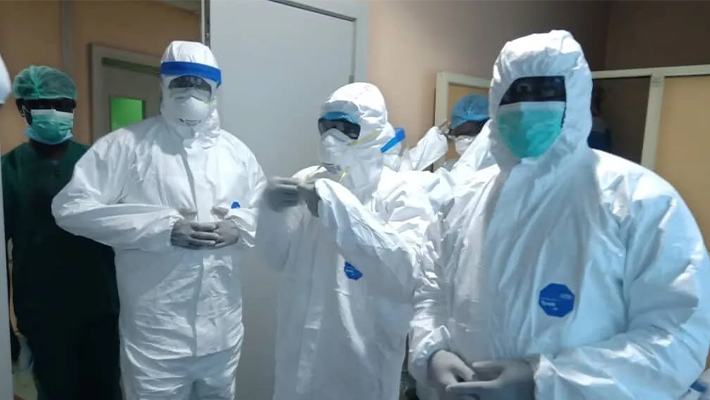
Nigeria no longer has Ebola, says WHO
WHO’s regional director for Africa says Nigeria is Ebola-free following the medical evacuation of the patient and her husband to Switzerland.

Rights
Phone-tapping: El-Rufai’s woes continue as court dismisses no-case submission
The Federal High Court, Abuja Division, on Monday dismissed a no-case submission filed by former Governor Nasir El-Rufai in his phone-tapping trial.

States
Enugu man arrested for robbing POS operator at gunpoint
The police command in Enugu has arrested and detained a 28-year-old suspect, Michael Ayisa, for robbing a point-of-sale operator of ₦200,000 at gunpoint in Udenu council area.

Economy
Credit card company American Express to fire 3,500 workers over AI use
Multinational financial services company American Express plans to lay off 3,500 employees worldwide as it expands the use of artificial intelligence to take on more roles.
Anti-Corruption
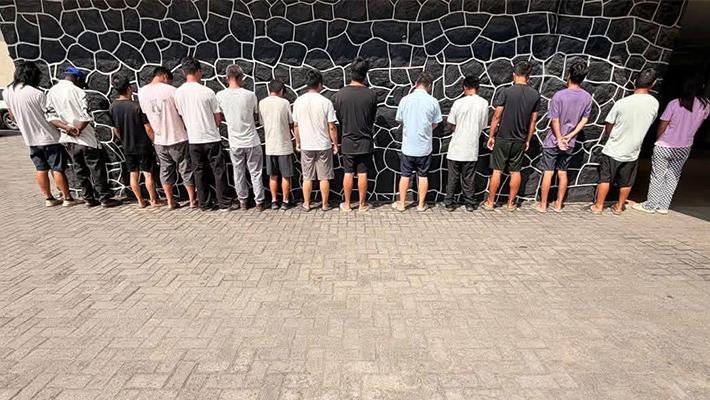
14 Chinese nationals arrested in Nigeria for operating illegal lithium processing plants
The Economic and Financial Crimes Commission has arrested 14 Chinese nationals and one Nigerian for illegally operating four lithium processing plants in Ogun.
States
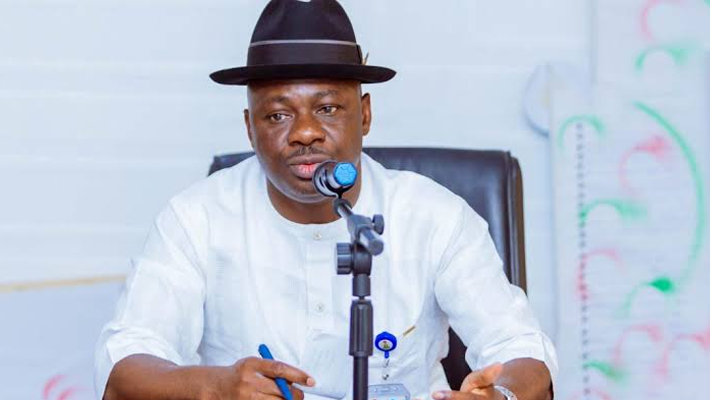
Delta speaker mourns Okonjo-Iweala’s mother
The speaker of the Delta House of Assembly, Dennis Guwor, on Monday mourned Kamene Okonjo, mother of Ngozi Okonjo-Iweala, director-general of the WTO.


