

Attitudinal change crucial to achieving open defecation-free Nigeria: FG
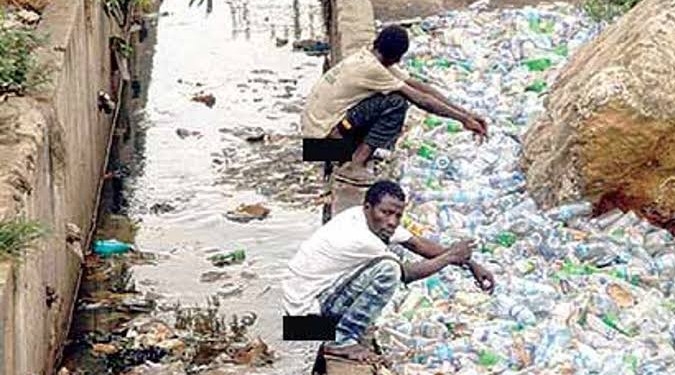
The federal government has said that achieving an Open Defecation-Free Nigeria will depend largely on behavioural and attitudinal change among citizens, backed by community ownership of sanitation practices.
Director of Water Quality Control and Sanitation at the Federal Ministry of Water Resources and Sanitation, Elizabeth Ugoh. made this known at the National Training Workshop for ODF Validators in Nasarawa on Wednesday.
She noted, “Sanitation is dignity. We don’t have to wait for the government to push us. It is hygiene; it is cleanliness. Using and maintaining toilets helps prevent diseases. Water, Sanitation and Hygiene (WASH) is preventive health, and if we want a productive economy and healthy workforce, we must address water, sanitation and hygiene.”
Ms Ugoh stressed that while infrastructure and technology were important, the ODF campaign would only succeed if communities adopted a mindset change towards sanitation and hygiene.
According to her, refresher training for validators is part of efforts to reinforce this process by ensuring they are well equipped to support communities and states.
She said, “You don’t stop learning. The majority of those here today are already validators, but this training will refresh their knowledge, align them with the protocols, and enable them to share experiences from the field.”
Ms Ugoh explained that Nigeria now has 149 ODF local government areas (LGAs), but reaching the 2025 target requires scaling up.
She added, “We need more validators who can be deployed whenever states request support from the Clean Nigeria campaign secretariat. That is why we are updating the knowledge of those already in the system and adding new ones.”
She further highlighted the importance of sanitation marketing through a demand-driven approach.
“When you trigger under CLTS++, you have created demand for toilets. But that demand must be matched by supply, affordable technologies and artisans who can construct toilets for communities.
“The products should be readily available for people to access and buy,” she said.
Ms Ugoh reiterated that sustaining momentum would require Nigerians to embrace sanitation as a personal responsibility.
A facilitator, Chinyere Okolo, also underscored the role of demand creation in achieving sustainable sanitation outcomes.
She said, “Demand creation is the linchpin for achieving lasting and equitable sanitation solutions worldwide. By integrating community engagement, fostering market innovation, and strengthening enabling policies, we can accelerate progress toward universal access to sanitation.’’
Ms Okolo noted that effective demand creation yields multiple benefits, including reduced healthcare costs, improved productivity and higher school attendance.
She added that it also enhances dignity and safety for women and girls who are disproportionately affected by open defecation.
Earlier, another facilitator, Abasiama Ebreso, gave an overview of the protocol for verification and certification of ODF communities, with emphasis on the broader concept of total sanitation.
According to her, total sanitation goes beyond ending open defecation to ensuring that households and public places adopt sustainable hygiene practices.
She noted that for a community to be declared totally sanitised, all households must use hygienic latrines kept clean at all times, with proper disposal of anal cleansing materials.
She added that latrines, handwashing facilities and urinals should be provided and actively used in schools, health centres, markets and other public places.
Ms Ebreso said adherence to these standards would ensure healthier environments, reduce disease transmission, and sustain progress towards universal sanitation coverage.
Nigeria launched its Roadmap to End Open Defecation by 2025 in 2016, alongside the “Clean Nigeria: Use the Toilet” campaign, inaugurated in 2019 as its flagship initiative.
While progress has been recorded, experts say challenges remain in funding, enforcement of sanitation by-laws, and private sector involvement.
Development partners such as UNICEF, the World Bank and WaterAid continue to support federal and state governments through behaviour change communication, financing models, and community-led total sanitation interventions.
(NAN)

We have recently deactivated our website's comment provider in favour of other channels of distribution and commentary. We encourage you to join the conversation on our stories via our Facebook, Twitter and other social media pages.

More from Peoples Gazette

Agriculture
FG tasks ECOWAS on leveraging financing strategies for agroecology
The federal government has urged stakeholders in the agriculture and finance sectors in the West Africa region to leverage financing strategies to enhance agroecology practices

Politics
Katsina youths pledge to deliver over 2 million votes to Atiku
“Katsina State is Atiku’s political base because it is his second home.”
Africa
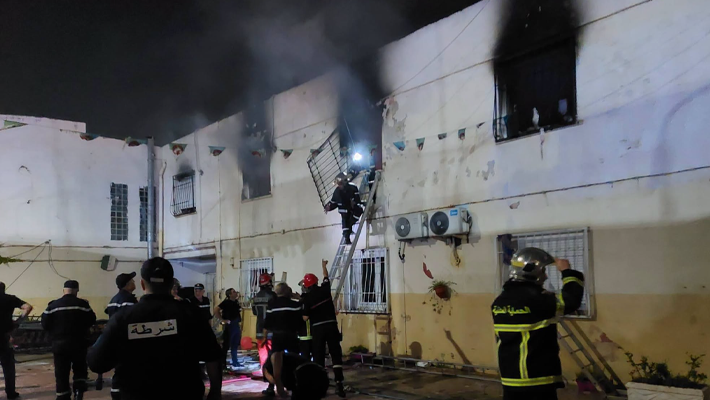
Eleven children killed, 19 injured in Algeria orphanage fire
President Abdelmadjid Tebboune described the tragedy as a huge loss.
Heading 2
Kano empowers 1,900 butchers, to establish cottage industry hubs
He said the government had already made provision for the establishment of the hubs in the 2026 budget.

Heading 3
2027 Elections: Police commence recovery of illegal arms nationwide
Mr Kokumo said the centre had destroyed more than 16,000 unserviceable weapons since its inception.

Heading 5
Court restrains FRSC from operating on Kano township roads
Mr Hikima sued the commission for unnecessarily stopping, searching and questioning him and other motorists.

Heading 5
White House teleprompter operator rakes in over $100,000 betting on Trump’s speeches: Report
Investigators discovered Mr Perez placed bets on more than a dozen of Mr Trump’s speeches over a three-month period.

Hot news Home top
Kidnapped Kogi school principal, NECO official, students regain freedom
Gunmen, on Tuesday, abducted a principal, NECO official and students during exam in Kogi school.


