

Australian study reveals how COVID-19 virus continues to evolve
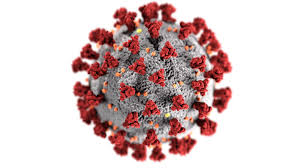
Australian researchers published new findings on Tuesday, revealing how rapidly SARS-CoV-2, the virus behind COVID-19, evolved, offering crucial insights that could aid in forecasting and combating future variants.
Researchers from the University of New South Wales tracked the genetic evolution of SARS-CoV-2 over five years by serially passaging 11 samples from nine major variants.
This included Alpha, Delta, and Omicron to observe how the virus mutates over time, a statement from UNSW Sydney revealed.
By studying the virus in a controlled environment, researchers could observe its natural evolutionary pathways without the unpredictable variables of real-world infections.
The study’s lead author, Charles Foster, from UNSW’s School of Biomedical Sciences, said.
This approach helps anticipate which mutations may arise next, allowing scientists and public health officials to better prepare vaccines and treatments, Mr Foster said.
“By growing the virus over many generations in a controlled lab environment, we can observe how it evolves without the influence of the immune system or treatments.
“That gives us a clearer picture of its natural evolutionary pathways,” he said.
The study found that SARS-CoV-2 kept evolving and accumulating mutations even after 100 generations in the lab, with some mutations repeatedly emerging across different strains, a pattern known as convergent evolution, the release revealed.
Many of the mutations were found in the spike protein, which helps the virus infect human cells, but other parts of the virus also changed, and sometimes even more quickly.
Importantly, some of these mutations are already known to make certain vaccines less effective, said the study published in the Journal of Virology.
“We’ve made all of our sequencing data freely available so other researchers can dig into it, compare it with clinical samples, and hopefully uncover even more about how this virus evolves,” Mr Foster said.
He added that understanding these evolutionary patterns was crucial for staying ahead of COVID-19 and preparing for whatever comes next.
(Xinhua/NAN)

We have recently deactivated our website's comment provider in favour of other channels of distribution and commentary. We encourage you to join the conversation on our stories via our Facebook, Twitter and other social media pages.

More from Peoples Gazette

States
Independence: NBA urges Nigerians to expect better future
The NBA said that ordinary Nigerians should be deriving benefit from the subsidy removal rather than hardship.

Agriculture
FG tasks ECOWAS on leveraging financing strategies for agroecology
The federal government has urged stakeholders in the agriculture and finance sectors in the West Africa region to leverage financing strategies to enhance agroecology practices

Politics
Katsina youths pledge to deliver over 2 million votes to Atiku
“Katsina State is Atiku’s political base because it is his second home.”

Lagos
LASEMA begins demolition of distressed GNI building
The Lagos State Emergency Management Agency (LASEMA) says it will begin the controlled demolition of the distressed Great Nigeria Insurance House on Lagos Island on Thursday.

Lagos
Lagos diverts traffic on Independence Bridge for repairs
The Lagos government says traffic will be diverted on Independence Bridge, Lagos Island, as urgent repairs begin on Friday.

Abuja
Army chief seeks stronger West African military cooperation against terrorism
Army chief Waidi Shaibu has called for stronger military cooperation among West African countries to combat terrorism and transnational security threats.

Economy
Banks urged to boost lending to productive sectors
Financial sector stakeholders urged Nigerian banks to channel capital into productive lending, strengthen digital infrastructure, and build customer trust.

Africa
China, Togo deepen strategic cooperation, commit to shared future
Chinese President Xi Jinping and Togolese President Faure Gnassingbé agreed to elevate bilateral relations to a China-Togo community with a shared future in the new era.
Economy
Dangote, Botswana exchange back NGX push for cross-border investment
Dangote Industries and the Botswana Stock Exchange endorsed NGX’s efforts to expand cross-border investment opportunities across African capital markets.


