

Azu Ishiekwene: AEDC: What it takes to get a meter

Data is good, but it often doesn’t tell the whole story. Data cannot capture the extent of our efforts to get a prepaid meter at my workplace in Abuja after we were disconnected from the grid in February. We’re still off-grid. Our meter misery mocks any statistics you may find on the Nigerian Electricity Regulatory Commission (NERC) website.
Before we were cut off, things seemed fine because we were on estimated billing. In case this doesn’t make sense, estimated billing is an improvised metering system that allows the distribution company to estimate what you should pay for electricity, even if there is no electricity. It’s a best-case scenario that consistently delivers the worst possible outcome—darkness.
Yet, the estimated bill, like Caesar’s wife, is beyond suspicion. You must accept it for what it is, or negotiate for less by paying a bribe.
The band beat
When the tariff for Band A was increased, things got pretty chaotic. Customers like LEADERSHIP (where I work) that didn’t have a prepaid meter became prey to the staff of the Abuja Electricity Distribution Company (AEDC). AEDC fixed prices, which were often more than double what we had been paying before, and threatened to raise them further if we didn’t pay quickly.
Each time they came by in their rickety branded vans, with cable remnants in the open-back bed, harnesses, pliers, and an extension ladder among their more visible tools of terror, they threatened that we must pay what they had unilaterally decided, or be disconnected.
They wouldn’t mind if we could “do something”, the euphemism for a bribe: Pay the punitive bill or “do something” was the only option.
Enough is enough!
I decided that enough was enough. After a meeting with some senior staff members, we told the AEDC people to disconnect us. Our in-house power audit indicated that, even though we were taking a hit from energy costs that had gone up roughly 500 to 600 per cent in the last three years—the highest levels in 28 years—with control and better discipline, the difference between AEDC’s estimated bills and relying on the combined power from our generators and partial solar coverage would not be significant. We could manage in the short run.
But we decided not to leave the matter there. We complained formally. We were hopeful that even if AEDC field staff had gone rogue, their bosses would call them to order, investigate our complaint, and give us a prepaid meter. That was all we asked for. Surely, that was not too much.
Our journey to a prepaid meter from AEDC, which started in February, is now in its seventh month. After our complaint went unanswered for the first two or three weeks of February, we went to the top.
Oga at the top
We reached out to the MD, Mr Chijoke Okwuokenye, who seemed quite eager to help.
If you’re familiar with Nigerian big men, especially public sector-minded ones, and you think seeing them is hard, wait until you ask them to perform a service.
There’s nothing they love more than shoving you off to a subordinate they know will exhaust you faster than a balloon on needles. The MD didn’t disappoint, which was shocking from the top shot of a company still so financially fragile that its consumer services were subsidised by N26.4 billion in 2024.
He directed us to an engineer, Jonathan Adeyemi, who asked us to apply for a meter. Of course, we applied only to be told that AEDC didn’t have any prepaid meters at the time. They directed us to one of their vendors, in what now seemed like the second half of a meter ping-pong game.
Another oga at the top
In the midst of this, I met another AEDC big man by chance. I had gone to receive an award from the Abuja branch of the Nigeria Union of Journalists (NUJ) when a man in the front row was introduced as Engineer Blessing Ogbe, the Chief Operating Officer of AEDC. I quickly slipped him a note introducing myself and asking for his assistance in getting us out of our meter misery.
He gave me his card and asked me to share any previous correspondence on the matter with him. He didn’t stop there. He introduced me to the head of corporate affairs, whom I had known in a previous life. This was in May. Surely, the nightmare of the last three or four months was about to end.
Afterwards, I shared acknowledgement copies of some of our letters of complaint dated February 17 with him and also copied the PR man. Nothing happened.
DisCo not responding
In June, we decided to contact one of the two officially approved private meter companies based in Lagos. They were very eager to help, and in fact, sent field engineers to our office for a survey.
Here’s an entry from the journal of our staff who handled the matter after the private meter firm sent its report to the AEDC: “Mr A. (the private company’s field engineer) called me (on June 24 at 2.22 pm), saying that he has done his part, but Abuja Disco is not responding.” Yet, AEDC is a one-eyed king in the town of the 11 blind distribution companies. It ranks second in performance, only behind the Eko Electricity Distribution Company.
All 11 distribution companies are barely surviving, largely because of thousands of unmetered customers, technical losses from ageing infrastructure, electricity theft and bypass, and inability to efficiently recover the full cost of electricity supplied.
The problems run deep. Even though the “unbundling” of the power sector was a good idea, the entire value chain—from generation to distribution—which began 25 years ago, was crony capitalism at its worst. The privatisation of electricity distribution in 2013 was like a feast for vultures.
The bidding process was a sham and mostly incompetent, but politically connected persons who thought it was going to become another gold mine like the sale of GSM licences took advantage. Customers had already been through hell after years of poor service. We thought, well, it couldn’t get worse. Sell the damn thing if that’s what it takes to make it work again. Were we mistaken?
Meter for Christmas?
A Vanguard report said that the government had invested N10 trillion in the sector over 13 years. Yet the money has failed to help the system managers see that they cannot love ladders more than prepaid meters. Wasn’t that why the regulator, NERC, fined AEDC N1.69 billion or 10 per cent of its operating expenses, in September 2024 for non-compliance with capping estimated billing? They can’t get far without understanding something as basic as prepaid metering and responsive customer service.
We might get our meter before Christmas. That’s what we hope for. After the back-and-forth, AEDC informed us in mid-July that we need a meter compatible with a 500 KVA transformer, rather than the 300 KVA meter that was originally assessed. We have now been directed to an Abuja-based private meter asset provider to supply the meter upon payment of N2,890,000.
So much for the unease of doing business!
Ishiekwene is the Editor-in-Chief of LEADERSHIP and author of the book Writing for Media and Monetising It.

We have recently deactivated our website's comment provider in favour of other channels of distribution and commentary. We encourage you to join the conversation on our stories via our Facebook, Twitter and other social media pages.

More from Peoples Gazette

States
Independence: NBA urges Nigerians to expect better future
The NBA said that ordinary Nigerians should be deriving benefit from the subsidy removal rather than hardship.

Agriculture
FG tasks ECOWAS on leveraging financing strategies for agroecology
The federal government has urged stakeholders in the agriculture and finance sectors in the West Africa region to leverage financing strategies to enhance agroecology practices

Politics
Katsina youths pledge to deliver over 2 million votes to Atiku
“Katsina State is Atiku’s political base because it is his second home.”

Heading 2
Tinubu’s economic reforms yielding results despite doubts: Bagudu
Mr Bagudu described Mr Tinubu as a visionary leader whose decisions demonstrated courage and commitment to national development.
Sport
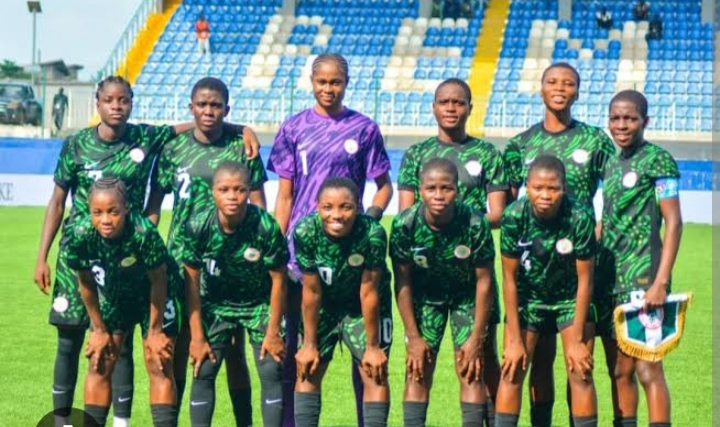
Flamingos lose 2-1 to Poland in FIFA U-17 Women’s World Cup opener
Poland’s Natalia Skrok made it two in the second half when Blanka Zajac, in the 65th minute, crossed into the Nigerian penalty area.

States
Gov Mbah scraps N750 daily ticket fee for Enugu tricycle operators, extends work hours
Mr Mbah also disclosed that tricycle operators would continue to use the state’s modern transport terminals free of charge.

States
FG unveils five-point strategy to tackle banditry, terrorism in Sokoto
Mr Ribadu called for sustained security deployments around vulnerable settlements, forest corridors and border communities.

Politics
2027: Wike urges Rivers traditional leaders to avoid ‘mistake’, back Tinubu for prosperity
Mr Wike said, “Supporting Tinubu is a support for prosperity.”
Heading 4
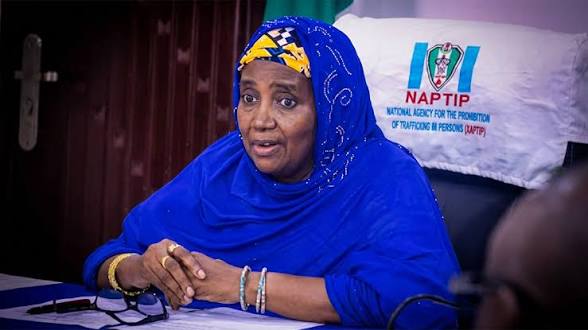
NAPTIP raises alarm over rise in parents’ facilitation of children’s sexual exploitation
The NAPTIP boss said parents and guardians were facilitating the sexual exploitation of their children to make money.


