

COVID-19 stories by children
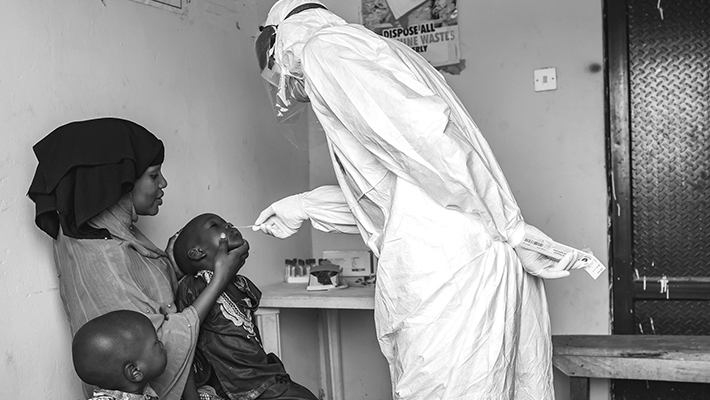
It all seems like memories from a distant past. But it’s not. This time last year we were in a lockdown. The world was under the monstrous grip of the Coronavirus. Rumours and speculations about the origin and nature of this invincible foe were rife, leaving data and science in the dust. Fear ruled the world.
The situation in Europe, especially in Italy and Spain, was particularly dire as the virus overwhelmed their sophisticated medical systems. While researchers and scientists struggled to crack the pathogen, dead bodies that could not be accommodated in morgues began to spill onto church pews and public places.
It was like a horror movie too deranged to script.
In Nigeria, things unfolded slowly. It was difficult to believe that the round-the-clock horror TV stories were real. Then, it began to unfold.
Within two months of Nigeria recording the index victim, any lingering doubts that the virus had not come to play were settled when Abba Kyari, the president’s chief of staff, died from COVID-19 related complications. Today, over 2,000 deaths have been recorded, out of 166,000 reported – frankly under-reported – infections. At first, the reports were statistics, then they became names, and not too long afterwards, faces of people we know.
In a gloomy forecast released in April 2020, the Economic Commission for Africa (ECA) said between 300,000 and 3.3 million Africans may die from Coronavirus, under different scenarios. For a continent already beset by poverty and a host of deadly diseases, Corona could only compound our misery.
It turned out that ECA overstated its case. There’s no doubt, however, that the virus has made things worse in many ways. Not only in terms of the millions of lives lost or livelihoods ruined, but also in terms of the impact that the virus has had on children, who are among the most vulnerable.
Adults have obviously been the most impacted, because of the nature of the virus. But for almost every adult affected, a child has been at the receiving end of the grief.
For every parent that died, a child has been bereaved. For every teacher that died, a child has lost a shining light. And for every school that was closed during the lockdown, millions of children in poor countries without access to the internet were left farther behind.
Children have suffered in a way they only know and can tell. According to data by the South African Journal of Science in July-August 2020, 173 million schools in 156 countries were impacted by lockdowns.
That’s not all. The toll on wellbeing has just been as devastating. In Nigeria, for example, babies born at the height of the pandemic could not receive their normal postnatal vaccinations, exposing them to avoidable childhood diseases that could affect them later on in life.
Resources that could have been deployed in childcare and support were diverted to emergency use to save an adult population imprisoned by fear, hesitancy, politics and useless conspiracy theories.
And children bear the brunt. According to the United Nations Children’s Fund (UNICEF), “The global socioeconomic crisis caused by the pandemic could push 142million more children into financially poor households in developing countries.”
UNICEF estimates that the total number of children living in poverty worldwide could reach 725 million or nearly the entire population of Africa very soon.
We’re still counting the costs. An NGO, the Global Partnership for Education, reported in March, that Nigeria’s perennially underfunded education budget took a further cut last year from N568billion (about $1.5billion) to N509billion (roughly $1.34billion). That is about a 10.4 per cent cut.
When you add the learning crisis and other threats to child survival and health to the mix, you’ll understand why for some children, the impact of the pandemic may be lifelong. But we don’t even know their stories. Or maybe we think we do since the adult population makes a virtue of chewing the microphone, even when children are involved.
To mark this year’s Children’s Day, which is May 27, LEADERSHIP invited children from five secondary schools in Abuja to produce a special newspaper, headlined, “My COVID-19 experience.”
Here’s how a few of the children told their own stories, in their own words:
‘An Unexpected Blow’
Eriken Esther Chinaza
SS 2D, GSS, Area 10, Garki
COVID-19 struck the world unexpectedly. Because of the lockdown, many people did not have access to food. There was a high rate of crimes, such as kidnapping and rape. The government introduced online learning but access was limited.
Even for those with handsets, the network was a problem. Also, not everyone had the money to buy data. But those of us whose parents work 24 hours a day were happy that we got to see them.
‘At Some Point, I Got Tired Of Even Family’
Purity Nnodim
SASCON International School, Maitama
I smile when I remember the day I was sent home from school because my elder brother had caught chickenpox. My teacher presumed that I might have contracted the infection from him. I was hurt because I missed a lot. Little did I know that, in a few years, I would be sent home for nearly six months, all in the name of a tiny but mighty virus called Corona! I missed talking and laughing with my friends face-to-face. Our chats had no life attached to them.
At some point, I even got tired of my family. Since we were all at home and saw each other’s faces every day, it didn’t surprise me that we soon got bored of ourselves and turned that boredom into anger and arguments. My brother and I quarrelled about anything and everything, including the TV remote control? The only thing that kept me sane was social media.
‘I Started Writing Novels’
Onovo Chidimma Thehilah
SS 1G, GSS, Wuse Zone 3
All I did for the first few weeks was to eat, sleep and gain weight. After a while, I realized that this whole lockdown was actually supposed to “benefit” me. So, later, I started writing novels. I engaged in online lessons from my school to help me prepare more.
Things were tough for some people, but we had enough to eat and drink. How could I forget? There were times I was so bored; my sisters would ask me, ‘Are you not feeling bored?’
I cured my boredom by reading and writing, watching TV and sleeping. One day, I thought that this was an opportunity for me to make myself more useful to myself, my neighbours and my parents. And I did.
‘Lockdown Affected My Family Financially’
Adebisi Mubeenah Adeola
SS 1B, GSS, Lugbe
The lockdown affected my family financially. My father is a transport operator. Inter-state travel was stopped, and he could not work again. My mother, who is a trader, could no longer go out to sell her goods. But, fortunately for us, help came from family members.
‘Our Meals Went From 111 To 101’
Vivian Ojo-Ache
SS 1G, GSS, Lugbe
Mum made garri (a staple from cassava) in many ways: sometimes we soaked it with sugar and groundnut; at other times, she made eba, and so on.
I did not expect “Phase 3” of the lockdown, but it came. It was announced on June 30, 2020. This phase was expected to last four weeks from Tuesday, June 30, to July 27, 2020. Four more weeks with no school, no friends, more carbohydrates! It wasn’t funny!
‘Young Girls Of My Age Were Getting Pregnant’
Idris Zuwaira
Anointed Secondary School, Mpape
Every day, I prayed that one day the sun would rise and schools would be reopened. This was because the situation was going from bad to worse with each passing day. Young girls my age were getting pregnant.
My parents were worried and fearful of contracting COVID-19 or getting arrested for violating the health guidelines. We were left to fate. I cried endlessly, remembering how much my parents used to take care of us when there was money and freedom to move around. I can’t forget.
How can?
Today, the Nigerian child faces a double whammy of the lingering fallouts of Corona and the predations of a country broken by violence on the watch of an incompetent leadership. Yet, the memories shared in these stories carry in them the seeds that could reinvent our country!
Azu Ishiekwene is Editor-In-Chief LEADERSHIP.

We have recently deactivated our website's comment provider in favour of other channels of distribution and commentary. We encourage you to join the conversation on our stories via our Facebook, Twitter and other social media pages.

More from Peoples Gazette

States
Independence: NBA urges Nigerians to expect better future
The NBA said that ordinary Nigerians should be deriving benefit from the subsidy removal rather than hardship.

Agriculture
FG tasks ECOWAS on leveraging financing strategies for agroecology
The federal government has urged stakeholders in the agriculture and finance sectors in the West Africa region to leverage financing strategies to enhance agroecology practices

Politics
Katsina youths pledge to deliver over 2 million votes to Atiku
“Katsina State is Atiku’s political base because it is his second home.”
States
Kano will lead other northern states to secure victory for Tinubu in 2027, says Gov. Yusuf
Mr Yusuf said the North had confidence in Mr Tinubu and remained committed to supporting his second-term ambition.

NationWide
CGC Volleyball League: Anambra Queens, COAS Spikers record wins
Sunshine Spikers also recorded a straight-set victory over Life Camp VC, winning 25-22, 25-21 and 25-20.
States
Cross River targets N19 billion revenue from 2026 carnival
Mr Otu noted that the government was repositioning the festival as a major economic asset.
Lagos
Two die, two injured in Lagos road crash
Mr Bakare-Oki expressed sympathy to the families of the deceased and wished the injured victims a speedy and complete recovery.

Education
SSANU suspends two-week ultimatum after FG releases eight months’ arrears
Mr Ibrahim urged the Federal Government to address other outstanding demands affecting SSANU members in federal and state universities.
World
Ukraine attacks Russia’s key oil terminal despite Trump’s ceasefire pact claim
Mr Zelensky said Russian forces launched nearly 2,700 drones, 1,700 aerial bombs and 66 missiles at Ukraine over the past week.


