

Azu Ishiekwene: Has Atiku cornered Tinubu on petrol subsidy?
A few months before the 2023 general elections, the Emir of Kano, Muhammadu Sanusi, warned voters to reject any politician who promised an easy road.
“Anybody who tells you that it is going to be easy,” he said in Kaduna in October 2022, “please, don’t vote for him. It’s either that he’s lying to you, or he does not know what job he’s going to get.”
The problem is that the most remarkable things politicians do at election time are not to say what needs to be done and how, but to say what voters want to hear, anyhow.
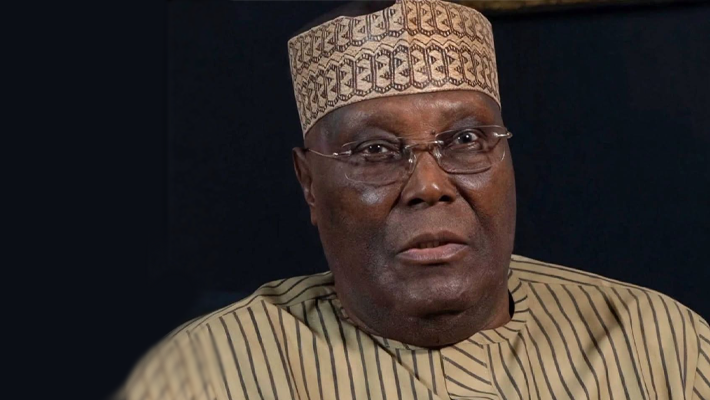
Former Vice-President Atiku Abubakar is a politician who knows the game and how to work the crowd. His recent declaration to restore subsidy on petrol if elected as president in 2027 is a classic demonstration of the statement that “in politics, as in war, all things are fair”.
Panicking APC
His attack on President Bola Ahmed Tinubu has ignited the campaign trail and even got the ruling All Progressives Congress (APC) scampering. The party, which had refused to grant any concessions on petrol costs and/or failed to consider any domestic price reviews in light of higher crude prices triggered by the Persian Gulf crises, has begun to shuffle, thanks to Atiku.
It is important for the APC that Atiku has picked a populist refrain at a critical electioneering period, and whether he speaks or uses sign language, his gestures resonate with hardship-stricken voters, desperate for relief. It’s political opportunism at its best.
But it is not entirely Atiku’s fault that most Nigerians now view subsidy as the only thing they have ever benefited from the political elite. For the most part, few people care about the corruption that plagues the subsidy regime because the Tinubu administration has taken the subsidy money and given it back to equally unaccountable governors. On either side, the people think and are beginning to believe they have lost.
States and the money
States (and local governments) in Nigeria have been awash in money. According to figures by the Federal Ministry of Finance, on a comparable monthly basis through December 2025, allocations to states increased by 94 per cent, while allocations to local governments increased by 85 per cent.
One specific example might suffice. From the latest available data for 2026, Ekiti State is the poorest state in terms of federal allocation, receiving the lowest monthly share from the federation account among all 36 states.
Official FAAC 2023 Annual Report from the Nigeria Governors’ Forum Secretariat states that Ekiti’s average monthly allocation between January and April 2023, just before the subsidy was removed, was about N1.73 billion.
But since the “subsidy is gone” fiat, Ekiti has grown from receiving less than N2 billion in monthly allocations. According to reports from August 2026 on Federation Account Allocation Committee (FAAC) disbursements, Ekiti State received N13.13 billion in May 2026, the lowest among all Nigerian states.
This is just one scenario of what the nil subsidy regime represents if the sub-regional governments were accountable and committed to changing the fortunes and landscape of their people.
Flyovers to nowhere
In July, Tinubu publicly complained that state governors were building bridges rather than arterial roads connecting communities and markets to centres of development. Not exactly the way the president said it, but broadly still within the same context.
Yet, there’s a limit to which Tinubu can complain since 31 of the 36 states are members of his party, and voters might judge him on what the majority of governors, who are members of his party, do or fail to do.
Not so fast, Atiku
That’s not to suggest that Atiku’s rhetoric and somersaults on petrol subsidy make sense. He’s simply offering voters a remix of the old poison. One of the most extensive studies of subsidies by the Economist, Thomas Sowell, in Basic Economics, demonstrates that there’s hardly such a thing as a “guaranteed subsidy”.
Subsidies do not eliminate costs. They either transfer or obscure them, but someone, somewhere pays. A subsidised product, whether it’s petrol or bread, may appear cheaper to the buyer, but someone pays for the difference. Atiku’s suggestion that his government would bear the cost by selling domestically produced crude oil to qualified Nigerian refineries at a price below its market equivalent is unworkable and disingenuous.
How will you pay?
First, I’m not sure how many local refineries will be left if subsidies return. The Waltersmith Refinery, the Edo Refinery, the Aradel Refinery, and the Dangote Refinery (the most consequential in terms of output) were all built with zero subsidies, a regime that profited the state-owned NNPC by encouraging racketeering in import licences. A return to petrol subsidy will damage investments in local refineries and hand the future back to the racketeers.
Second, there is no legal basis to return the subsidy. In March 2022, Senate President Ahmad Lawan said that an amendment to the Petroleum Industry Act (PIA) would be required to extend the subsidy regime because the law contained no such provision.
Several sections of the PIA, specifically Section 205(1), make this point clearly: “Subject to the provisions of this section, wholesale and retail prices of petroleum products shall be based on unrestricted free market pricing conditions.”
Where’s the crude?
Third, even though Nigeria’s oil production has risen from about 1.2 mpd to about 1.6 mpd, about 30 per cent of this stock set aside and managed by the NNPC has been pledged in forward deals for many years. There’s hardly any headroom left, which explains why the NNPC cannot even meet its current obligation to the Dangote Refinery.
Four, for nearly 10 straight years until 2023, there was no new investment, onshore or offshore, largely due to the delay in passing the PIA. Even with recent commitments, it would take some time before significant onshore production could start, limiting supply and hampering the redemption of any subsidy promissory notes.
Five, the NNPC, the industry’s rotten core, is a dead horse. It was dead even before the Obasanjo government, of which Atiku was a part, sold it to Bluestar in 2007. Yet, the attempts to give this carcass another life since the Umaru Musa Yar’Adua government revoked the sale have cost billions of dollars, the most recent of which was $1.5 billion for the Port Harcourt Refinery.
And six, while the NNPC has become a hotspot for issuing petrol import licences mainly to benefit insiders, a major regulator, on which Atiku may rely for information about exactly how much petrol the country’s consumers consume daily, relies on dubious estimates. It only gets worse when Atiku added that he would “open the borders!”
Name of the game
But I understand the game, and Tinubu cannot complain too much because it was taken from his 2012 playbook. Remember when he described President Goodluck Jonathan’s subsidy removal 14 years ago as the “Jonathan tax” and accused the government of acting abruptly without protecting citizens? Or his pledge not to seek a second term if he does not fix Nigeria’s power problem?
Apart from Tinubu, there are many other examples of politicians’ hypocritical campaign poetry. From the U.S. President George H.W. Bush’s “read my lips, no new taxes” to Donald Trump’s Mexico would pay for the wall, and Boris Johnson’s multiple false claims about Brexit, politicians first lie to win and leave you to deal with the consequences later.
We’ve seen this many times before. We still remember what Emir Sanusi said. Atiku should ply his wares elsewhere.
Ishiekwene is the Editor-in-Chief of LEADERSHIP and author of the book, Writing for Media and Monetising It.

We have recently deactivated our website's comment provider in favour of other channels of distribution and commentary. We encourage you to join the conversation on our stories via our Facebook, Twitter and other social media pages.

More from Peoples Gazette

States
Independence: NBA urges Nigerians to expect better future
The NBA said that ordinary Nigerians should be deriving benefit from the subsidy removal rather than hardship.

Agriculture
FG tasks ECOWAS on leveraging financing strategies for agroecology
The federal government has urged stakeholders in the agriculture and finance sectors in the West Africa region to leverage financing strategies to enhance agroecology practices

Politics
Katsina youths pledge to deliver over 2 million votes to Atiku
“Katsina State is Atiku’s political base because it is his second home.”

Heading 2
Tinubu’s economic reforms yielding results despite doubts: Bagudu
Mr Bagudu described Mr Tinubu as a visionary leader whose decisions demonstrated courage and commitment to national development.

Sport
Flamingos lose 2-1 to Poland in FIFA U-17 Women’s World Cup opener
Poland’s Natalia Skrok made it two in the second half when Blanka Zajac, in the 65th minute, crossed into the Nigerian penalty area.

States
Gov Mbah scraps N750 daily ticket fee for Enugu tricycle operators, extends work hours
Mr Mbah also disclosed that tricycle operators would continue to use the state’s modern transport terminals free of charge.

States
FG unveils five-point strategy to tackle banditry, terrorism in Sokoto
Mr Ribadu called for sustained security deployments around vulnerable settlements, forest corridors and border communities.

Politics
2027: Wike urges Rivers traditional leaders to avoid ‘mistake’, back Tinubu for prosperity
Mr Wike said, “Supporting Tinubu is a support for prosperity.”
Heading 4
NAPTIP raises alarm over rise in parents’ facilitation of children’s sexual exploitation
The NAPTIP boss said parents and guardians were facilitating the sexual exploitation of their children to make money.


