

Azu Ishiekwene: Muhammadu Sa’ad Abubakar III: A sultan for all seasons
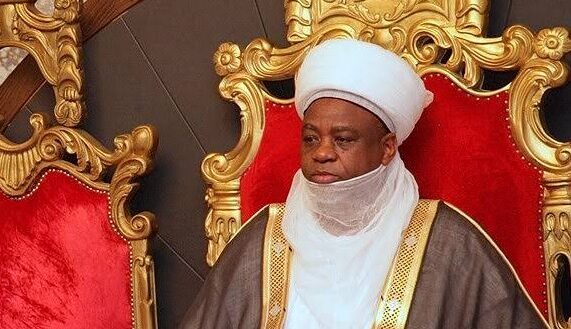
It was five years on Tuesday since I wrote a tribute to the Sultan of Sokoto, Muhammadu Sa’ad Abubakar III, who was 65 then.
Our paths first crossed after he was named Sultan following the tragic death of his brother, Muhammadu Maccido, in the 2006 ADC air crash in which 93 persons were killed.
Apart from his brother, Brigadier Abubakar (as he then was) also lost his nephew, Senator Badamasi Maccido, in that crash. It seemed that tragedy had not only struck without notice, but it had also come with its own chair and shelter.
On Monday, August 24, Sultan Abubakar III turned 70. He’ll mark his 20th year on the throne on November 2. It’s remarkable what the last five years of his reign have revealed, for himself, the sultanate, and the country.
Two days after his 65th birthday in 2021, for example, the sultan publicly said that things were not getting better and that religious leaders had a duty to tell the government so.
Shooting straight
He didn’t stop there. He said anyone who incited violence, whether religious leaders, traditional rulers or politicians, should face the law. And he said this at a time when Plateau state was in the middle of a dangerous cycle of ethnic violence, with serious threats of reprisal.
He’s not one to mince his words. When mad men under the franchise of Boko Haram or their affiliates maim, murder, rape and destroy in the name of Allah, claiming that if they die, a bevy of brides awaits them in paradise, some religious leaders may choose silence. Not Sultan Abubakar III. He tells such mad men in plain language, which he repeated to my hearing some time ago, that “they’ll go straight to hell!”
No one can kill in Allah’s name and expect shelter in paradise. The Arabic version of Surah Al-Ma’idah 5: 78-79, “Lā yatanāhawna ‘an munkarin fa‘alūhu”, expressly calls out those who do not forbid, restrain or admonish one another concerning the wrongdoing they committed.
Inter-faith champion
One year after his 65th birthday, his credentials as an interfaith leader were tested when Deborah Samuel, a student of the Shehu Shagari College of Education, Sokoto, was murdered over allegations of blasphemy. The Sultanate Council condemned the killing and demanded that the suspects face the law.
That was extraordinary, even if the civil authorities under Governor Waziri Tambuwal ignored the advice, and a former Vice-President, Atiku Abubakar, after condemning the act in a tweet, quickly deleted it.
Abubakar III has done more for inter-faith unity and understanding than any Muslim spiritual leader I’ve known for a long, long time. In his capacity as co-chairman of the Nigeria Inter-Religious Council, he has worked tirelessly, drawing on his extensive network with other faith councils worldwide, to repair broken bonds and roll back religious intolerance and extremism.
Social crusader
Sultan Abubakar III is, if you like, a moderate social crusader, which is somewhat ironic, given that he is from Sokoto, often regarded as the bastion of conservatism. He has spoken out for education for the child—boy or girl—reminding fools and their enablers who despise education in the name of Islam that the Caliphate was founded on education and enlightenment.
And he’s right. Much of the documented history of the caliphate owes a lot to Nana Asmau, Sultan Mohammed Bello’s younger half-sister, who spoke four languages, according to the book by Fola Fagbule and Feyi Fawehinmi, entitled Formations: The Making of Nigeria from Jihad to Amalgamation.
Sultan Abubakar has spoken about the link between rising insecurity, poverty, hunger, and social exclusion, saying on one occasion that “hunger knows no religion”, challenging the government to tackle rising inflation and the high cost of living and to stop making excuses.
When the Buhari government was sleepwalking on court orders, including an order to release publisher and activist Omoyele Sowore from detention, the sultan publicly said that disobedience to court orders was “a recipe for chaos and disaster”. And he said so at the meeting of the inter-religious council in Abuja, Buhari’s playground at the time.
Shuttle diplomacy
The 2023 coup in Niger was a tricky moment for President Bola Ahmed Tinubu’s government, which had only just been sworn in. When the hardline posture of Nigeria and ECOWAS failed, the Nigerian government sent a delegation led by General Abdulsalami Abubakar and also comprising the sultan to explore channels where presidents and diplomats had hit a brick wall.
It was a reminder that soft power can sometimes find a way where force has exhausted itself. Although Niger, Mali and Burkina Faso went ahead to form the so-called Alliance of Sahel States (AES), the mediation by the General Abubakar-led committee averted the potential escalation of the crisis in the subregion.
Many rivers to cross
Yet one of the sultan’s regrets as he turns 70 may well be the dangerous rise of insurgency in Nigeria’s Northwest. Borno (in the North-East) remains the epicentre, but the deadly activities of Lakurawa indicate that Kebbi and Sokoto are emerging as jihadist fronts in the Northwest. What the sultan was looking at from afar and warning against when he was 65 has arrived at the doorstep of the caliphate, as a transnational Sahelian threat.
Translation: his job as a moral compass and stabilising voice is not done.
The world is not only listening, but also paying attention. The sultan and his brother in the business of inter-faith engineering, Cardinal John Onaiyekan, were jointly nominated for the Nobel Peace Prize. The nomination was as good as winning, because it sent a clear message that the extraordinary work that both men are doing has not gone unnoticed—or unrewarded. Both had jointly shared the prize for the LEADERSHIP Persons of the Year 2012, proof that these prophets are worthy, at home and abroad.
Moment of trial
Yet, there have been moments of trial in the last few years. Two years ago, the future of the sultanate seemed to be tottering. Governor Ahmed Aliyu proposed changes to the Sokoto Local Government and Chieftancy Law that could have curtailed the Sultanate Council’s authority to appoint district and village heads. Under the proposed changes, now suspended, the council could only recommend candidates, not appoint them.
Whatever the letter of the law intended, coming five years after the Kano state government weakened the powers of Emir Muhammadu Sanusi, it was an affront to another important traditional institution in the North.
The Sokoto state government wanted to bring the Sultanate to its knees, exposing the fundamental contradiction of modern Nigerian traditional institutions: a man could be the spiritual leader of tens of millions, internationally recognised and sought after by presidents, yet his stool is subject to state laws at the governor’s pleasure.
Soldier and gentleman
As the sultan turns 70, I have struggled to figure out what might be behind his enigmatic path. He was a member of the 18th Regular Combatant Course of the Nigerian Defence Academy (the class of the former Chief of Army Staff, Lt. General Azubuike Ihejirika), and the first soldier to ascend the sultanate.
His extensive tour of duty in combatant and non-combatant positions, especially his deployment as defence adviser to Pakistan, with concurrent accreditation to Iran, Iraq, Afghanistan, Saudi Arabia, and the Gulf States, might also have shaped his worldview.
To adapt Kipling’s words, at 70 and nearly 20 years on the throne, Sultan Muhammad Sa’ad Abukakar III has seen triumphs and setbacks and treated both impostors the same.
Long, and well, may you live and reign!
Ishiekwene is the Editor-In-Chief of LEADERSHIP and author of the book, Writing for Media and Monetising it.

We have recently deactivated our website's comment provider in favour of other channels of distribution and commentary. We encourage you to join the conversation on our stories via our Facebook, Twitter and other social media pages.

More from Peoples Gazette

States
Independence: NBA urges Nigerians to expect better future
The NBA said that ordinary Nigerians should be deriving benefit from the subsidy removal rather than hardship.

Agriculture
FG tasks ECOWAS on leveraging financing strategies for agroecology
The federal government has urged stakeholders in the agriculture and finance sectors in the West Africa region to leverage financing strategies to enhance agroecology practices

Politics
Katsina youths pledge to deliver over 2 million votes to Atiku
“Katsina State is Atiku’s political base because it is his second home.”

States
Gov Mbah scraps N750 daily ticket fee for Enugu tricycle operators, extends work hours
Mr Mbah also disclosed that tricycle operators would continue to use the state’s modern transport terminals free of charge.

States
FG unveils five-point strategy to tackle banditry, terrorism in Sokoto
Mr Ribadu called for sustained security deployments around vulnerable settlements, forest corridors and border communities.

Politics
2027: Wike urges Rivers traditional leaders to avoid ‘mistake’, back Tinubu for prosperity
Mr Wike said, “Supporting Tinubu is a support for prosperity.”
Heading 4
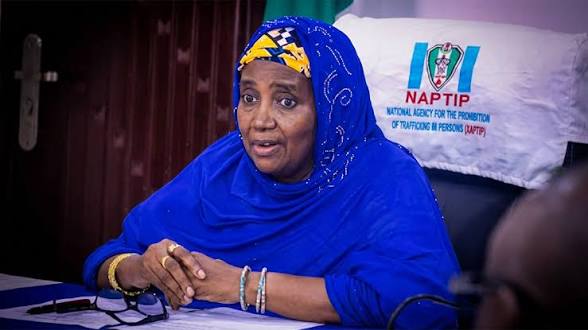
NAPTIP raises alarm over rise in parents’ facilitation of children’s sexual exploitation
The NAPTIP boss said parents and guardians were facilitating the sexual exploitation of their children to make money.
Heading 3
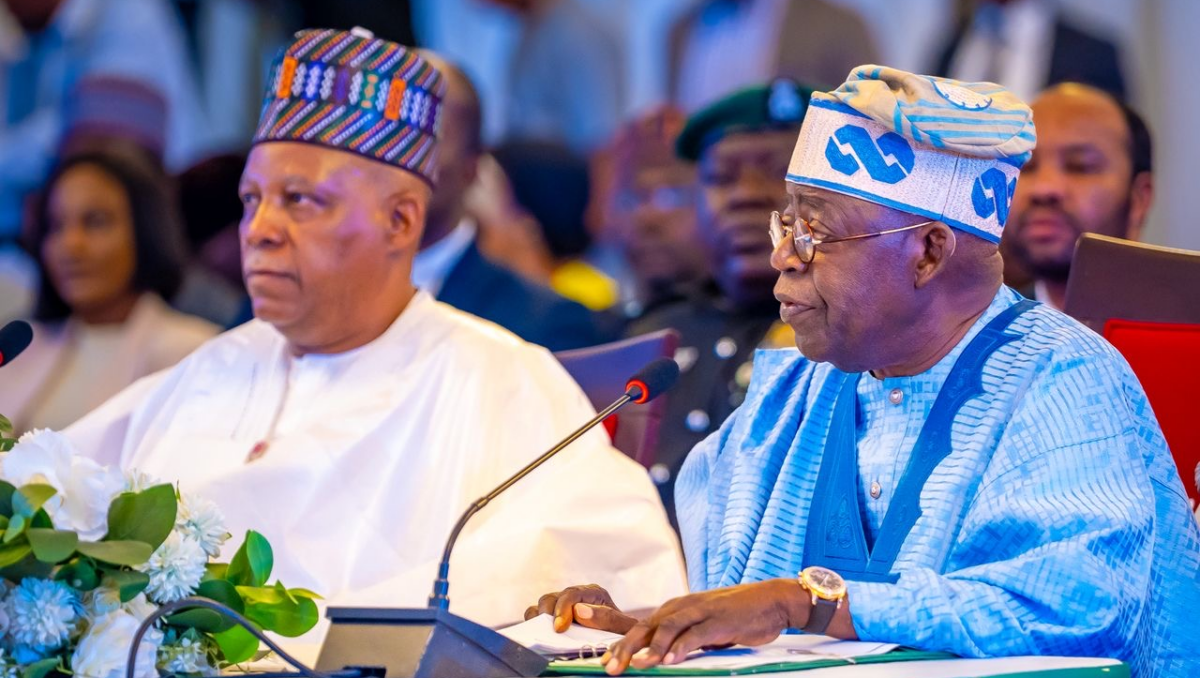
Shettima warns Tinubu’s supporters against dismissing Nigerians’ hardship during campaigns
Mr Shettima said the North has spoken with a resounding voice and unmistakable conviction in its support for Mr Tinubu.
NationWide
Nigeria seeks binding global rules on autonomous weapons, warns of terrorist threat
The diplomat also expressed concern about the increasing integration of artificial intelligence into nuclear weapons systems.


